
In today’s digital landscape, speed isn’t just a luxury—it’s a necessity. Whether you’re a content creator rendering 4K video, a gamer loading massive open-world environments in seconds, or a professional handling large datasets and complex simulations, your storage drive can make or break your workflow. Traditional hard disk drives (HDDs) simply can’t keep up anymore. Enter NVMe SSDs: the high-performance storage revolution that’s redefining what’s possible on modern PCs and laptops.
This comprehensive buying guide is designed to cut through the noise and help you choose the best high-performance NVMe SSD for your specific needs in 2026. We’ll walk you through every critical factor—from raw performance specs to real-world durability, budget considerations, and even common pitfalls to avoid. By the end, you’ll have a clear, confident understanding of what makes an NVMe SSD truly “fast” and how to match that capability with your use case. The market is flooded with options, but not all SSDs are created equal. Some promise blistering speeds but falter under sustained workloads; others offer great value but lack endurance for heavy-duty tasks. Our goal is to equip you with expert-level insight so you don’t just buy an SSD—you buy the right one.
The NVMe SSD market has matured significantly over the past few years. What once was a niche upgrade for enthusiasts is now standard in most new systems, thanks to falling prices and widespread adoption of PCIe Gen4 and Gen5 interfaces. Today, you can find drives delivering over 10,000 MB/s read speeds—more than 20 times faster than SATA SSDs—and capacities reaching 8TB or more. Yet, with this abundance comes confusion. Brands tout different controllers, NAND types, DRAM caches, and thermal solutions, often leaving buyers overwhelmed. This guide demystifies those technicalities and translates them into practical advice. Whether you’re building a new gaming rig, upgrading a workstation, or just looking to breathe new life into an older laptop, we’ve got you covered.

What to Look for When Buying Buying Guide
1. Performance Specifications
Performance is the heart of any high-speed NVMe SSD, and it’s measured primarily through sequential read/write speeds and random IOPS (Input/Output Operations Per Second). Sequential speeds—typically advertised as “up to X MB/s”—determine how quickly large files like videos, games, or disk images can be loaded or saved. For most users, sequential read speeds above 5,000 MB/s are excellent, while professional workloads may benefit from Gen5 drives hitting 12,000–14,000 MB/s. However, don’t ignore random performance: this reflects how well the drive handles thousands of small, scattered operations—like loading an operating system, launching apps, or managing databases. Look for drives with high random 4K read/write IOPS (ideally 1M+ for premium models).
Also pay attention to sustained performance. Many SSDs achieve peak speeds only during short bursts thanks to SLC caching. Once the cache fills up—especially during large file transfers—speeds can drop dramatically. High-end drives use larger caches or advanced controllers to maintain consistent throughput. If you regularly move multi-gigabyte files or run virtual machines, prioritize drives with strong sustained write performance. Real-world benchmarks from trusted sources like Tom’s Hardware, AnandTech, or StorageReview are far more reliable than manufacturer claims.
2. Interface & Form Factor
NVMe SSDs connect via the PCIe interface, but not all PCIe generations are equal. As of 2026, PCIe Gen4 is the sweet spot for most users, offering double the bandwidth of Gen3 (up to ~8,000 MB/s). PCIe Gen5 doubles that again, pushing theoretical limits beyond 14,000 MB/s—but it comes with trade-offs: higher power consumption, increased heat output, and compatibility requirements (your motherboard and CPU must support Gen5). Unless you’re using a cutting-edge workstation or server, Gen4 remains the most balanced choice.
Form factor matters too. The vast majority of consumer NVMe SSDs use the M.2 2280 form factor—22mm wide, 80mm long—which slots directly onto your motherboard. Ensure your system has an available M.2 slot and check clearance for heatsinks, especially if you plan to use a Gen5 drive, which often requires robust cooling. Some laptops and mini-PCs may only support shorter lengths (like 2242 or 2260), so always verify compatibility before purchasing.
3. NAND Flash Type & Controller
The type of NAND flash memory used directly impacts speed, endurance, and cost. As of 2026, TLC (Triple-Level Cell) NAND dominates the high-performance segment because it offers a great balance of speed, capacity, and longevity. QLC (Quad-Level Cell) is cheaper and denser but slower under sustained writes and less durable—best suited for light-use secondary storage. Avoid drives using older planar NAND; instead, look for 3D NAND with at least 96–176 layers for optimal performance and reliability.
Equally important is the SSD controller—the “brain” that manages data flow, error correction, and wear leveling. Top-tier controllers from companies like Phison (E18, E26), Silicon Motion (SM2264, SM2268), and Samsung’s in-house designs deliver superior performance and efficiency. A high-quality controller ensures consistent speeds, better thermal management, and longer drive life. When comparing models, check which controller is used—it’s often listed in detailed spec sheets or reviews.
4. DRAM Cache Presence
A DRAM cache acts as a high-speed buffer between the NAND flash and the host system, dramatically improving performance—especially for random operations and multitasking. Drives with a dedicated DRAM chip (usually labeled as “DRAM-equipped”) outperform DRAM-less models, which rely on slower system memory (HMB—Host Memory Buffer) for mapping tables. While HMB works acceptably for basic tasks, it introduces latency and can bottleneck performance during heavy workloads.
For gaming, content creation, or any scenario involving frequent file access, always choose an NVMe SSD with onboard DRAM. The difference is noticeable: boot times are faster, applications launch quicker, and large project files load without stutter. Budget drives may omit DRAM to cut costs, but this often results in inconsistent performance and reduced longevity due to increased write amplification.
5. Endurance & TBW Rating
Endurance refers to how much data you can write to an SSD over its lifetime, measured in Terabytes Written (TBW). A higher TBW means the drive can handle more writes before potential failure—critical for professionals who constantly save, edit, and overwrite large files. For example, a 1TB drive might have a TBW rating of 600TB, while a 2TB model could offer 1,200TB or more. Consumer drives typically range from 300TBW (budget) to 1,200TBW+ (premium), whereas enterprise-grade drives exceed 3,000TBW.
Don’t confuse TBW with warranty length. A 5-year warranty doesn’t guarantee the drive will last five years—it just means the manufacturer will replace it if it fails within that time or hits its TBW limit, whichever comes first. Always check both metrics. If you’re a video editor processing terabytes of footage monthly, invest in a drive with high TBW and a reputable brand known for reliability.
6. Thermal Management & Heatsinks
High-performance NVMe SSDs generate significant heat, especially Gen4 and Gen5 models under load. Excessive heat throttles performance as the drive slows down to protect itself. Many premium SSDs now include integrated heatsinks or thermal pads, and some even feature copper layers or graphene coatings for better heat dissipation. If your case has poor airflow or you’re using a compact build (like an ITX PC), consider a drive with built-in cooling or purchase a third-party M.2 heatsink.
Laptops and small form-factor PCs are particularly vulnerable to thermal throttling due to limited space. In these cases, look for drives specifically designed for low-power operation or those with dynamic thermal throttling algorithms that maintain performance without overheating. Never assume all NVMe SSDs run cool—always check thermal performance in reviews.
7. Brand Reputation & Firmware Updates
Not all SSD brands are equal. Established names like Samsung, Western Digital, Crucial, Kingston, and Sabrent have proven track records of reliability, consistent performance, and strong customer support. They also provide regular firmware updates that can improve stability, fix bugs, and even boost performance over time. Lesser-known or no-name brands may offer tempting prices but often cut corners on components, quality control, and post-purchase support.
Firmware is crucial because it governs how the SSD operates. A buggy firmware can cause crashes, data corruption, or sudden performance drops. Reputable brands invest heavily in firmware development and testing. Before buying, check if the manufacturer offers a user-friendly utility for monitoring drive health, updating firmware, and running diagnostics—tools like Samsung Magician or WD Dashboard are excellent examples.
8. Warranty & Support
A solid warranty reflects manufacturer confidence in their product. Most high-performance NVMe SSDs come with 5-year limited warranties, but terms vary. Some cover only hardware defects, while others include data recovery assistance or expedited replacement. Read the fine print: does the warranty require registration? Is it transferable if you sell the drive? Are there usage limits (e.g., TBW caps)?
Customer support quality matters too. Can you easily reach a human? Do they offer live chat, phone, or email assistance? Brands with global service networks (like Samsung or Crucial) typically provide faster resolution times. Avoid brands with no clear support channels—you don’t want to be stuck with a failed drive and no recourse.
Different Types of Buying Guide
Common Buying Mistakes to Avoid
❌ Mistake: Prioritizing Peak Speed Over Real-World Performance
Why it’s bad: Manufacturers often advertise peak sequential speeds achieved only during brief bursts. In daily use, your SSD will rarely sustain those numbers—especially during mixed workloads or when the SLC cache is exhausted. Relying solely on spec sheet numbers can lead to disappointment when your system doesn’t feel as snappy as expected.
What to do instead: Focus on real-world benchmarks and sustained write performance. Look for reviews that test the drive under realistic conditions—like copying large folders, running VMs, or editing video—not just synthetic benchmarks.
❌ Mistake: Ignoring Thermal Throttling
Why it’s bad: A drive that overheats will slow down dramatically to protect itself, negating its high-speed advantages. This is especially common in compact builds or laptops without adequate cooling.
What to do instead: Check thermal performance in independent reviews. If you’re building a small PC or using a Gen5 drive, invest in a quality heatsink or choose a model with integrated cooling.
❌ Mistake: Choosing QLC NAND for Primary Storage
Why it’s bad: QLC drives are slower under sustained writes and have lower endurance. Using one as your main OS drive can result in sluggish performance during updates, installations, or multitasking.
What to do instead: Reserve QLC SSDs for secondary storage (like game libraries or media archives). For your primary drive, stick with TLC or MLC NAND.
❌ Mistake: Overlooking DRAM Cache
Why it’s bad: DRAM-less SSDs rely on system RAM for mapping tables, which introduces latency and can bottleneck performance—especially on systems with limited RAM or heavy multitasking.
What to do instead: Always opt for a DRAM-equipped NVMe SSD unless you’re on an extremely tight budget and only doing light tasks like web browsing or document editing.
❌ Mistake: Buying Based Solely on Price
Why it’s bad: The cheapest SSDs often use inferior components, lack warranties, or have poor firmware. A failed drive can cost you far more in lost data and downtime than the initial savings.
What to do instead: Balance price with reliability, performance, and support. Spend a little more for a reputable brand with a proven track record.
❌ Mistake: Not Checking Compatibility
Why it’s bad: Not all M.2 slots support NVMe—some only accept SATA-based M.2 drives. Additionally, Gen5 drives require compatible motherboards and CPUs.
What to do instead: Verify your motherboard’s manual or manufacturer website to confirm NVMe support, PCIe generation, and M.2 slot specifications before purchasing.
❌ Mistake: Skipping Firmware Updates
Why it’s bad: Outdated firmware can cause instability, reduced performance, or even data loss. Many users never update their SSD firmware, missing critical fixes.
What to do instead: Download the manufacturer’s SSD management tool and check for firmware updates regularly—especially after major OS updates.
Budget Guidelines: How Much Should You Spend?
Entry-Level ($40–$70 for 1TB): This tier includes PCIe Gen3 or DRAM-less Gen4 drives ideal for basic computing, office work, or as secondary storage. Expect speeds around 3,000–3,500 MB/s and modest endurance (300–400TBW). Great for upgrading older systems or adding extra storage without breaking the bank.
Mid-Range ($70–$130 for 1TB): The sweet spot for most users. These are typically PCIe Gen4 TLC drives with DRAM, offering 5,000–7,000 MB/s speeds, strong sustained performance, and 600–800TBW endurance. Perfect for gaming, photo editing, programming, and general productivity. You get near-top-tier performance without paying premium prices.
Premium ($130–$250 for 1TB): Designed for enthusiasts and professionals. These drives feature top-tier controllers, advanced NAND, robust heatsinks, and Gen4 or early Gen5 speeds (up to 12,000 MB/s). Endurance often exceeds 1,000TBW, and they include premium software suites. Ideal for 4K/8K video editing, 3D rendering, and high-frequency trading.
Luxury ($250+ for 1TB): Cutting-edge Gen5 drives with blistering speeds (14,000+ MB/s), enterprise-grade components, and exceptional thermal solutions. These are overkill for most consumers but essential for AI researchers, data scientists, or anyone pushing hardware to its limits. Expect top-tier warranties and global support.
Expert Tips for Getting the Best Deal
1. Time Your Purchase Strategically: SSD prices tend to drop in Q4 (October–December) due to holiday sales and new product launches. Avoid buying right after a major tech announcement—prices on older models often dip as retailers clear inventory.
2. Compare Total Cost of Ownership: A slightly more expensive drive with a longer warranty and better endurance may save you money long-term by avoiding replacement costs and data recovery fees.
3. Buy from Authorized Retailers: Stick to trusted sellers like Amazon (sold by Amazon, not third-party), Newegg, Best Buy, or direct from the manufacturer. This ensures genuine products, valid warranties, and reliable return policies.
4. Read Professional Reviews—Not Just User Ratings: User reviews can be biased or based on isolated issues. Rely on in-depth testing from reputable tech sites that evaluate performance, thermals, endurance, and real-world usage.
5. Consider Refurbished or Open-Box Options: Many manufacturers sell certified refurbished SSDs with full warranties at 20–30% off retail. These are thoroughly tested and often indistinguishable from new units.
6. Check Return Policies Before Buying: Ensure the retailer offers at least a 30-day return window. Some drives may have compatibility issues or fail early—you don’t want to be stuck with a dud.
7. Use Manufacturer Tools for Monitoring: Once installed, use tools like CrystalDiskInfo, Samsung Magician, or WD Dashboard to monitor drive health, temperature, and remaining lifespan. Early warnings can prevent data loss.
8. Don’t Overbuy Capacity: While larger drives often perform better due to more parallel NAND channels, you don’t need 4TB if you only use 500GB. Match capacity to your actual needs—you can always add a second drive later.
Frequently Asked Questions
Q: Is NVMe SSD worth it over SATA SSD?
A: Absolutely—if your system supports it. NVMe drives are 3–5x faster than SATA SSDs, drastically reducing boot times, app launches, and file transfers. The performance gap is especially noticeable in gaming and creative workflows.
Q: Can I use a Gen5 SSD in a Gen4 slot?
A: Yes, but it will run at Gen4 speeds. Gen5 drives are backward compatible, so you can future-proof your purchase even if your current system only supports Gen4.
Q: Do I need a heatsink for my NVMe SSD?
A: Not always, but highly recommended for Gen4/Gen5 drives or compact builds. Heatsinks prevent thermal throttling and maintain consistent performance during prolonged workloads.
Q: How long do NVMe SSDs last?
A: Most consumer NVMe SSDs last 5–10 years under normal use, depending on workload and TBW rating. Modern drives are extremely reliable—failure due to wear is rare before the warranty expires.
Q: Can I clone my old drive to a new NVMe SSD?
A: Yes! Use cloning software like Macrium Reflect, Acronis True Image, or Samsung Data Migration to transfer your OS, apps, and files seamlessly.
Q: Are external NVMe SSDs as fast as internal ones?
A: Only if connected via USB 3.2 Gen 2×2 (20Gbps) or Thunderbolt 4. Most USB 3.0/3.1 enclosures bottleneck NVMe speeds. For full performance, internal installation is best.
Q: What’s the difference between NVMe and M.2?
A: M.2 is a physical form factor; NVMe is a protocol. Not all M.2 drives are NVMe—some use the slower SATA protocol. Always check the specification to ensure it’s NVMe PCIe.
Q: Should I enable TRIM on my NVMe SSD?
A: Yes! TRIM helps maintain performance over time by telling the SSD which blocks are no longer in use. It’s usually enabled by default in Windows, macOS, and Linux.
Q: Can I use two NVMe SSDs in RAID?
A: Yes, but only if your motherboard supports NVMe RAID and you’re using compatible drives. RAID 0 can boost speed, but increases risk of data loss—always back up first.
Q: Do NVMe SSDs consume more power?
A: Slightly, especially Gen5 models under load. However, the difference is negligible for desktops. Laptop users should look for low-power variants if battery life is a priority.
Our Final Recommendations
Best for Budget-Conscious Buyers: Crucial P3 Plus (1TB) – A reliable Gen4 TLC drive with DRAM, offering 5,000 MB/s speeds at an unbeatable price. Perfect for upgrading older systems or building a cost-effective gaming PC.
Best Overall Value: Samsung 980 Pro (1TB) – The gold standard for Gen4 performance. Consistently fast, excellent thermals, 5-year warranty, and Samsung’s legendary reliability. Ideal for gamers and creators alike.
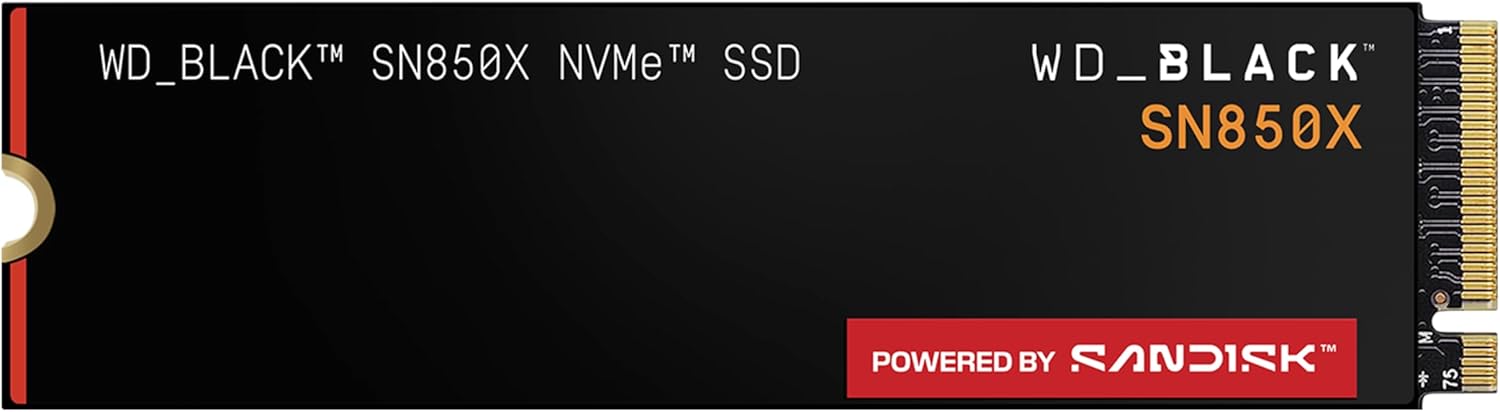
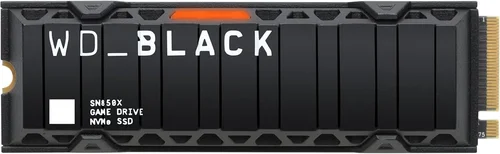
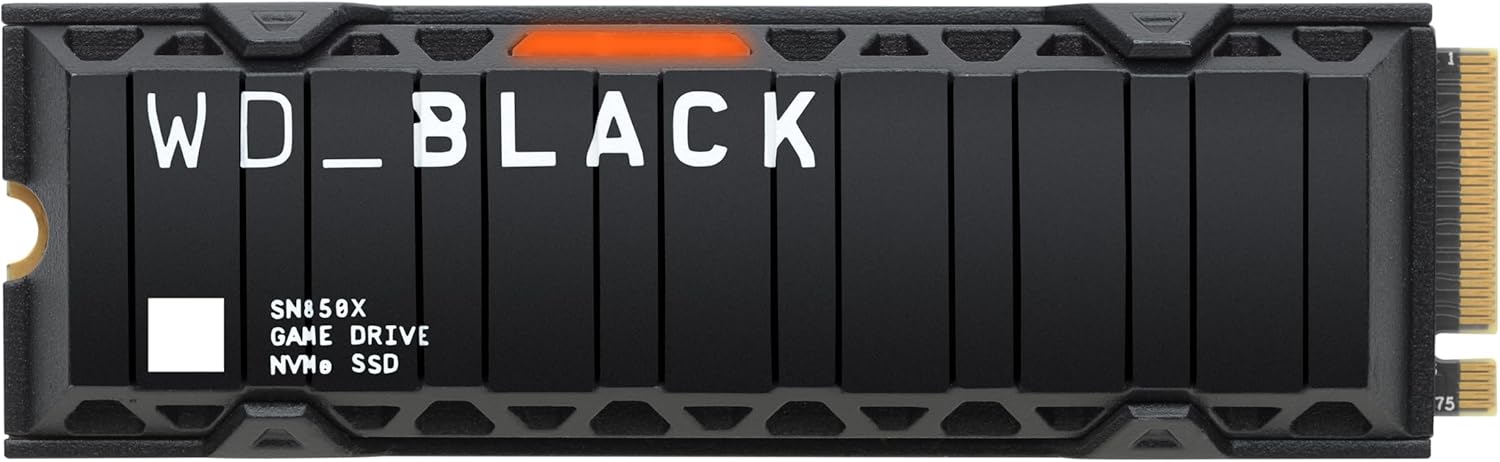
Best Premium Option: WD Black SN850X (2TB) – Packed with a top-tier controller, massive SLC cache, and aggressive thermal management. Delivers near-Gen5 speeds on Gen4 hardware and excels in sustained workloads.
Best for Beginners: Kingston KC3000 (1TB) – Easy to install, comes with Kingston’s SSD Manager software, and offers strong performance out of the box. Great first NVMe upgrade with minimal setup hassle.
Best for Advanced Users: Sabrent Rocket 4 Plus-G (2TB) – A Gen5 powerhouse with 14,000 MB/s speeds, integrated copper heatsink, and exceptional endurance. Built for professionals who demand maximum throughput and future-proofing.
Conclusion: Making the Right Choice
Choosing the best high-performance NVMe SSD isn’t just about picking the fastest number on a spec sheet—it’s about aligning technology with your real-world needs. Whether you’re chasing frame rates in the latest AAA title, rendering cinematic visuals, or simply wanting your computer to feel instant, the right SSD can transform your experience. We’ve covered everything from interface compatibility and NAND types to thermal management and budget tiers, giving you the tools to make an informed decision.
Remember: prioritize your use case. Gamers benefit most from fast load times and responsive OS performance, while creators need sustained write speeds and high endurance. Don’t overspend on features you won’t use, but also don’t cut corners on critical components like DRAM or TLC NAND. And always buy from reputable brands with strong support—your data is too valuable to risk.
Ultimately, the “best” NVMe SSD is the one that fits your workflow, budget, and system perfectly. Use this guide as your roadmap, compare your top contenders using real benchmarks, and trust your instincts. With the right drive installed, you’ll wonder how you ever tolerated slow storage. Ready to upgrade? Your faster, smoother, more productive computing experience starts now.