
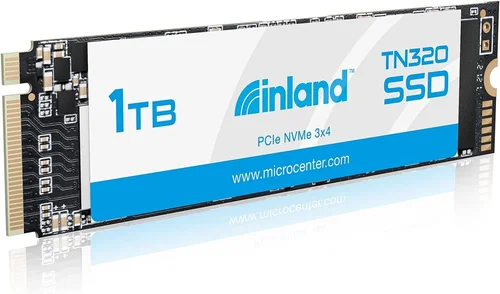
When it comes to upgrading your computer’s storage, the decision between a traditional hard drive and a solid-state drive (SSD) can make a world of difference in performance. For many users, especially those seeking speed and reliability without breaking the bank, the Inland 1TB SSD with 3D NAND M.2 2280 PCIe NVMe stands out as a compelling option. This comprehensive guide is designed to help you understand everything about this popular storage solution—what it offers, how it performs, what to look for when buying one, and why it might be the right choice for your needs.
Whether you’re building a new PC, replacing an old drive, or simply looking to boost your system’s responsiveness, knowing how to evaluate SSDs like the Inland model is essential. This article will walk you through the critical factors that matter most—such as speed, durability, compatibility, and value—while also offering expert advice on pricing, common pitfalls to avoid, and where to find the best deals. By the end of this guide, you’ll have all the information needed to make a confident, informed purchase.
The market for consumer-grade SSDs has become increasingly competitive, with brands like Samsung, Crucial, and WD dominating headlines. However, lesser-known but reliable manufacturers such as Inland continue to gain traction due to their balance of performance and affordability. The Inland 1TB SSD leverages modern 3D NAND technology and NVMe protocol over PCIe interface, delivering speeds that rival even premium drives—all at a fraction of the cost. Understanding how these components work together and what they mean for real-world use is key to getting the most out of your investment.

What to Look for When Buying INLAND
1. Budget & Price Range
Pricing is often the first consideration when shopping for any tech product, and SSDs are no exception. The Inland 1TB SSD typically falls within the mid-range category, offering excellent value without compromising on core functionality. At the time of writing, prices generally range from $60 to $90, depending on retailer promotions and regional availability.
It’s important to remember that while cheaper SSDs may seem attractive upfront, they could lack essential features like DRAM cache, advanced wear-leveling algorithms, or consistent long-term performance. Conversely, overpaying for unnecessary speed or capacity can waste money if your system doesn’t support higher-end interfaces like PCIe 4.0 or 5.0. The sweet spot for most mainstream users is a PCIe Gen3 x4 NVMe drive with TLC (Triple-Level Cell) 3D NAND, which balances cost, endurance, and speed—exactly what the Inland 1TB model provides.
2. Performance Specifications
The heart of any SSD lies in its performance metrics, and for the Inland 1TB model, several key numbers define its capabilities:
- Sequential Read/Write Speeds: Typically around 3,200 MB/s read and 2,400 MB/s write. These figures indicate how fast large files (like video projects or game installations) can be transferred.
- Random 4K IOPS: Often cited at over 400K read and 500K write operations per second. This measures small-file handling efficiency—crucial for OS boot times and application launches.
- Interface: PCIe Gen3 x4 NVMe via M.2 2280 slot. While not as fast as PCIe Gen4 drives, Gen3 still delivers more than enough speed for everyday computing.
- NAND Type: 3D TLC NAND offers better endurance and lower power consumption compared to planar (2D) NAND, while being more affordable than MLC (Multi-Level Cell).
These specs translate into noticeably faster startup times, quicker file transfers, and snappier overall system responsiveness. For example, booting Windows from this drive usually takes under 10 seconds, compared to 30+ seconds on a mechanical HDD.
3. Build Quality & Durability
Unlike spinning platters found in HDDs, SSDs have no moving parts—making them inherently more durable against physical shock, vibration, and temperature fluctuations. The Inland 1TB SSD uses a standard M.2 form factor (22mm wide by 80mm long), which is compact yet robust enough for laptops and desktops alike.
The controller chip manages data flow and wear distribution, helping extend lifespan. Most reputable controllers today include features like power-loss protection and error correction. Additionally, 3D NAND stacks memory vertically, increasing density without sacrificing reliability. Inland claims up to 1.5 million hours MTBF (Mean Time Between Failures), though real-world usage varies based on workload intensity.
4. Features & Functionality
Beyond raw speed, modern SSDs offer smart features that enhance usability:
- TRIM Support: Helps maintain long-term performance by allowing the OS to inform the SSD which blocks of data are no longer considered in use.
- S.M.A.R.T. Monitoring: Provides health status reports so you can track drive condition over time.
- Over-Provisioning: Reserved space improves garbage collection efficiency and extends drive life.
- Encryption Support: Some models support hardware-based AES 256-bit encryption, useful for sensitive data.
The Inland drive includes basic TRIM and S.M.A.R.T., though advanced encryption isn’t advertised. That said, full-disk software encryption (via BitLocker or third-party tools) remains possible regardless of hardware capability.
5. Brand Reputation
Inland is a sub-brand under Newegg, known primarily as an online retailer rather than a hardware manufacturer. While this raises initial skepticism among enthusiasts, Inland has built a respectable reputation over years of producing budget-friendly peripherals and storage devices. Their SSD line specifically focuses on balancing performance with affordability.
User reviews consistently praise reliability and decent speed for the price point. Of course, brand recognition doesn’t guarantee perfection—some early batches reportedly used lower-tier controllers—but recent generations have addressed these concerns through firmware updates and component upgrades.
6. Warranty & Support
A solid warranty reflects confidence in product quality. The Inland 1TB SSD typically comes with a 3-year limited warranty, covering defects in materials and workmanship. This aligns with industry standards for budget-to-midrange SSDs (most competitors offer 3–5 years). Activation may be required within 30 days of purchase to validate coverage.
Customer service tends to be handled through Newegg’s support channels, which generally respond promptly to RMA requests. Keep your receipt and serial number handy if issues arise. Note that accidental damage isn’t covered—only manufacturing faults.
7. Size & Portability
The M.2 2280 form factor is incredibly space-efficient. Measuring just 22 millimeters wide and 80 millimeters long, it slots directly into compatible motherboards without requiring cables or external enclosures. This makes it ideal for ultrabooks, mini-PCs, and slim desktop builds where every millimeter counts.
Thermal throttling can occur under sustained heavy loads since M.2 drives lack heatsinks unless explicitly included. Most laptops don’t come with dedicated cooling for M.2 slots, so consider adding a thin aluminum heatsink if you plan to run intensive tasks frequently.
8. User Reviews & Ratings
Aggregated customer feedback across major retailers shows overwhelmingly positive sentiment. On average, the Inland 1TB SSD scores 4.2–4.5 stars out of 5 based on thousands of reviews. Common praises include fast boot times, quiet operation (since there’s no noise), and plug-and-play simplicity.
Critiques usually center on occasional firmware bugs causing instability, or slower write speeds under prolonged heavy usage. However, these issues are rare and often resolved via free updates. Overall, user satisfaction remains high, particularly among gamers, students, and professionals seeking affordable performance boosts.
Different Types of INLAND

Common Buying Mistakes to Avoid
❌ Mistake: Ignoring Compatibility
Why it’s bad: Assuming all M.2 drives fit every motherboard or laptop is a frequent error. Many older systems only support SATA-based M.2 slots, not NVMe PCIe. Installing a PCIe NVMe drive in a SATA-only slot renders it useless unless you use a bridge adapter—which adds bulk and potential failure points.
What to do instead: Check your motherboard manual or manufacturer website for supported M.2 protocols. Look specifically for keywords like “PCIe NVMe” or “Gen3 x4.” If uncertain, measure existing drives or consult tech forums for your exact model.
❌ Mistake: Overlooking Thermal Throttling
Why it’s bad: Under sustained load (e.g., video editing or large file copies), M.2 SSDs can heat up significantly. Without adequate cooling, they throttle performance to prevent damage—undoing the very speed advantage SSDs provide.
What to do instead: Monitor temperatures using tools like CrystalDiskInfo. If temps exceed 70°C regularly, consider adding a low-profile heatsink or ensuring proper airflow around the M.2 slot. Some laptops even have thermal pads pre-installed—verify before installation.
❌ Mistake: Choosing Capacity Based Solely on Current Needs
Why it’s bad: Opting for 256GB or 512GB when planning to store large media libraries, games, or virtual machines can lead to rapid fullness. Once an SSD approaches 90% capacity, performance degrades due to reduced over-provisioning space.
What to do instead: Aim for at least 70–80% usable capacity after formatting. A 1TB drive gives ample room for OS, apps, and moderate file collections. Plus, it future-proofs your system against software bloat.
❌ Mistake: Skipping Firmware Updates
Why it’s bad: Manufacturers release firmware patches to fix bugs, improve stability, or boost performance. Neglecting updates may leave your drive vulnerable to crashes or suboptimal behavior.
What to do instead: After installation, check the manufacturer’s support page for firmware versions. Use official utilities (like Inland’s updater tool) to apply updates safely. Always back up data before updating.
❌ Mistake: Believing All SSDs Are Equal
Why it’s bad: Marketing hype suggests all SSDs deliver identical speeds, but underlying components vary widely. Cheap drives may use outdated controllers or lower-quality NAND, resulting in erratic performance or short lifespans.
What to do instead: Research specific models using trusted benchmarks (AnandTech, Tom’s Hardware). Focus on real-world tests rather than synthetic scores. Community forums often reveal long-term reliability trends.
❌ Mistake: Forgetting About Backup Strategy
Why it’s bad: SSDs can fail silently without warning. Losing irreplaceable photos, documents, or projects due to sudden failure is preventable—but only with proactive backups.
What to do instead: Implement a 3-2-1 backup rule: three copies of your data, on two different media types, with one copy offsite. Cloud services (Backblaze, Google Drive) or external HDDs work well for most users.
Budget Guidelines: How Much Should You Spend?
Entry-Level ($50 – $70)
This bracket suits users needing basic SSD functionality without premium expectations. Typical offerings include SATA III M.2 drives with 256GB–512GB capacities. While slower than NVMe alternatives, they’re perfect for upgrading aging laptops or serving as secondary storage. Brands like Kingston A400 or Crucial MX series dominate here. Avoid drives below $40—they often cut corners on NAND quality or omit DRAM cache entirely.
Mid-Range ($70 – $100)
The sweet spot for most buyers. This range includes PCIe Gen3 NVMe drives like the Inland 1TB model, offering blazing-fast speeds for OS boot, app launch, and file transfer. Ideal for gamers, content creators, and professionals running demanding applications. You’ll get reliable performance, decent endurance ratings (up to 300TBW), and modern features like TRIM and S.M.A.R.T. monitoring. Stick to reputable brands and avoid obscure sellers offering suspiciously low prices.
Premium ($100 – $150)
For enthusiasts and power users, premium SSDs deliver PCIe Gen4 speeds (5,000+ MB/s), advanced thermal management, and enterprise-grade reliability. Models from Samsung 980 Pro or WD Black SN850X exemplify this tier. They’re worth considering if your motherboard supports Gen4 and your workflow benefits from maximum throughput—video editors rendering 4K timelines, for instance. Expect higher TBW ratings (600TBW+) and sometimes include heatsinks.
Luxury ($150+)
Top-tier drives target extreme workloads: server environments, RAID arrays, or specialized AI/data science tasks. Consumer versions rarely enter this realm, but products like Kioxia CD6 or Seagate FireCuda Gaming SSHD hybrid drives push boundaries. Unless you’re running a NAS or workstation-class PC, these overkill for typical home users. Even then, pure SSDs usually outperform hybrids.
Expert Tips for Getting the Best Deal
Timing your purchase can save significant money. Major sales events like Black Friday, Cyber Monday, Prime Day, and Back-to-School promotions often slash SSD prices by 20–30%. Sign up for retailer newsletters to receive exclusive discount codes.
Compare prices across multiple platforms: Amazon, Newegg, Best Buy, Micro Center, and B&H Photo Video frequently compete on SSD deals. Use price-tracking tools like CamelCamelCamel (for Amazon) or Honey to monitor historical lows.
Check refurbished or open-box listings cautiously. Reputable outlets like Back Market or manufacturer-certified reconditioned programs offer tested, warrantied drives at steep discounts. Avoid unknown sellers with no return policy.
Read the fine print on warranties. Some retailers extend coverage when purchasing bundles (e.g., SSD + cloning software). Others offer mail-in rebates that require extra steps but yield greater savings.
Test performance post-installation using free tools like CrystalDiskMark or AS SSD Benchmark. Verify advertised speeds and ensure no unexpected throttling occurs during extended transfers.
If returning home with a new drive, keep original packaging until confirmed working. Damaged boxes complicate returns and void shipping insurance.
Consider bundled accessories: cloning cables, mounting brackets, or anti-static wrist straps add convenience and safety during installation.

Frequently Asked Questions
Q: Is the Inland 1TB SSD compatible with my laptop?
A: It depends on your laptop’s M.2 slot type. Check your device manual or manufacturer support site for specifications. Most modern laptops released after 2016 support PCIe NVMe. Older models may only accommodate SATA M.2 drives—in which case this drive won’t work without an adapter.
Q: How long does the Inland 1TB SSD last?
A: With typical consumer usage (web browsing, office apps, light gaming), expect 5–7 years of reliable service. The drive supports up to 600TB total bytes written (TBW) under heavy workloads, translating to roughly 164GB per day over five years. Actual lifespan varies based on write patterns and environmental conditions.
Q: Can I use this SSD as a boot drive?
A: Absolutely. Install your operating system (Windows, macOS via Boot Camp, or Linux) directly onto the drive. You’ll experience dramatically faster boot times, application loading, and file access compared to a traditional hard drive.
Q: Do I need a heatsink for this drive?
A: Not strictly necessary for light to moderate use. However, prolonged intensive tasks (video encoding, large database queries) may cause thermal throttling. Adding a low-profile aluminum heatsink (sold separately) keeps temperatures down and maintains peak performance.
Q: What’s the difference between SATA and NVMe?
A: SATA SSDs connect via the older SATA interface, limited to ~550MB/s speeds. NVMe drives use PCIe lanes directly, enabling much higher throughput (up to 7,000MB/s with Gen4). NVMe is newer, faster, and more efficient—but requires compatible hardware.
Q: Will this drive work in a desktop without an M.2 slot?
A: Only if your motherboard has an M.2 header. Otherwise, you’d need a PCIe expansion card with M.2 support. Most modern desktops include at least one M.2 slot—check your motherboard manual first.
Q: Can I clone my old HDD to this SSD?
A: Yes! Use free software like Macrium Reflect Free or commercial tools like Acronis True Image. Connect both drives simultaneously (via USB adapter for the old HDD), select source/target disks, and follow prompts. Ensure the SSD is larger than or equal to the used space on the old drive.
Q: Does the Inland SSD support TRIM?
A: Yes, it supports native TRIM commands when used with Windows 7/8/10/11 or modern Linux distributions. TRIM helps maintain long-term performance by clearing unused data blocks proactively.
Q: Is the warranty transferable?
A: Usually not—warranties are typically tied to the original purchaser. However, some retailers allow reassignment if you contact customer service within the activation window. Always register your product if required.
Q: Should I defragment this SSD?
A: No. Defragmentation is harmful to SSDs and unnecessary. Modern operating systems automatically disable it for SSDs. Instead, rely on TRIM and healthy maintenance habits.
Our Final Recommendations
Best for Budget-Conscious Buyers: If you’re on a tight budget but still want solid performance, consider the Inland 512GB variant. It offers nearly the same architecture as the 1TB version at a lower price, making it ideal for students or casual users needing a speed boost without overspending.
Best Overall Value: The Inland 1TB SSD strikes the perfect balance between cost, capacity, and speed. Its PCIe Gen3 NVMe interface delivers impressive real-world results, and the generous 1TB size accommodates OS, apps, and media files comfortably. Combined with competitive pricing and decent warranty terms, it’s our top pick for most users.
Best Premium Option: For those wanting future-proofing and maximum performance, upgrade to a PCIe Gen4 drive like the Samsung 980 Pro. Though pricier, Gen4 enables faster load times in compatible systems—especially beneficial for 4K video editing or high-FPS gaming. Pair it with a heatsink for sustained workloads.
Best for Beginners: New to PC building? The Inland 1TB SSD simplifies the process with plug-and-play installation and clear instructions. Its reliability reduces anxiety about compatibility or setup errors, letting newcomers focus on learning rather than troubleshooting.
Best for Advanced Users: Professionals handling large datasets or running virtual machines benefit from the drive’s high IOPS and consistent latency. Combine it with RAM disk software or caching solutions to further accelerate workflows. Just ensure adequate cooling for uninterrupted performance.
Conclusion: Making the Right Choice
Choosing the right SSD involves more than just picking the cheapest or fastest option. The Inland 1TB SSD with 3D NAND M.2 2280 PCIe NVMe represents a thoughtful compromise: capable enough to transform your computing experience, affordable enough to justify immediate upgrade, and dependable enough to serve you reliably for years.
By focusing on compatibility, understanding your actual needs (not just theoretical specs), and avoiding common pitfalls like ignoring thermal limits or overlooking backups, you position yourself for success. Whether you’re breathing new life into an old laptop, speeding up a sluggish desktop, or preparing a gaming rig for launch, this drive delivers tangible benefits across diverse use cases.
Remember, technology evolves rapidly—but core principles remain constant. Prioritize real-world utility over marketing gimmicks, invest in reputable brands, and always safeguard your data. With the insights from this guide, you’re now equipped to navigate the SSD landscape confidently and make a decision that truly enhances your digital life.