
Silicon Power SSDs were once popular for budget-friendly storage, but they’ve largely disappeared from major retailers and online platforms. This decline stems from supply chain shifts, increased competition, quality concerns, and strategic business pivots—leaving many users wondering where their favorite affordable drives went.
If you’ve been shopping for a solid-state drive (SSD) lately, you might have noticed something odd: Silicon Power SSDs are getting harder to find. Just a few years ago, these drives were everywhere—on Amazon, Newegg, and even local electronics stores. They offered decent performance at a wallet-friendly price, making them a go-to choice for budget builders, students, and casual upgraders. But now? They’ve practically vanished from the spotlight.
So, what happened? Why have Silicon Power SSDs disappeared from the consumer market? It’s not that the company shut down or went bankrupt. Silicon Power is still around, manufacturing storage solutions for various industries. But its once-prominent lineup of consumer SSDs has faded into near obscurity. The answer lies in a mix of market forces, technological shifts, and strategic decisions that reshaped the company’s direction.
This article dives deep into the rise and fall of Silicon Power’s consumer SSD presence. We’ll explore the competitive landscape, examine real user experiences, and uncover the behind-the-scenes factors that led to this quiet exit. Whether you’re a longtime fan wondering where your favorite budget drive went, or a new buyer confused by the sudden scarcity, this guide will give you the full picture.
Key Takeaways
- Market Competition Intensified: Major brands like Samsung, Crucial, and Kingston flooded the SSD market with better warranties, performance, and reliability, pushing smaller players like Silicon Power out of mainstream visibility.
- Supply Chain and Manufacturing Challenges: Global chip shortages and rising NAND flash costs made it harder for Silicon Power to maintain competitive pricing and consistent product availability.
- Quality and Reliability Concerns: Some users reported inconsistent performance and higher failure rates in older Silicon Power models, damaging brand trust over time.
- Shift in Business Strategy: Silicon Power refocused on niche markets like industrial storage, automotive tech, and embedded systems, reducing its consumer SSD presence.
- Limited Marketing and Retail Support: Unlike bigger brands, Silicon Power invested less in advertising and retail partnerships, making it harder to stay visible in a crowded marketplace.
- Consumer Preference for Trusted Brands: Buyers increasingly prioritize proven reliability and long-term support, favoring established names over budget alternatives.
- Legacy Products Still Available—But Rare: While new Silicon Power SSDs are scarce, some older models can still be found through third-party sellers or liquidation channels.
Quick Answers to Common Questions
Why are Silicon Power SSDs hard to find now?
Silicon Power has shifted focus away from consumer SSDs to industrial and embedded storage markets. Combined with supply chain issues and increased competition, this has reduced their visibility in retail channels.
Are Silicon Power SSDs still being made?
Yes, but not for the general consumer market. The company now primarily manufactures SSDs for industrial, automotive, and specialized applications rather than retail PC upgrades.
Can I still buy a Silicon Power SSD?
You might find older models through third-party sellers or liquidation sites, but new stock is rare. Availability is limited and not guaranteed.
Were Silicon Power SSDs reliable?
Many users reported good experiences, but some models had issues with performance consistency and firmware stability. Reliability varied by model and batch.
What should I buy instead of a Silicon Power SSD?
Consider budget-friendly options from Crucial, Kingston, or Team Group. These brands offer better warranties, stronger performance, and more reliable support.
📑 Table of Contents
The Rise of Silicon Power SSDs
Silicon Power entered the consumer storage market in the early 2010s, a time when SSDs were still relatively expensive and out of reach for many everyday users. Back then, upgrading from a traditional hard drive to an SSD felt like a luxury. Silicon Power changed that by offering affordable, no-frills SSDs that delivered solid performance for the price.
Their drives, such as the SP SSD series and the Armor series, quickly gained traction among budget-conscious buyers. They weren’t the fastest on the market, but they were reliable enough for everyday tasks like booting Windows, loading applications, and storing files. For people building their first PC or upgrading an older laptop, Silicon Power SSDs were a smart, cost-effective choice.
One of the key reasons for their early success was aggressive pricing. While brands like Samsung and Crucial charged a premium for their SSDs, Silicon Power undercut them significantly. A 240GB Silicon Power SSD could cost $20–$30 less than a comparable Samsung 860 EVO. That kind of savings mattered to students, gamers on a budget, and small businesses looking to upgrade multiple machines.
Another factor was availability. Silicon Power partnered with major online retailers and distributors, ensuring their products were easy to find. You could grab one on Amazon with free shipping, or pick one up at a local Micro Center. Their packaging was simple but functional, and the drives came with basic cloning software to help users migrate from old hard drives.
For a while, it seemed like Silicon Power had cracked the code: offer decent performance, keep costs low, and stay accessible. But as the SSD market evolved, so did the challenges.
Market Shifts and Increased Competition
Visual guide about Why Have Silicon Power Ssd Dissapeared
Image source: aomeitech.com
The SSD market didn’t stay static. In fact, it exploded in growth over the past decade. As NAND flash memory became cheaper and more efficient, SSD prices dropped across the board. This was great for consumers, but it also meant that the gap between budget and premium drives started to shrink.
Suddenly, brands that once seemed out of reach became affordable. Samsung’s 870 EVO, Crucial’s MX500, and Kingston’s NV2 all offered excellent performance, strong endurance ratings, and long warranties—often for prices close to what Silicon Power was charging. This made it harder for Silicon Power to compete on value alone.
Moreover, these bigger brands invested heavily in marketing and customer trust. Samsung, for example, became synonymous with reliability in the SSD space. Their drives were tested rigorously, came with robust software suites, and were backed by strong customer support. Crucial, owned by Micron (a major NAND manufacturer), had the advantage of vertical integration, allowing them to control costs and ensure supply.
Silicon Power, on the other hand, didn’t have the same brand recognition or marketing muscle. They relied on word-of-mouth and price competitiveness, which worked well in the early days. But as consumer expectations rose, that wasn’t enough.
Another major shift was the rise of NVMe SSDs. While Silicon Power did release some NVMe models, they were slower to adopt the technology compared to competitors. By the time they entered the NVMe space, brands like WD Black, Samsung 980, and Sabrent had already captured the performance-focused audience. Silicon Power’s NVMe drives were often seen as mid-tier options—good, but not standout.
This shift in technology also changed consumer behavior. People began to expect faster boot times, quicker file transfers, and better overall system responsiveness. A SATA SSD that maxed out at 550 MB/s suddenly felt outdated when NVMe drives could hit 3,500 MB/s or more. Silicon Power’s slower adoption of NVMe limited their appeal in a market that was rapidly moving toward speed and efficiency.
Quality and Reliability Concerns
While Silicon Power SSDs were praised for their affordability, they weren’t without criticism. Over time, some users began reporting issues that raised red flags about long-term reliability.
One common complaint was inconsistent performance. Some drives performed well out of the box but slowed down significantly after prolonged use. This was often due to poor garbage collection or inadequate DRAM caching. Unlike premium drives that used high-quality controllers and NAND chips, Silicon Power’s budget models sometimes relied on lower-tier components to keep costs down.
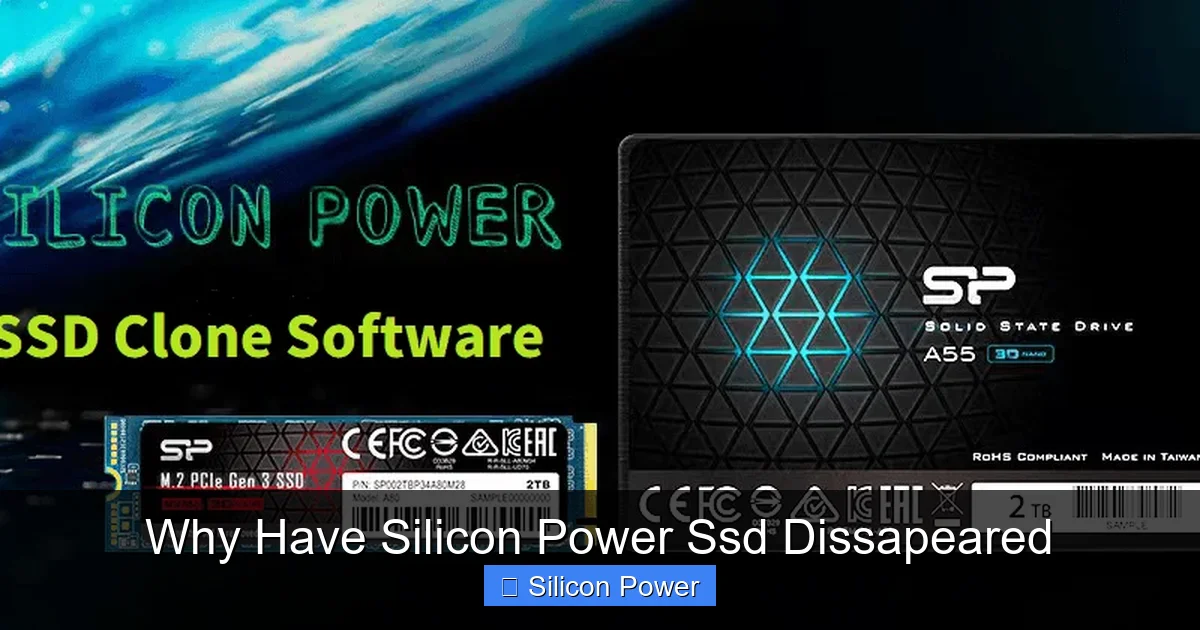
For example, the Silicon Power A55 series, a popular SATA SSD, used TLC NAND but lacked a DRAM cache in some variants. This meant that write speeds could drop dramatically during sustained workloads. While this wasn’t a problem for light users, it became noticeable during large file transfers or when running multiple applications.
Another issue was firmware stability. Some users reported sudden drive failures or corruption after firmware updates. In one notable case, a batch of Silicon Power SSDs experienced bricking issues after a firmware patch, leaving users unable to access their data. While the company issued fixes, the incident damaged trust.
Warranty support also became a concern. Silicon Power offered standard 3-year warranties on most consumer SSDs, but the RMA (return merchandise authorization) process was often slow and cumbersome. Customers reported long wait times for replacements and difficulty getting responses from support teams. In contrast, brands like Samsung and Crucial offered faster turnaround times and sometimes even advance replacement options.
These reliability concerns didn’t affect every user—many people used Silicon Power SSDs for years without issues. But in a market where data security is paramount, even a few negative experiences can tarnish a brand’s reputation. Online forums, Reddit threads, and tech review sites began to reflect this skepticism, with some users advising against Silicon Power for critical systems.
Supply Chain and Manufacturing Challenges
The global semiconductor shortage that began in 2020 hit the storage industry hard. NAND flash memory, the core component of SSDs, became scarce and expensive. This created a ripple effect across the entire supply chain.
For larger manufacturers like Samsung and Micron, the shortage was manageable. They had long-term contracts, in-house production capabilities, and the financial strength to weather the storm. But for smaller players like Silicon Power, the situation was far more difficult.
Silicon Power relies on third-party manufacturers and NAND suppliers, which made them more vulnerable to price fluctuations and supply delays. When NAND prices spiked, they had to either absorb the cost (hurting profits) or pass it on to consumers (making their drives less competitive). Neither option was sustainable in the long run.
Additionally, the shortage led to production bottlenecks. Even if Silicon Power wanted to ramp up SSD production, they couldn’t get the components they needed. This resulted in inconsistent stock levels and frequent out-of-stock situations on retail platforms.
The pandemic also disrupted logistics and shipping. Delays in container shipping, factory shutdowns in Asia, and increased demand for electronics (due to remote work and learning) further strained the supply chain. Silicon Power, which operates primarily out of Taiwan, faced challenges in getting products to global markets on time.
These factors combined to make it harder for Silicon Power to maintain a steady presence in the consumer SSD market. While bigger brands could pivot quickly and secure supply, Silicon Power was left playing catch-up.
Strategic Shift to Niche Markets
As the consumer SSD market became increasingly competitive and volatile, Silicon Power made a strategic decision: pivot away from mainstream consumer drives and focus on niche applications.
Today, Silicon Power’s product lineup is dominated by industrial-grade storage solutions, automotive memory modules, and embedded systems. These markets have different demands—longevity, temperature resistance, and reliability under extreme conditions—and they’re less price-sensitive than the consumer sector.
For example, Silicon Power now supplies memory cards and SSDs for dashcams, surveillance systems, and medical devices. These products are built to last longer and perform consistently in harsh environments. They also come with specialized firmware and support, which justifies higher price points.
This shift makes business sense. Industrial and embedded markets offer more stable demand and longer product lifecycles. Unlike consumer SSDs, which are frequently updated and replaced, industrial storage solutions can remain in use for five to ten years. This provides Silicon Power with more predictable revenue streams.
Additionally, these markets are less crowded. While consumer SSDs are dominated by a handful of global brands, industrial storage has room for specialized players. Silicon Power can differentiate itself through customization, compliance certifications, and technical support—areas where they’ve built expertise over the years.
While this pivot has been successful for the company, it has come at the cost of consumer visibility. Most of their new products aren’t sold through retail channels. Instead, they’re distributed through B2B partners, OEMs, and industrial suppliers. As a result, the average PC builder or laptop upgrader rarely encounters a Silicon Power SSD anymore.
The Role of Marketing and Brand Perception
One of the biggest differences between Silicon Power and its competitors is marketing investment. Brands like Samsung, Crucial, and WD spend millions on advertising, sponsorships, and influencer partnerships. They’re everywhere—on YouTube, in tech magazines, and even in gaming tournaments.
Silicon Power, by contrast, has always been a quiet player. They don’t run flashy ad campaigns or sponsor esports teams. Their presence on social media is minimal, and they rarely engage with the tech community in a meaningful way.
This lack of visibility has hurt their brand perception. In a market where trust is built through reputation and recognition, Silicon Power simply doesn’t have the same cachet as Samsung or Crucial. Even when their products are technically competent, consumers often default to what they know.
Moreover, the rise of tech influencers and review channels has amplified the dominance of major brands. When a popular YouTuber recommends a Samsung SSD, it drives massive sales. Silicon Power rarely gets that kind of exposure, so their products remain under the radar.
This isn’t to say Silicon Power is invisible. They still have a presence on Amazon and other online retailers, but their listings are often buried under more popular brands. Search algorithms favor products with higher sales velocity and better reviews, creating a feedback loop that pushes lesser-known brands further down the list.
What This Means for Consumers
So, where does this leave you, the consumer? If you’re looking for a Silicon Power SSD today, your options are limited. You might find older models like the A55 or S55 on third-party sellers, but availability is spotty. Prices can be inflated due to scarcity, and there’s no guarantee of warranty support.
For most users, this isn’t a major loss. The SSD market is healthier than ever, with a wide range of reliable, high-performance options at competitive prices. Brands like Crucial, Kingston, and Team Group offer budget SSDs that outperform older Silicon Power models in both speed and endurance.
That said, if you already own a Silicon Power SSD, there’s no need to panic. Many of these drives are still functioning perfectly fine. Just make sure to back up your data regularly and monitor drive health using tools like CrystalDiskInfo or SSD Life.
If you’re upgrading an older system and come across a Silicon Power SSD at a great price, it can still be a decent choice for light use. But for new builds or critical systems, it’s worth investing in a more established brand with better support and proven reliability.
Conclusion
The disappearance of Silicon Power SSDs from the consumer market isn’t the result of a single factor, but a combination of market dynamics, technological shifts, and strategic decisions. While they once offered a compelling value proposition, the rise of stronger competitors, supply chain challenges, and a pivot to industrial markets have left their consumer presence diminished.
This doesn’t mean Silicon Power has failed. On the contrary, the company has adapted to a changing landscape by focusing on areas where it can thrive. But for everyday users, the era of affordable, widely available Silicon Power SSDs appears to be over.
The good news? The SSD market is more vibrant and accessible than ever. With so many great options available, consumers have more choice, better performance, and stronger support than at any time in the past. And while Silicon Power may no longer be a household name in consumer storage, its legacy lives on in the countless systems that still rely on its drives every day.
Frequently Asked Questions
Is Silicon Power out of business?
No, Silicon Power is still operational. The company has shifted its focus from consumer SSDs to industrial and embedded storage solutions, which are less visible to the general public.
Why did Silicon Power stop making consumer SSDs?
Silicon Power didn’t completely stop, but they drastically reduced their consumer presence due to intense competition, supply chain challenges, and a strategic decision to focus on niche markets with higher margins and stability.
Are old Silicon Power SSDs safe to use?
Most older Silicon Power SSDs are still functional and safe for non-critical use. However, it’s wise to back up data regularly and monitor drive health, as some models have reported higher failure rates over time.
Will Silicon Power return to the consumer SSD market?
It’s unlikely in the near future. The company’s current strategy centers on industrial applications, and re-entering the competitive consumer market would require significant investment and brand rebuilding.
What caused the decline in Silicon Power SSD popularity?
The decline was driven by stronger competition from brands like Samsung and Crucial, quality concerns in some models, supply chain disruptions, and a lack of marketing investment compared to larger rivals.
Can I get warranty support for my Silicon Power SSD?
Warranty support is still available, but the process can be slow. Contact Silicon Power’s customer service directly, though response times may vary depending on your region and the age of the product.