

Silicon Power SSDs are made by Silicon Power Computer & Communications Inc., a Taiwan-based company known for reliable, budget-friendly storage solutions. With over two decades of experience, they design and manufacture SSDs using quality components and rigorous testing to deliver solid performance for everyday users.
If you’ve ever shopped for a solid-state drive (SSD), chances are you’ve come across the name Silicon Power. Known for delivering solid performance at wallet-friendly prices, Silicon Power SSDs have become a go-to choice for students, home users, and even small businesses looking to upgrade their systems without breaking the bank. But have you ever wondered who actually makes these drives? Where are they built? And how do they manage to offer such good value?
The answer lies with Silicon Power Computer & Communications Inc., a technology company headquartered in Taipei, Taiwan. Founded in 1998, Silicon Power has spent over 25 years building a reputation for reliable, innovative storage solutions. While they may not have the global brand recognition of giants like Samsung or Western Digital, they’ve carved out a strong niche by focusing on affordability, durability, and real-world performance. Their SSDs are designed, engineered, and manufactured with a hands-on approach that ensures quality control from start to finish.
What sets Silicon Power apart is their commitment to in-house development. Unlike some brands that simply rebrand drives made by third-party manufacturers, Silicon Power takes an active role in designing their SSDs. They select the NAND flash memory, choose the controller chips, and fine-tune the firmware to optimize speed, stability, and longevity. This level of involvement allows them to deliver consistent performance across their product lines while keeping costs low.
Key Takeaways
- Silicon Power SSDs are manufactured by Silicon Power Computer & Communications Inc.: A well-established tech company based in Taiwan with a strong reputation in the storage industry.
- They design and assemble their SSDs in-house: From controller selection to firmware tuning, Silicon Power maintains tight control over the production process to ensure consistency and reliability.
- They use quality NAND flash memory and controllers: Partnering with trusted suppliers like Micron, Samsung, and Phison, they ensure their drives offer good endurance and speed.
- Affordable pricing without major compromises: Silicon Power targets budget-conscious consumers and professionals who need dependable storage without overspending.
- Rigorous testing and quality assurance: Every SSD undergoes multiple stress tests before hitting the market, including temperature, power cycle, and data integrity checks.
- Wide range of SSD models for different needs: From SATA to NVMe, entry-level to high-performance, they offer options for laptops, desktops, and gaming rigs.
- Strong global presence and customer support: Available in over 100 countries with localized warranties and responsive technical assistance.
Quick Answers to Common Questions
Who makes Silicon Power SSDs?
Silicon Power SSDs are made by Silicon Power Computer & Communications Inc., a technology company based in Taipei, Taiwan.
Are Silicon Power SSDs reliable?
Yes, they are known for solid reliability, with rigorous testing, quality components, and low failure rates reported by users.
Where are Silicon Power SSDs manufactured?
They are designed and assembled in Taiwan, with components sourced from trusted suppliers like Micron and Phison.
Do Silicon Power SSDs come with a warranty?
Most models include a 3- or 5-year limited warranty, depending on the series and capacity.
Can I use a Silicon Power SSD in my laptop?
Yes, they offer 2.5-inch SATA and M.2 form factors compatible with most laptops and desktops.
📑 Table of Contents
Who Is Silicon Power Computer & Communications Inc.?
Silicon Power Computer & Communications Inc. (often shortened to Silicon Power or SP) is a privately held technology company based in Taipei, Taiwan. Established in 1998, the company began as a manufacturer of flash memory products, including USB drives and memory cards. Over time, they expanded into solid-state drives, portable hard drives, and other data storage solutions. Today, they are one of the leading names in the affordable storage market, with a presence in over 100 countries.
The company operates with a clear mission: to make high-quality digital storage accessible to everyone. They believe that fast, reliable storage shouldn’t be a luxury—it should be available to students, creatives, gamers, and everyday users. This philosophy has guided their product development and pricing strategies, helping them stand out in a crowded market.
Silicon Power’s headquarters and primary manufacturing facilities are located in Taiwan, a country known for its strong electronics manufacturing ecosystem. Being based in Taiwan gives them access to skilled engineers, advanced production equipment, and close partnerships with component suppliers. This geographic advantage allows them to respond quickly to market demands and maintain tight quality control.
Company History and Growth
Silicon Power started small, focusing on USB flash drives and SD cards. Their early success came from offering durable, high-capacity storage at competitive prices. As the demand for SSDs grew in the 2010s, the company pivoted to meet the needs of consumers upgrading from traditional hard drives. They launched their first SSDs around 2012, targeting the budget and mid-range segments.
Over the years, Silicon Power has consistently invested in research and development. They’ve built in-house labs for testing performance, endurance, and compatibility. Their engineering team works closely with component suppliers to optimize firmware and ensure smooth operation across different systems. This hands-on approach has helped them avoid the pitfalls of generic, off-the-shelf designs.
Today, Silicon Power offers a full lineup of SSDs, including SATA III, M.2 SATA, and NVMe PCIe Gen3 and Gen4 models. They’ve also expanded into gaming peripherals, power banks, and mobile accessories, but storage remains their core business.
Global Reach and Market Position
Despite not being a household name like Samsung or Crucial, Silicon Power has built a strong international presence. Their products are sold in North America, Europe, Asia, Australia, and parts of Africa and South America. They partner with major retailers like Amazon, Newegg, Best Buy, and local electronics stores to ensure wide availability.
In terms of market positioning, Silicon Power sits between ultra-budget brands (like KingSpec or Netac) and premium names (like Samsung or WD Black). They offer better build quality and reliability than the cheapest options, while remaining significantly more affordable than high-end brands. This sweet spot has made them a favorite among value-conscious buyers.
How Are Silicon Power SSDs Manufactured?
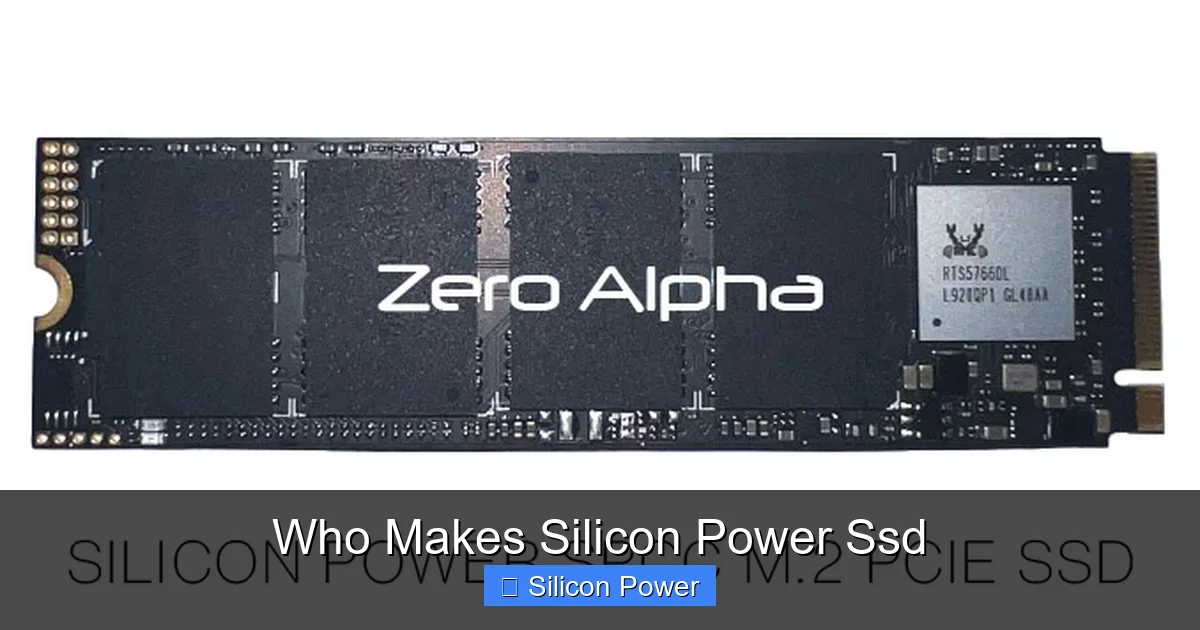
Visual guide about Who Makes Silicon Power Ssd
Image source: zeroalpha.com.au
One of the most common questions about Silicon Power SSDs is: “Who actually builds them?” The short answer is: Silicon Power does—mostly in-house. While they don’t operate their own semiconductor fabrication plants (like Intel or Samsung), they design and assemble their SSDs using a combination of proprietary engineering and trusted third-party components.
The manufacturing process begins with component selection. Silicon Power carefully chooses NAND flash memory and controller chips based on performance, endurance, and cost. They often use 3D TLC (Triple-Level Cell) NAND from reputable suppliers like Micron, Samsung, or Kioxia. These chips offer a good balance of speed, capacity, and longevity.
For controllers, they frequently partner with Phison, a leading SSD controller manufacturer based in Taiwan. Phison controllers are known for their reliability and compatibility, making them a popular choice for brands that prioritize stability over cutting-edge speed. Silicon Power works with Phison to customize firmware for their specific drive models, ensuring optimal performance and error correction.
Design and Engineering Process
Silicon Power’s engineering team plays a central role in the design of each SSD. They start by defining the target market—whether it’s a budget SATA drive for a laptop upgrade or a high-speed NVMe drive for gaming. Based on this, they select the appropriate form factor (2.5-inch, M.2 2280, etc.), interface (SATA or PCIe), and capacity range.
Next, they design the printed circuit board (PCB) layout, ensuring efficient power delivery and signal integrity. They also integrate features like DRAM cache (on higher-end models) to improve performance during heavy workloads. The firmware is then developed in-house or in collaboration with controller partners like Phison. This firmware manages wear leveling, garbage collection, and error correction—key factors in SSD longevity.
Assembly and Quality Control
Once the design is finalized, production begins at Silicon Power’s manufacturing facilities in Taiwan. The SSDs are assembled using automated pick-and-place machines that solder components onto the PCB with precision. After assembly, each drive undergoes a series of tests.
These tests include:
– **Power cycle testing:** Simulating repeated power on/off cycles to check for stability.
– **Temperature testing:** Exposing drives to extreme heat and cold to ensure they operate reliably in different environments.
– **Data integrity checks:** Writing and reading large amounts of data to verify accuracy and detect bad blocks.
– **Performance benchmarking:** Running tools like CrystalDiskMark to confirm read/write speeds meet specifications.
Only drives that pass all tests are packaged and shipped. This rigorous quality assurance process helps Silicon Power maintain a low failure rate and build trust with customers.
Use of Third-Party Components
While Silicon Power designs and assembles their SSDs, they do rely on third-party suppliers for key components. This is common in the tech industry—even major brands like Apple and Dell don’t make every part themselves. What matters is how they integrate and optimize these components.
For example, their use of Phison controllers allows them to leverage proven technology while customizing firmware for better performance. Similarly, sourcing NAND from Micron or Samsung ensures high-quality memory chips with good endurance ratings. Silicon Power doesn’t cut corners here—they choose suppliers known for reliability.
What Makes Silicon Power SSDs Stand Out?
In a market flooded with SSD options, Silicon Power manages to stand out by focusing on real-world value. They don’t chase the highest benchmark scores or the flashiest marketing. Instead, they aim to deliver consistent, reliable performance at a price that makes upgrading accessible.
One of their biggest strengths is affordability. A 1TB Silicon Power SSD often costs 20–30% less than comparable models from Samsung or Crucial. This makes them ideal for users who want to upgrade an older laptop or build a budget gaming PC without overspending.
But low price doesn’t mean low quality. Silicon Power SSDs are built to last. They offer decent endurance ratings (measured in terabytes written, or TBW), and many models come with a 3- or 5-year warranty. For example, the Silicon Power P34A80 NVMe SSD has a 5-year warranty and a TBW rating of up to 600TB for the 1TB model—comparable to more expensive drives.
Performance and Reliability
Silicon Power SSDs deliver solid performance for everyday tasks. Their SATA models, like the SP SSD, offer read speeds up to 560 MB/s and write speeds up to 530 MB/s—matching the limits of the SATA III interface. This is more than enough for booting Windows quickly, loading applications, and transferring files.
For users needing faster speeds, their NVMe drives like the P34A80 or P34A60 offer PCIe Gen3 x4 performance with read speeds up to 3,400 MB/s. These are great for gaming, video editing, and multitasking. While they may not match the peak speeds of Gen4 drives from Samsung or WD, they provide excellent value for the price.
Reliability is another strong point. Silicon Power uses error-correcting code (ECC) and advanced wear-leveling algorithms to extend the life of their drives. They also include features like S.M.A.R.T. monitoring, which lets users track drive health using tools like CrystalDiskInfo.
Target Audience and Use Cases
Silicon Power SSDs are ideal for:
– **Laptop upgrades:** Replacing a slow HDD with a Silicon Power SSD can breathe new life into an older machine.
– **Budget PC builds:** Gamers and content creators on a tight budget can get fast storage without overspending.
– **External storage:** Their portable SSDs are great for photographers and videographers who need durable, fast backups.
– **Everyday computing:** Students, office workers, and home users benefit from faster boot times and app loading.
For example, a student upgrading a 5-year-old laptop with a 500GB Silicon Power SATA SSD will notice a dramatic improvement in performance. Windows boots in under 15 seconds, apps launch instantly, and file transfers are much faster.
Warranty and Customer Support
Silicon Power offers competitive warranties on their SSDs. Most models come with a 3-year limited warranty, while higher-end NVMe drives often have 5 years. This shows confidence in their product quality.
Their customer support is accessible through email and online portals. While not as extensive as some premium brands, they respond reasonably quickly to inquiries about compatibility, troubleshooting, and RMA requests. They also provide detailed product manuals and firmware updates on their website.
Comparison with Other SSD Brands
When choosing an SSD, it’s natural to compare Silicon Power with other brands. Let’s see how they stack up against some popular competitors.
Silicon Power vs. Samsung
Samsung is the gold standard for SSDs, known for top-tier performance and reliability. Their 980 Pro and 990 Pro drives are among the fastest on the market. However, they come at a premium price.
Silicon Power can’t match Samsung’s peak speeds, but they offer 70–80% of the performance at half the cost. For most users, the difference isn’t noticeable in daily use. If you’re building a high-end workstation or need maximum speed for 4K video editing, Samsung is better. But for general use, Silicon Power provides excellent value.
Silicon Power vs. Crucial
Crucial, a subsidiary of Micron, is another strong competitor. Their MX and P series SSDs are well-regarded for performance and reliability. Crucial often uses the same NAND and controllers as Silicon Power, so the underlying technology is similar.
The main difference is branding and price. Crucial tends to be slightly more expensive, but offers better software support (like the Crucial Storage Executive tool). Silicon Power wins on affordability and often has better deals during sales.
Silicon Power vs. Kingston
Kingston is another budget-friendly brand with a wide SSD lineup. Both companies target the same market segment. Kingston’s A2000 and NV2 drives are strong competitors to Silicon Power’s NVMe models.
In terms of performance, they’re very close. Silicon Power often has a slight edge in write speeds, while Kingston may offer better software. Again, price and availability often decide the winner.
Common Misconceptions About Silicon Power SSDs
Despite their popularity, some misconceptions about Silicon Power SSDs persist. Let’s clear them up.
“They’re Just Rebranded Drives”
This is a common myth. While some budget brands simply rebrand generic SSDs, Silicon Power designs their own products. They select components, develop firmware, and conduct their own testing. Their drives are not identical to those from other brands, even if they use similar parts.
“They’re Unreliable”
Silicon Power SSDs have a solid track record. Independent reviews and user feedback show low failure rates. They may not have the same prestige as Samsung, but they’re far from unreliable. Many users report using their Silicon Power drives for years without issues.
“They’re Only for Budget Users”
While affordability is a key selling point, Silicon Power also offers high-performance models. Their NVMe drives are used by gamers, streamers, and content creators. You don’t have to sacrifice speed to save money.
Tips for Buying and Using Silicon Power SSDs
If you’re considering a Silicon Power SSD, here are some practical tips to get the most out of your purchase.
Choose the Right Model
– For older laptops: Go with a 2.5-inch SATA SSD like the SP SSD.
– For modern desktops: Consider an M.2 NVMe drive like the P34A80 for faster speeds.
– For external use: Look at their portable SSDs with USB 3.2 Gen 2 support.
Check Compatibility
Make sure your system supports the interface (SATA or NVMe) and form factor (2.5-inch or M.2). Most modern motherboards support both, but older systems may not have M.2 slots.
Enable TRIM and Update Firmware
After installation, enable TRIM in your operating system to maintain performance over time. Also, check Silicon Power’s website for firmware updates, which can improve stability and compatibility.
Use Monitoring Tools
Download tools like CrystalDiskInfo to monitor your SSD’s health. This helps you catch potential issues early and plan for replacement if needed.
Backup Regularly
No SSD is immune to failure. Always keep backups of important data on an external drive or cloud storage.
Conclusion
So, who makes Silicon Power SSDs? The answer is clear: Silicon Power Computer & Communications Inc., a dedicated storage company based in Taiwan. With over two decades of experience, they design, engineer, and manufacture their SSDs with a focus on affordability, reliability, and real-world performance.
They don’t rely on rebranding or cutting corners. Instead, they use quality components from trusted suppliers, customize firmware for optimal performance, and rigorously test every drive before it reaches consumers. The result is a lineup of SSDs that offer excellent value for everyday users, students, gamers, and professionals on a budget.
While they may not have the flashy marketing or peak speeds of premium brands, Silicon Power delivers what most people actually need: fast, dependable storage at a fair price. Whether you’re upgrading an old laptop or building a new PC, a Silicon Power SSD is a smart, cost-effective choice.
In a world where storage needs are growing faster than ever, having a reliable, affordable option like Silicon Power makes all the difference. So the next time you’re shopping for an SSD, don’t overlook this underrated brand—they might just be the perfect fit for your system.
Frequently Asked Questions
Are Silicon Power SSDs good for gaming?
Yes, especially their NVMe models like the P34A80. They offer fast load times and smooth performance for most games, making them a great budget-friendly option.
Do Silicon Power SSDs use DRAM cache?
Higher-end models like the P34A80 include DRAM cache for better performance. Entry-level SATA drives may use HMB (Host Memory Buffer) instead.
Can I clone my old hard drive to a Silicon Power SSD?
Yes, you can use cloning software like Macrium Reflect or Acronis True Image to transfer your OS and data to the new SSD.
Are Silicon Power SSDs compatible with Mac?
Yes, they work with macOS, but you may need to format the drive using Disk Utility and ensure compatibility with your Mac model.
How long do Silicon Power SSDs last?
With typical use, they can last 5–10 years. Endurance depends on usage, but their TBW ratings and warranties reflect solid longevity.
Where can I buy Silicon Power SSDs?
They are available on Amazon, Newegg, Best Buy, and other major electronics retailers worldwide.