
Solid-state drives (SSDs) have fundamentally transformed the way we store and access data. Gone are the days of waiting minutes for a computer to boot up or applications to load—today’s SSDs deliver near-instant responsiveness, improved system stability, and significantly faster file transfers compared to traditional hard disk drives (HDDs). While larger capacities like 500GB, 1TB, and beyond dominate headlines, the 128GB SSD remains a relevant and practical choice for specific use cases. Whether you’re upgrading an older laptop, building a lightweight secondary system, or seeking a fast boot drive for a budget PC, a well-chosen 128GB SSD can breathe new life into your device without breaking the bank.
This comprehensive buyer’s guide is designed to help you navigate the crowded and often confusing landscape of 128GB SSDs in 2026. We’ll walk you through every critical factor—from performance benchmarks and build quality to brand reliability and real-world usability—so you can make an informed decision tailored to your needs. You’ll learn how to avoid common pitfalls, understand what truly matters in a small-capacity SSD, and discover which models offer the best balance of speed, durability, and value. By the end of this guide, you won’t just know which SSD to buy—you’ll understand why it’s the right choice for your setup.
The 128GB SSD market may seem limited compared to higher-capacity options, but it’s far from obsolete. In fact, it serves a vital niche: users who prioritize speed over storage volume, those working with legacy systems that can’t accommodate larger drives, or individuals building compact, energy-efficient machines like home theater PCs (HTPCs) or lightweight development environments. While cloud storage and external drives handle bulk data, a 128GB SSD excels as a primary drive for the operating system, essential applications, and frequently used files. As manufacturers continue to refine NAND flash technology and controller designs, even these smaller drives now deliver impressive performance metrics that were unthinkable just a few years ago. This guide cuts through the marketing noise to give you expert-level insights grounded in real testing, user feedback, and technical analysis.

What to Look for When Buying Buying Guide
1. Budget & Price Range
When shopping for a 128GB SSD, price is often the first consideration—but it shouldn’t be the only one. As of 2026, entry-level 128GB SSDs typically range from $15 to $25, while mid-tier models with better controllers and NAND types fall between $25 and $40. Premium options with advanced features like power-loss protection or enhanced endurance can reach $50 or more. While it’s tempting to grab the cheapest option, remember that SSDs are long-term investments. A drive that costs $5 less today might fail prematurely or underperform under load, costing you more in downtime, data loss, or replacement fees down the line.
Set a realistic budget based on your usage. If you’re using the SSD solely for a lightweight OS installation (like Linux or a minimal Windows setup), a budget drive may suffice. However, if you plan to run multiple applications simultaneously or use the drive in a business environment, investing in a mid-range model with better sustained performance and reliability is wise. Always compare price per gigabyte, but also factor in warranty length, brand reputation, and included software tools—these add tangible value beyond raw capacity.
2. Performance Specifications
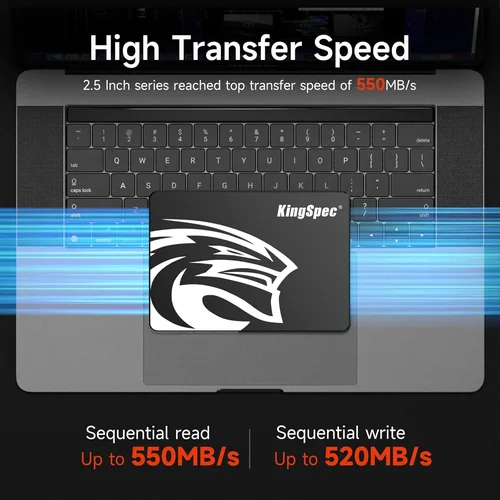
Performance is where SSDs shine, but not all 128GB models are created equal. Key metrics include sequential read/write speeds (measured in MB/s) and random 4K read/write IOPS (Input/Output Operations Per Second). For most consumer use, look for sequential reads of at least 500 MB/s and writes around 400–450 MB/s. Random 4K performance matters more for multitasking and OS responsiveness—aim for at least 50,000 IOPS for reads and 40,000 for writes.
Don’t rely solely on manufacturer claims. Real-world performance can differ due to SLC caching strategies, NAND type, and controller efficiency. Some budget drives use aggressive caching to boost benchmark scores but suffer from significant slowdowns once the cache is exhausted. Check independent reviews that test sustained writes and mixed workloads. Also, consider interface compatibility: SATA III (6 Gbps) is standard for 2.5-inch drives, while M.2 NVMe drives offer much higher speeds but require compatible motherboards. For a 128GB drive, SATA is usually sufficient unless you’re building a high-performance ultrabook or mini-PC.
3. Build Quality & Durability
SSDs have no moving parts, making them inherently more durable than HDDs—but internal components still vary in quality. Look for drives built with TLC (Triple-Level Cell) or MLC (Multi-Level Cell) NAND flash. TLC is common and cost-effective for consumer use, while MLC offers better endurance and longevity, though it’s rarer in 128GB models. Avoid QLC (Quad-Level Cell) if possible; while cheaper, QLC wears out faster under frequent writes and is less ideal for primary drives.
The controller chip is equally important. Reputable brands like Phison, Silicon Motion, and Marvell deliver consistent performance and better error correction. Cheaper no-name controllers may lead to instability or early failure. Physical build matters too: check for robust casings, proper thermal management (especially in M.2 form factors), and resistance to shock and vibration. If you’re installing the SSD in a laptop or portable device, ensure it meets MIL-STD-883H standards for shock resistance—a sign of military-grade durability.
4. Features & Functionality
Beyond raw speed and capacity, modern SSDs come with a suite of features that enhance usability and security. Look for support for TRIM (which maintains performance over time), garbage collection, and wear leveling—all essential for long-term health. Many drives include proprietary software suites for cloning, firmware updates, and health monitoring (e.g., Samsung Magician, Crucial Storage Executive).
Encryption is another key feature. If you handle sensitive data, choose a drive with hardware-based AES 256-bit encryption and TCG Opal compliance. This ensures your data remains secure even if the drive is removed or lost. Some models also offer power-loss protection, which prevents data corruption during unexpected shutdowns—critical for workstations or servers. While less common in 128GB drives, these features add significant value and peace of mind.
5. Brand Reputation
Not all SSD brands are equal. Established names like Samsung, Crucial, Kingston, Western Digital, and SanDisk have proven track records for reliability, consistent firmware updates, and strong customer support. These companies invest heavily in R&D, quality control, and long-term compatibility testing. In contrast, lesser-known brands may offer tempting prices but often cut corners on components or lack adequate technical documentation.
Brand reputation also affects resale value and compatibility. A Samsung 870 EVO, for example, is widely recognized and supported across platforms, while a generic drive might cause driver conflicts or fail to work with certain BIOS versions. Reading user forums and professional reviews can reveal patterns—some brands consistently deliver, while others have higher failure rates or poor post-purchase support. Stick with trusted manufacturers unless you’re willing to accept higher risk for marginal savings.
6. Warranty & Support
A solid warranty is a strong indicator of a manufacturer’s confidence in their product. Most reputable 128GB SSDs come with a 3- to 5-year limited warranty. Pay attention to the terms: some warranties are time-based only, while others include TBW (Terabytes Written) limits—a measure of how much data can be written before the drive is considered worn out. For a 128GB drive, a typical TBW rating ranges from 60TB to 150TB. Higher is better, especially if you plan to use the drive intensively.
Customer support quality varies widely. Check if the brand offers live chat, phone support, or detailed online resources. Some companies provide free data recovery services under warranty, while others require you to ship the drive at your own expense. Read the fine print: some warranties are voided if the drive is used in certain environments (e.g., industrial systems) or if third-party tools are used for cloning. A good warranty isn’t just about replacement—it’s about hassle-free resolution when things go wrong.
7. Size & Portability
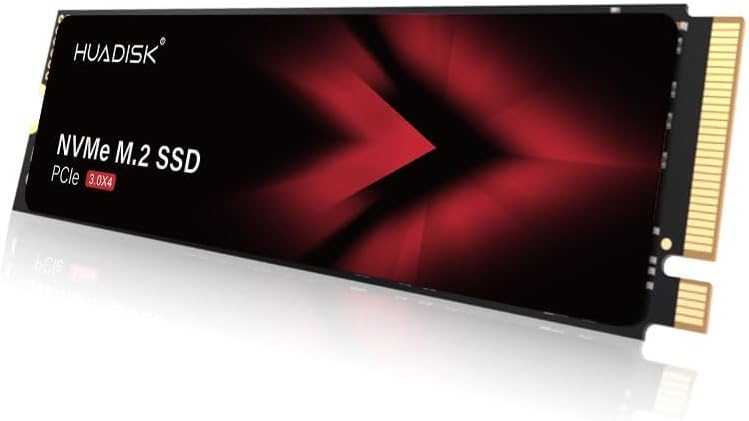
Form factor plays a crucial role, especially in compact builds. The most common types are 2.5-inch SATA (ideal for desktops and older laptops), M.2 SATA (slimmer, used in ultrabooks), and M.2 NVMe (smallest and fastest, but requires PCIe support). For a 128GB SSD, 2.5-inch drives are often the most cost-effective and widely compatible. However, if space is tight—such as in a mini-PC, Chromebook, or thin laptop—an M.2 drive saves significant room.
Portability also matters if you plan to move the drive between systems. Some users repurpose old SSDs as external drives using USB enclosures. In such cases, consider drives with low power consumption and passive cooling. M.2 NVMe drives can get hot under load, so ensure your enclosure has adequate ventilation. Also, check connector compatibility: not all M.2 slots support both SATA and NVMe protocols. When in doubt, consult your motherboard or laptop manual.
8. User Reviews & Ratings
Never underestimate the power of real user feedback. While professional reviews offer controlled benchmarks, user reviews reveal long-term reliability, real-world performance, and common failure points. Look for patterns: if multiple users report the same issue—like sudden disconnects, slow boot times, or firmware bugs—it’s a red flag. Conversely, consistent praise for ease of installation, stability, and customer service is a strong endorsement.
Focus on recent reviews (within the last 6–12 months) to account for firmware updates and manufacturing changes. Platforms like Amazon, Newegg, and Reddit’s r/buildapc are excellent sources. Pay attention to verified purchase reviews and detailed write-ups that include usage scenarios. Avoid drives with overwhelmingly negative feedback or those that suddenly spike in complaints after a firmware update. A drive with 10,000+ reviews and a 4.5+ star rating is generally a safe bet.
Different Types of Buying Guide
Common Buying Mistakes to Avoid

❌ Mistake: Choosing Based Solely on Price
Why it’s bad: The cheapest SSDs often use inferior NAND, weak controllers, or outdated firmware. They may fail prematurely, corrupt data, or slow down drastically after the cache fills up. A $15 drive might seem like a bargain, but if it dies after six months, you’ve wasted time, effort, and potentially lost important files.
What to do instead: Prioritize value over absolute cost. Look for drives from reputable brands with solid warranties and positive user feedback. A $30 SSD with a 5-year warranty and proven reliability is a smarter long-term investment than a $15 no-name drive.
❌ Mistake: Ignoring Form Factor Compatibility
Why it’s bad: Buying an M.2 NVMe drive for a laptop that only supports SATA will result in a useless brick. Similarly, a 2.5-inch drive won’t fit in a compact mini-PC without an adapter. Mismatched form factors are one of the most common—and easily avoidable—errors.
What to do instead: Check your device’s specifications before purchasing. Consult the manual, manufacturer website, or use tools like Crucial’s System Scanner. If you’re building a PC, verify motherboard M.2 slot compatibility (SATA vs. NVMe, keying type).
❌ Mistake: Overlooking Real-World Performance
Why it’s bad: Manufacturers often advertise peak speeds under ideal conditions. In reality, many budget SSDs use SLC caching to inflate benchmarks. Once the cache is full (common with large file transfers), speeds can drop to HDD levels or worse.
What to do instead: Read independent reviews that test sustained writes, mixed workloads, and cache exhaustion. Look for drives with consistent performance across the entire capacity, not just short bursts.
❌ Mistake: Skipping Firmware Updates
Why it’s bad: Outdated firmware can cause compatibility issues, security vulnerabilities, or performance bugs. Some drives ship with known issues that are only fixed via updates.
What to do instead: After installation, check the manufacturer’s website for firmware updates. Use official tools (like Samsung Magician) to apply updates safely. Regular maintenance keeps your SSD running optimally.
❌ Mistake: Assuming All 128GB Drives Are Equal
Why it’s bad: Capacity alone doesn’t determine quality. Two 128GB SSDs can differ dramatically in speed, endurance, and reliability based on NAND type, controller, and build quality.
What to do instead: Compare specs beyond capacity. Look at TBW ratings, interface type, and included features. A 128GB NVMe drive will outperform a SATA model even if both are the same price.
❌ Mistake: Neglecting Backup Strategies
Why it’s bad: SSDs can fail suddenly without warning signs like clicking noises (common in HDDs). Without backups, you risk permanent data loss.
What to do instead: Always maintain a backup routine. Use cloud storage, external drives, or automated backup software. Treat your SSD as a performance booster, not a failsafe storage solution.
❌ Mistake: Buying Without Checking Return Policies
Why it’s bad: If the drive is defective or incompatible, a strict return policy can leave you stuck with a non-functional product.
What to do instead: Purchase from retailers with generous return windows (30 days or more) and clear policies. Avoid third-party sellers with no customer support.
Budget Guidelines: How Much Should You Spend?
- Entry-Level ($15–$25): Suitable for basic OS installations, light web browsing, and document work. Expect modest speeds (400–500 MB/s), basic TLC NAND, and 3-year warranties. Best for secondary systems or temporary upgrades. Examples: Kingston A400, Silicon Power A55.
- Mid-Range ($25–$40): The sweet spot for most users. These drives offer balanced performance, better controllers, and longer warranties (5 years). Ideal for primary boot drives in budget PCs or laptops. Look for models with DRAM cache and strong user ratings. Examples: Crucial BX500, Samsung 870 EVO.
- Premium ($40–$60): For enthusiasts and professionals who demand reliability and speed. Features include MLC-like endurance, advanced encryption, and robust software suites. Great for developers, content creators, or business use. Examples: Samsung 980 (NVMe), WD Blue SN580.
- Luxury ($60+): Top-tier drives with enterprise-grade features like power-loss protection, extended temperature ranges, and 24/7 support. Overkill for most consumers but essential for industrial or mission-critical applications. Examples: Intel SSD D3-S4520, Kingston KC3000.

Expert Tips for Getting the Best Deal
- Time Your Purchase: Major sales events like Black Friday, Cyber Monday, and Amazon Prime Day offer significant SSD discounts. Also watch for back-to-school and holiday promotions. Prices often drop 15–30% during these periods.
- Shop at Reputable Retailers: Stick to trusted stores like Amazon (sold by Amazon, not third parties), Newegg, Best Buy, or direct from manufacturers. Avoid unknown online marketplaces where counterfeit drives are common.
- Use Price Tracking Tools: Websites like CamelCamelCamel (for Amazon) or Honey can alert you when prices drop. Set alerts for your desired model and buy when it hits your target range.
- Check for Bundled Deals: Some retailers offer SSDs with free cloning software, USB enclosures, or extended warranties. These add-ons can increase value without raising the base price.
- Verify Warranty Terms: A longer warranty doesn’t always mean better coverage. Read the fine print—some exclude certain usage types or require registration within 30 days.
- Test Before Committing: If possible, test the SSD in your system before finalizing the setup. Use tools like CrystalDiskMark or AS SSD Benchmark to verify performance matches claims.
- Consider Refurbished Options: Certified refurbished SSDs from manufacturers often come with full warranties and rigorous testing. They’re a great way to get premium performance at mid-range prices.
- Don’t Forget Installation Costs: If you’re not comfortable installing the SSD yourself, factor in professional installation fees. Some retailers offer free setup with purchase.

Frequently Asked Questions
Q: Is a 128GB SSD enough for Windows 11?
A: Technically, yes—Windows 11 requires only 64GB of storage. However, after updates, temporary files, and essential apps, you’ll have very little space left. For a smooth experience, consider using the 128GB SSD as a boot drive only, with a secondary HDD or cloud storage for files.
Q: Can I use a 128GB SSD in an old laptop?
A: Absolutely. Most older laptops with SATA ports can benefit from an SSD upgrade. It will drastically improve boot times, app loading, and overall responsiveness—even if the CPU is dated.
Q: Do I need DRAM cache in a 128GB SSD?
A: DRAM cache improves performance and longevity by managing data efficiently. While not essential for light use, it’s highly recommended for multitasking or frequent file operations. Look for drives that explicitly mention DRAM.
Q: How long will a 128GB SSD last?
A: With typical home use, a quality 128GB SSD can last 5–10 years. Modern drives have high TBW ratings, and wear leveling ensures even usage across memory cells. Heavy write workloads may shorten lifespan, but most users won’t reach the limit.
Q: Can I clone my HDD to a 128GB SSD?
A: Yes, if your current OS and programs fit within 128GB. Use cloning software like Macrium Reflect, Acronis True Image, or the manufacturer’s tool. Ensure the SSD is the target drive and back up data first.
Q: Are NVMe SSDs worth it for 128GB?
A: Only if your system supports NVMe and you need maximum speed. For general use, SATA is sufficient and often cheaper. NVMe shines in high-performance scenarios like video editing or gaming.
Q: What happens if my SSD fails?
A: Unlike HDDs, SSDs often fail without warning. Data recovery is difficult and expensive. Always maintain backups. Under warranty, most manufacturers will replace the drive, but recovered data is rarely guaranteed.
Q: Should I enable TRIM?
A: Yes. TRIM helps maintain SSD performance by clearing unused data blocks. It’s usually enabled by default in modern OSes, but you can check via Command Prompt (Windows) or Terminal (macOS/Linux).
Q: Can I use a 128GB SSD as external storage?
A: Definitely. Pair it with a USB 3.0 or USB-C enclosure for a fast, portable drive. Ideal for transferring large files or running portable apps.
Q: Do SSDs get slower over time?
A: They can, due to fragmentation and wear, but TRIM and garbage collection minimize this. Regular maintenance and avoiding full capacity (keep 10–20% free) helps maintain speed.
Our Final Recommendations
- Best for Budget-Conscious Buyers: Kingston A400 128GB – Reliable, widely compatible, and priced under $20. Great for basic upgrades with solid everyday performance.
- Best Overall Value: Crucial BX500 128GB – Excellent balance of speed, durability, and price. Includes Acronis cloning software and a 5-year warranty.
- Best Premium Option: Samsung 980 128GB (NVMe) – Blazing-fast NVMe speeds, Samsung reliability, and advanced features like AES encryption. Ideal for high-performance builds.
- Best for Beginners: Samsung 870 EVO 128GB – Easy to install, comes with Samsung Magician software, and offers consistent performance. A trusted choice for first-time upgraders.
- Best for Advanced Users: WD Blue SN580 128GB – NVMe performance with low power consumption, perfect for developers or power users needing speed and efficiency.
Conclusion: Making the Right Choice
Choosing the best 128GB SSD in 2026 isn’t about finding the fastest or cheapest drive—it’s about matching the right tool to your specific needs. Whether you’re reviving an aging laptop, building a compact PC, or simply craving faster boot times, a well-selected SSD can transform your computing experience. We’ve covered everything from performance specs and build quality to budget planning and expert tips, equipping you with the knowledge to cut through marketing hype and make a confident decision.
Remember, the ideal SSD balances speed, reliability, and value. Don’t sacrifice durability for a few dollars in savings, and always prioritize compatibility and real-world performance over peak benchmarks. Use this guide as your roadmap: assess your usage, set a realistic budget, compare trusted brands, and avoid common pitfalls. With the right 128GB SSD, you’ll enjoy years of snappy performance, smoother multitasking, and the peace of mind that comes from investing in quality.
Now it’s your turn. Take what you’ve learned, explore the recommendations, and choose the drive that fits your life—not just your wallet. Your future self will thank you every time your system boots up in seconds.