

Backing up your SSD isn’t just a smart move—it’s essential. Whether you’re a creative professional working with large video files, a student saving years of research, or someone who simply values their digital photos and documents, losing data from a solid-state drive can be devastating. Unlike traditional hard drives, SSDs have no moving parts, which makes them faster and more durable, but they’re not immune to failure. In fact, SSDs can fail silently due to firmware bugs, power surges, or wear from repeated writes. That’s why having a reliable backup strategy is critical in 2026 and beyond.
This comprehensive buying guide is designed to help you navigate the complex world of SSD backup solutions. We’ll walk you through everything you need to know—from understanding the different types of backup methods and hardware options to evaluating performance, reliability, and cost. Whether you’re looking for an external SSD, a NAS system, cloud storage, or a hybrid approach, we’ve got you covered. By the end of this guide, you’ll be equipped with the knowledge to choose the best backup solution for your specific needs, budget, and usage patterns.
The market for SSD backup solutions has evolved rapidly over the past few years. With the rise of NVMe technology, ultra-fast transfer speeds, and increasingly affordable high-capacity drives, consumers now have more options than ever. At the same time, cloud services have become more robust, offering seamless syncing and versioning. However, with so many choices—external SSDs, docking stations, RAID arrays, and software-based backup tools—it’s easy to feel overwhelmed. This guide cuts through the noise, offering expert insights, real-world comparisons, and practical advice to help you make an informed decision.
What to Look for When Buying Buying Guide
1. Backup Method: Local vs. Cloud vs. Hybrid
The first and most important decision is choosing your backup method. Local backups involve storing data on physical devices like external SSDs or NAS systems. These offer fast access, full control, and no recurring fees, but they’re vulnerable to physical damage, theft, or disasters like fire or flooding. Cloud backups, on the other hand, store your data on remote servers managed by providers like Backblaze, Google Drive, or Dropbox. They offer offsite protection and accessibility from anywhere, but rely on internet speed and may incur ongoing subscription costs. Hybrid solutions combine both approaches, giving you the best of both worlds—local speed and cloud safety.
For most users, a hybrid approach is ideal. Use an external SSD for daily backups and quick restores, and sync critical files to the cloud for disaster recovery. This 3-2-1 backup rule—three copies of your data, on two different media, with one offsite—is the gold standard recommended by data recovery experts.
2. Performance Specifications
When it comes to SSD backups, speed matters—especially if you’re backing up large files like 4K videos, RAW photos, or virtual machine images. Look for drives with high read/write speeds, ideally over 500 MB/s for SATA SSDs and 2,000 MB/s or more for NVMe models. NVMe SSDs, which use the PCIe interface, are significantly faster than SATA-based drives and are ideal for power users and professionals.
Also consider interface compatibility. USB 3.2 Gen 2 (10 Gbps) and USB4 (40 Gbps) offer excellent speeds, while Thunderbolt 3 and 4 are top-tier for Mac users and high-performance workflows. Make sure your computer supports the interface your backup drive uses. A Thunderbolt 4 SSD won’t reach its full potential on a USB 3.0 port.
3. Storage Capacity
Capacity is a key factor that directly impacts how much data you can back up. For casual users with documents, photos, and light media, a 1TB SSD may suffice. However, creative professionals working with video editing, 3D modeling, or large datasets should consider 2TB or higher. Keep in mind that SSDs perform best when they’re not nearly full—aim to use no more than 70–80% of the drive’s capacity to maintain speed and longevity.
Also, consider future-proofing. If you’re buying a backup drive today, think about your data growth over the next 2–3 years. A 2TB drive might seem excessive now, but it could save you from needing an upgrade soon. Some users opt for modular systems like RAID enclosures that allow them to add drives as needed.
4. Build Quality & Durability
Since backup drives are often transported or stored in less-than-ideal conditions, durability is crucial. Look for SSDs with ruggedized designs—shock-resistant casings, water resistance, and temperature tolerance. Many premium external SSDs now feature IP67 or IP68 ratings, meaning they can survive drops, dust, and even brief submersion in water.
Internal components also matter. High-quality NAND flash memory (like 3D TLC or QLC) and robust controllers contribute to longer lifespan and better error correction. Avoid no-name brands that cut corners on components—your backup drive should be as reliable as your primary SSD.
5. Encryption & Security Features
Your backup contains sensitive personal or professional data, so security is non-negotiable. Look for drives with hardware-based AES 256-bit encryption, which protects data even if the drive is lost or stolen. Some models include fingerprint scanners or PIN protection for an extra layer of security.
Software encryption is better than nothing, but hardware encryption is faster and more secure because it’s handled by the drive’s controller, not your computer’s CPU. Also, ensure the drive supports secure erase functions, which allow you to wipe data permanently when needed.
6. Software & Automation
A great backup drive is only as good as the software that manages it. Look for solutions that offer automated, scheduled backups so you don’t have to remember to do it manually. Features like incremental backups (only copying changed files), versioning (keeping multiple versions of files), and file recovery wizards can save you hours of frustration.
Some drives come with proprietary software, while others rely on third-party tools like Time Machine (macOS), File History (Windows), or open-source options like rsync or Duplicati. Evaluate whether the included software meets your needs or if you’ll need to use your own. Cloud services often include excellent backup apps with intuitive interfaces and cross-device syncing.
7. Brand Reputation & Reliability
Not all SSD brands are created equal. Stick with reputable manufacturers known for quality and reliability, such as Samsung, SanDisk, Crucial, Western Digital, Seagate, and Kingston. These companies invest in rigorous testing, offer strong warranties, and provide consistent firmware updates.
Check independent reviews and failure rate reports from sources like Backblaze, which publishes annual drive reliability statistics. A brand might offer a cheap drive, but if it has a high failure rate, it’s not worth the risk. Your backup drive should be a long-term investment, not a disposable gadget.
8. Warranty & Support
A solid warranty is a sign of confidence in a product’s durability. Most quality SSDs come with 3- to 5-year limited warranties, covering defects and premature failure. Some premium models even offer data recovery services or expedited replacement programs.
Customer support is equally important. Can you reach a human quickly? Is there a knowledge base or community forum? Brands like Samsung and Crucial offer excellent support, while lesser-known brands may leave you stranded. Before buying, check the warranty terms and support options—especially if you’re relying on the drive for critical backups.
Different Types of Buying Guide

Common Buying Mistakes to Avoid

❌ Mistake: Relying on a Single Backup
Why it’s bad: Putting all your eggs in one basket is risky. If your only backup fails—whether due to hardware failure, corruption, or physical damage—you could lose everything. SSDs, while reliable, can still fail without warning.
What to do instead: Follow the 3-2-1 rule: keep three copies of your data, on two different types of media (e.g., SSD and cloud), with one copy stored offsite. This dramatically reduces the risk of total data loss.
❌ Mistake: Ignoring Drive Health Monitoring
Why it’s bad: SSDs don’t make noise when they’re failing like old hard drives. Without monitoring, you might not realize your backup drive is degrading until it’s too late.
What to do instead: Use tools like CrystalDiskInfo (Windows), DriveDx (macOS), or the manufacturer’s own software to check SSD health, temperature, and wear level. Set up alerts for critical thresholds.
❌ Mistake: Buying the Cheapest Option
Why it’s bad: Budget SSDs often use lower-quality NAND flash and lack advanced features like encryption or ruggedization. They may fail sooner or offer slower speeds, defeating the purpose of a reliable backup.
What to do instead: Invest in a reputable brand with good reviews and a solid warranty. Think of your backup drive as insurance—cheaping out could cost you far more in lost data.
❌ Mistake: Not Testing Restores
Why it’s bad: A backup is only useful if you can restore from it. Many users assume their backups work until they need them—and then discover corruption, incomplete files, or software incompatibility.
What to do instead: Periodically test your backup by restoring a few files to a different device. This ensures your data is intact and your recovery process works when it matters most.
❌ Mistake: Overlooking Interface Compatibility
Why it’s bad: A Thunderbolt 4 SSD will be bottlenecked on a USB 3.0 port, and a USB-C drive may not work with older laptops without an adapter. Mismatched interfaces lead to frustration and wasted money.
What to do instead: Check your computer’s ports and supported standards before buying. If you’re unsure, opt for a drive with multiple interface options or include a compatible adapter in your purchase.
❌ Mistake: Skipping Encryption
Why it’s bad: If your backup drive is lost or stolen, unencrypted data can be accessed by anyone. This is especially risky for laptops, external drives, or cloud accounts with weak passwords.
What to do instead: Always enable hardware encryption if available, or use strong software encryption. Pair it with a unique, complex password and two-factor authentication for cloud services.
❌ Mistake: Not Planning for Long-Term Storage
Why it’s bad: SSDs can lose data over time if not powered on regularly—a phenomenon known as data retention decay. Storing a backup drive in a closet for years without use could result in corrupted files.
What to do instead: Power on and verify your backup drive at least once a year. For archival purposes, consider using M-DISC or cloud storage with versioning, which are better suited for long-term retention.
Budget Guidelines: How Much Should You Spend?
- Entry-Level ($80 – $150): Ideal for students, casual users, or those backing up documents and photos. Look for 500GB–1TB SATA-based external SSDs from brands like SanDisk or Crucial. Expect decent speeds (400–550 MB/s) and basic durability. These drives are great for occasional backups but may lack advanced features like encryption or ruggedization.
- Mid-Range ($150 – $350): The sweet spot for most users. This tier includes 1TB–2TB NVMe SSDs with USB 3.2 Gen 2 or Thunderbolt support, offering speeds up to 2,000 MB/s. Models from Samsung (T7 Shield), WD (My Passport SSD), and Sabrent often fall here. You’ll get better build quality, hardware encryption, and software suites for automated backups.
- Premium ($350 – $700): For professionals and power users. These are high-capacity (2TB–4TB), high-speed NVMe drives with rugged designs, IP ratings, and Thunderbolt 4 support. Examples include the Samsung X5 and G-Technology G-DRIVE. They’re built for demanding workflows like 8K video editing or large database backups.
- Luxury ($700+): Top-tier solutions for businesses, studios, or enthusiasts. This includes enterprise-grade NAS systems with RAID 5/6, multi-bay enclosures, and hybrid cloud integration. Products like Synology DS923+ or QNAP TS-464 offer scalability, redundancy, and remote access. Cloud subscriptions for unlimited storage (e.g., Backblaze B2) also fall into this category for heavy users.

Expert Tips for Getting the Best Deal
- Buy During Sales Events: Major shopping holidays like Black Friday, Cyber Monday, and Amazon Prime Day offer significant discounts on SSDs and backup systems. Sign up for deal alerts from retailers like Newegg, B&H, or Best Buy to catch flash sales.
- Consider Refurbished or Open-Box: Certified refurbished drives from manufacturers like Samsung or Apple often come with full warranties and can save you 20–30%. Just ensure they’re sold directly by the brand or a trusted retailer.
- Bundle with Cloud Storage: Some services offer free cloud storage with hardware purchases. For example, Backblaze includes 30 days of free backup with certain SSD purchases. Look for these promotions to maximize value.
- Check Return Policies: Before buying, review the return window and restocking fees. A 30-day return policy gives you time to test the drive and ensure it works with your setup.
- Use Price Tracking Tools: Websites like CamelCamelCamel (for Amazon) or Honey can alert you when prices drop. Set a target price and wait for the deal.
- Evaluate Total Cost of Ownership: Cloud backups have recurring fees, while local drives are one-time purchases. Calculate which is cheaper over 3–5 years. For example, a $200 SSD may be cheaper than $10/month cloud storage over time.
- Test Before Committing: If possible, try the drive with a small backup first. Check speeds, software usability, and compatibility. This helps avoid buyer’s remorse.
- Prioritize Warranty Length: A longer warranty often indicates higher build quality. If two drives are similarly priced, choose the one with the better warranty and support.

Frequently Asked Questions
Q: Can I use my primary SSD as a backup drive?
A: Technically yes, but it’s not recommended. Using the same drive for active work and backups increases wear and risk of failure. Always use a separate drive for backups to ensure data safety.
Q: How often should I back up my SSD?
A: It depends on how often your data changes. For most users, daily or weekly automated backups are sufficient. Professionals working on active projects may need real-time or hourly backups.
Q: Are external SSDs safe for long-term storage?
A: Not ideal. SSDs can lose data if unpowered for extended periods (typically 1–2 years). For archival storage, consider cloud services or tape drives, which are better suited for long-term retention.
Q: Do I need RAID for SSD backups?
A: RAID (Redundant Array of Independent Disks) provides redundancy and performance benefits but adds complexity and cost. For most home users, a single external SSD with cloud backup is sufficient. RAID is better for businesses or those needing high availability.
Q: Can I back up an SSD to another SSD?
A: Absolutely. In fact, SSD-to-SSD backups are faster and more reliable than using traditional hard drives. Just ensure the backup SSD has equal or greater capacity.
Q: What’s the difference between cloning and file-based backup?
A: Cloning creates an exact copy of your entire drive, including the operating system, which is useful for system recovery. File-based backup copies individual files and folders, offering more flexibility and versioning. Use cloning for full system restores and file backup for data protection.
Q: Is cloud backup secure?
A: Reputable cloud providers use strong encryption and security practices. However, you should still enable two-factor authentication and use strong passwords. For sensitive data, consider client-side encryption tools like Cryptomator before uploading.
Q: How do I back up a failing SSD?
A: Use disk cloning software like Macrium Reflect or Clonezilla to create a sector-by-sector copy. Work quickly, as the drive may fail completely at any moment. Once cloned, replace the failing drive immediately.
Q: Can I use a USB hub for multiple backup drives?
A: It’s possible, but not recommended for high-speed NVMe drives. USB hubs can introduce bottlenecks and power issues. For best performance, connect each drive directly to a USB port on your computer.
Q: What happens if my backup drive fails?
A: If you’ve followed the 3-2-1 rule, you should have another copy. Restore from your cloud backup or secondary local drive. This is why redundancy is so important—no single point of failure.
Our Final Recommendations
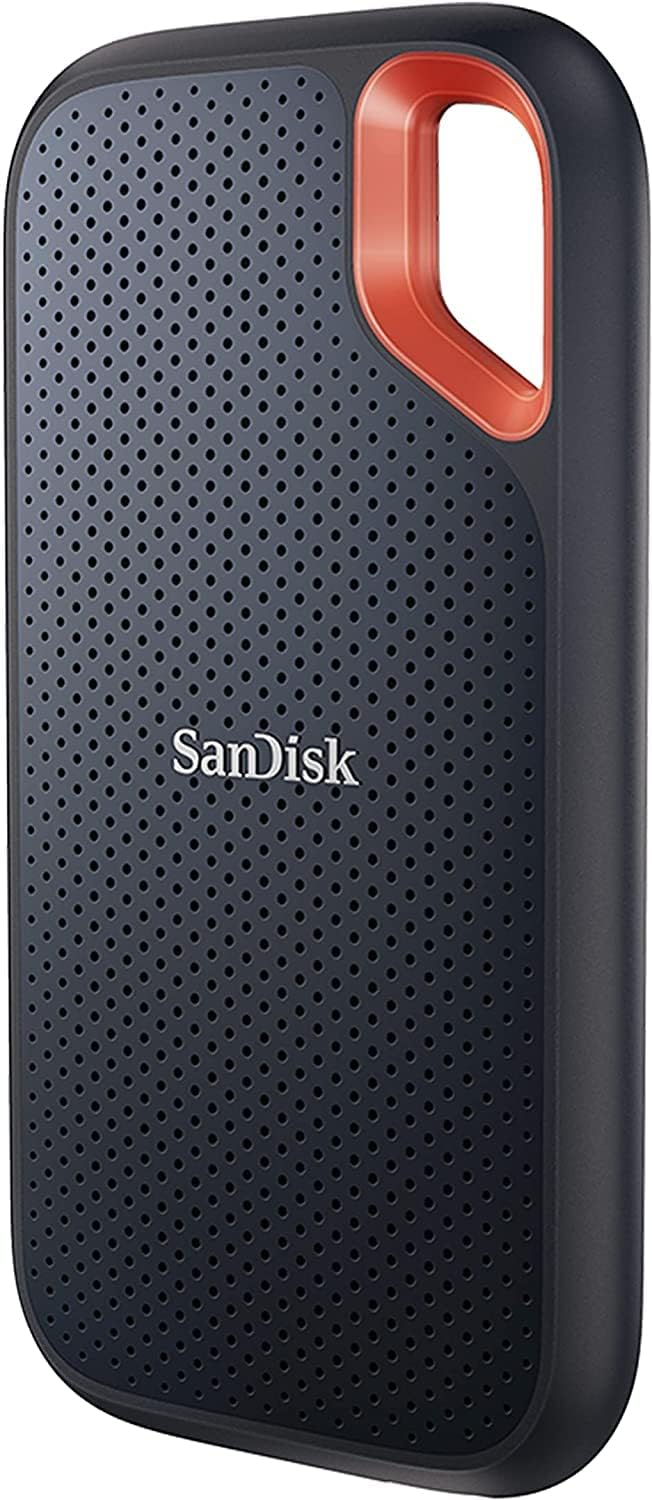
- Best for Budget-Conscious Buyers: SanDisk Extreme Portable SSD (1TB) – At around $100, this drive offers excellent value with 1,050 MB/s speeds, IP55 rating, and hardware encryption. Perfect for students and casual users.
- Best Overall Value: Samsung T7 Shield (2TB) – Combines speed (1,050 MB/s), durability (IP65), and reliability in a compact design. Priced around $200, it’s a top pick for most users.
- Best Premium Option: Samsung X5 (2TB) – A Thunderbolt 3 NVMe SSD with blazing 2,800 MB/s speeds. Ideal for video editors and professionals who need maximum performance. Priced around $600.
- Best for Beginners: WD My Passport SSD (1TB) – Easy-to-use software, sleek design, and solid performance. Great for those new to backups who want a plug-and-play solution.
- Best for Advanced Users: Synology DS923+ NAS with 4x 2TB SSDs in RAID 5 – Offers redundancy, remote access, and scalability. Ideal for power users, families, or small teams needing centralized, protected storage.
Conclusion: Making the Right Choice
Choosing the best way to backup your SSD isn’t just about picking the fastest or cheapest drive—it’s about creating a resilient, sustainable strategy that protects your data for years to come. We’ve covered the key factors: backup method, performance, capacity, durability, security, software, brand reputation, and support. We’ve compared different types of solutions, highlighted common pitfalls, and offered budget-friendly and premium recommendations.
Remember, the best backup system is one you actually use. Automate it, test it, and maintain it. Whether you go with a rugged external SSD, a powerful NAS, or a seamless cloud service, the goal is the same: peace of mind. Your data is valuable—don’t leave its safety to chance.
Take the time to assess your needs, prioritize reliability over cost, and invest in a solution that grows with you. And when in doubt, follow the 3-2-1 rule. With the right backup strategy, you’ll never have to worry about losing your most important files again.