

When it comes to upgrading or replacing the storage in your Mac, choosing the right solid-state drive (SSD) can feel like navigating a tech labyrinth. With Apple’s increasing integration of proprietary storage solutions—especially in newer MacBook Air, MacBook Pro, and Mac mini models—many users are left wondering whether they can even upgrade their SSD at all. The truth? It depends. But for those with compatible Macs—or those looking to replace an external drive—selecting the best SSD isn’t just about speed or capacity. It’s about compatibility, longevity, performance under real-world workloads, and value for money.
This comprehensive buying guide is designed to cut through the noise and deliver expert-level insights tailored specifically for Mac users in 2026. Whether you’re a creative professional editing 8K video on a MacBook Pro, a student running multiple apps on a decade-old iMac, or a developer compiling code on a Mac Studio, your storage needs are unique—and so should your SSD choice be. We’ll walk you through every critical factor, from interface types and form factors to endurance ratings and thermal management. You’ll learn how to avoid costly mistakes, understand what “performance” really means in everyday use, and discover which drives offer the best blend of reliability, speed, and price.
The SSD market has evolved dramatically over the past few years. NVMe drives have become the standard, SATA is fading into legacy status, and Apple’s shift toward soldered storage in many modern Macs has made aftermarket upgrades more complex—but not impossible. External SSDs now rival internal ones in speed thanks to Thunderbolt 4 and USB4, while cloud integration and encryption features add new layers of functionality. This guide covers both internal and external options, helping you make an informed decision regardless of your Mac model, workflow, or budget. By the end, you’ll know exactly what to look for—and what to avoid—when shopping for your next SSD.
What to Look for When Buying Buying Guide
1. Compatibility with Your Mac Model
Before considering speed or capacity, the most crucial factor is whether the SSD will physically and electronically work with your Mac. Apple uses different storage interfaces across its product line. Older Macs (pre-2016) often used standard SATA-based SSDs in 2.5-inch form factors, which are widely compatible with third-party drives. However, starting around 2016, Apple transitioned to proprietary blade-style NVMe SSDs in many MacBook Air and MacBook Pro models. These use a unique connector and firmware that limits compatibility to specific drives or adapters.
For example, a 2017 MacBook Pro 13″ uses an Apple-specific NVMe interface that requires either an original Apple SSD or a compatible third-party drive like those from OWC (Other World Computing) or Transcend, which offer plug-and-play replacements. Meanwhile, Mac mini and iMac models from the same era may still use standard M.2 NVMe slots, opening the door to a broader range of options. Always check your Mac’s exact model identifier (found under About This Mac > System Report > Hardware > Storage) and consult compatibility lists from reputable SSD manufacturers before purchasing.
2. Interface Type: NVMe vs. SATA vs. Thunderbolt
The interface determines how fast data can travel between your SSD and your Mac. NVMe (Non-Volatile Memory Express) is the current gold standard for internal SSDs, leveraging the PCIe bus to deliver significantly higher speeds than older SATA III interfaces. While SATA tops out around 550 MB/s, NVMe drives can exceed 7,000 MB/s on PCIe 4.0 and even reach 14,000 MB/s on PCIe 5.0—though few Macs currently support PCIe 5.0 internally.
Most modern Macs with user-upgradeable storage use M.2 NVMe slots. However, external SSDs introduce another layer: connection protocol. USB 3.2 Gen 2 (10 Gbps) is common and affordable, but for maximum performance, Thunderbolt 3 or 4 (40 Gbps) is ideal—especially for video editors or developers working with large datasets. A Thunderbolt SSD can saturate even the fastest internal NVMe drives, making it a viable alternative to internal upgrades in many cases. Always match the SSD’s interface to your Mac’s available ports and intended use case.
3. Performance Specifications: Read/Write Speeds and IOPS
SSD performance is typically measured in sequential read/write speeds (in MB/s) and random input/output operations per second (IOPS). Sequential speeds matter most for large file transfers—like copying a 4K video project—while IOPS reflect how well the drive handles many small files simultaneously, such as loading an app or browsing a database.
For general Mac users, sequential speeds above 2,000 MB/s are more than sufficient. Creative professionals working with high-resolution media should aim for 3,500–7,000 MB/s. However, don’t be fooled by manufacturer claims alone. Real-world performance can vary based on controller quality, NAND type, and thermal throttling. Look for independent benchmarks from sources like Tom’s Hardware, AnandTech, or Mac-specific reviewers like MacRumors or 9to5Mac. Also, note that sustained performance (over long transfers) often drops significantly after the drive’s cache is exhausted—a key detail often omitted in marketing materials.
4. Capacity Needs: How Much Storage Do You Really Need?
Storage capacity directly impacts price, performance, and longevity. Larger SSDs generally offer better performance due to more parallel NAND channels and larger DRAM caches. They also tend to have higher endurance ratings (measured in terabytes written, or TBW), meaning they’ll last longer under heavy use.
For most users, 512GB is the minimum viable capacity in 2026—especially if you store photos, videos, or games locally. Students and casual users may get by with 256GB if they rely heavily on iCloud or external drives. Professionals should consider 1TB or more. Remember: macOS itself takes up 30–50GB, and system updates, apps, and caches consume additional space. Always leave at least 10–15% of the drive free for optimal performance and wear leveling.
5. Build Quality & Durability
Unlike mechanical hard drives, SSDs have no moving parts, making them inherently more durable against drops and vibrations. However, build quality still varies. Look for drives with robust controllers (like Phison, Silicon Motion, or Samsung’s in-house designs), high-quality NAND flash (preferably TLC or MLC over QLC), and effective thermal management.
QLC NAND is cheaper and denser but wears out faster and offers lower performance under sustained loads. TLC strikes the best balance for most users. Enterprise-grade drives may use MLC for maximum endurance but come at a premium. Also, consider the enclosure material for external SSDs: aluminum housings dissipate heat better than plastic and offer better drop protection. Some drives, like the Samsung T7 Shield or SanDisk Extreme Pro, are rated for water and dust resistance—ideal for on-the-go use.
6. Brand Reputation and Reliability
Not all SSD brands are created equal. Established names like Samsung, Crucial, Western Digital, Kingston, and OWC have proven track records for reliability, consistent firmware updates, and strong customer support. Lesser-known brands may offer tempting prices but often cut corners on components or lack long-term firmware support.
Samsung’s 990 Pro and 980 Pro are industry benchmarks for performance and reliability. Crucial’s P5 Plus offers excellent value for mid-range users. OWC specializes in Mac-compatible drives and provides detailed compatibility guides and data migration tools. Avoid no-name brands sold exclusively on Amazon or eBay with vague specifications—these are often rebrands of low-end OEM drives with questionable longevity.
7. Warranty & Support
A good warranty reflects a manufacturer’s confidence in their product. Most reputable SSDs come with 3- to 5-year limited warranties. Some, like Samsung and Crucial, offer transferable warranties and easy RMA processes. Pay attention to whether the warranty is based on time (e.g., 5 years) or endurance (e.g., 600 TBW)—whichever comes first.
For Mac users, post-purchase support is equally important. Brands like OWC provide Mac-specific installation guides, data migration software (like Carbon Copy Cloner integration), and even free recovery services in some cases. Check if the manufacturer offers firmware update tools compatible with macOS—some Windows-only utilities won’t work on Macs.
8. Encryption and Security Features
With increasing concerns about data privacy, hardware-level encryption is a valuable feature. Many modern SSDs support AES 256-bit encryption and comply with TCG Opal standards. This allows you to secure your data without relying solely on software solutions like FileVault, which can impact performance.
Some drives, like the Samsung T7 Touch, include fingerprint sensors for biometric unlocking—a convenient and secure option for mobile professionals. Others support self-encrypting drive (SED) functionality that integrates seamlessly with macOS security frameworks. If you handle sensitive data, prioritize drives with robust encryption and secure erase capabilities.
Different Types of Buying Guide

Common Buying Mistakes to Avoid

❌ Mistake: Assuming All NVMe SSDs Are Compatible with Your Mac
Why it’s bad: Many users buy standard M.2 NVMe drives only to discover their Mac uses a proprietary connector or requires specific firmware. This leads to wasted money and frustration.
What to do instead: Always verify your Mac’s storage interface using System Information. For non-standard Macs, stick to brands like OWC or Transcend that explicitly list compatibility.
❌ Mistake: Prioritizing Peak Speed Over Real-World Performance
Why it’s bad: Marketing specs often highlight burst speeds using SLC cache, which disappears during large transfers. You might pay extra for performance you’ll never see.
What to do instead: Look for sustained write speeds and independent benchmarks. A drive with 3,500 MB/s peak but 1,200 MB/s sustained may outperform a 7,000 MB/s drive that drops to 800 MB/s after 10 seconds.
❌ Mistake: Ignoring Endurance Ratings (TBW)
Why it’s bad: Cheap SSDs often use QLC NAND with low TBW ratings. If you write large amounts of data daily (e.g., video editing), the drive could fail prematurely.
What to do instead: Check the terabytes written (TBW) spec. Aim for at least 600 TBW for a 1TB drive. Higher is better for professional use.
❌ Mistake: Buying Based Solely on Price
Why it’s bad: Extremely low-priced SSDs often use outdated controllers, low-quality NAND, or lack DRAM caches, leading to poor performance and reliability.
What to do instead: Stick to reputable brands and compare price per gigabyte within your capacity range. A $0.10/GB drive from Samsung is usually safer than a $0.06/GB no-name option.
❌ Mistake: Overlooking Thermal Throttling
Why it’s bad: High-performance SSDs generate heat. Without proper cooling, they throttle speeds to prevent damage, negating their performance advantage.
What to do instead: Choose drives with built-in heat spreaders or consider adding a thermal pad. For external SSDs, aluminum enclosures help dissipate heat.
❌ Mistake: Neglecting Data Migration and Backup
Why it’s bad: Installing a new SSD without a backup risks data loss. Cloning errors can also corrupt your system.
What to do instead: Always back up with Time Machine before upgrading. Use reliable cloning software like Carbon Copy Cloner or SuperDuper! for seamless migration.
❌ Mistake: Forgetting About Future-Proofing
Why it’s bad: Buying a 256GB SSD today may seem sufficient, but macOS updates and app bloat quickly consume space.
What to do instead: Opt for at least 512GB—even if it costs slightly more. It extends the usable life of your Mac and improves resale value.
Budget Guidelines: How Much Should You Spend?
Entry-Level ($50–$120): Ideal for basic upgrades on older Macs or budget external storage. Expect SATA or low-end NVMe drives with modest speeds (1,500–2,500 MB/s) and limited endurance. Brands like Kingston NV2 or Crucial P3 offer decent value here. Suitable for students or casual users who primarily browse, stream, and use office apps.
Mid-Range ($120–$250): The sweet spot for most Mac users. Drives like the Samsung 980 Pro, WD Black SN850X, or Crucial P5 Plus deliver excellent performance (3,500–7,000 MB/s), strong endurance, and reliable firmware. Available in 512GB to 2TB capacities. Perfect for creative professionals, developers, and power users who need speed without breaking the bank.
Premium ($250–$500): For enthusiasts and professionals who demand top-tier performance and durability. Includes high-end NVMe drives with PCIe 4.0 support, advanced thermal management, and enterprise-grade NAND. Examples: Samsung 990 Pro, Sabrent Rocket 4 Plus, or OWC Aura Pro. Ideal for 4K/8K video editing, large database work, or running virtual machines.
Luxury ($500+): Reserved for extreme workloads or RAID setups. Think 4TB+ Thunderbolt SSDs like the G-Technology G-RAID or OWC Envoy Pro FX. These offer redundancy, blazing speeds, and rugged builds—but are overkill for average users. Only consider if you’re a filmmaker, photographer, or IT professional managing critical data.

Expert Tips for Getting the Best Deal
- Buy during major sales events: Black Friday, Cyber Monday, Amazon Prime Day, and Back-to-School seasons often feature 20–40% discounts on SSDs. Sign up for price alerts on sites like CamelCamelCamel or Slickdeals.
- Check refurbished or open-box options: Apple Certified Refurbished drives or retailer open-box deals can save you 15–30% with full warranty coverage.
- Compare total cost of ownership: A slightly more expensive drive with a 5-year warranty and higher TBW may be cheaper long-term than replacing a failed budget drive.
- Use manufacturer trade-in programs: Some brands (like Samsung) offer credit for old drives, effectively reducing your upgrade cost.
- Verify return policies: Ensure the retailer allows returns if the drive isn’t compatible. Amazon and Best Buy typically offer 30-day windows.
- Test before finalizing: After installation, run benchmarks (using Blackmagic Disk Speed Test or AmorphousDiskMark) to confirm performance matches specs.
- Consider bundle deals: Some retailers sell SSDs with enclosures, cables, or cloning software—great for external setups.
- Monitor firmware updates: Register your drive with the manufacturer to receive critical performance and security updates.
Frequently Asked Questions
Q: Can I upgrade the SSD in my MacBook Pro 2023?
A: No. Starting with the M2 MacBook Pro (2022) and continuing with M3 models in 2023–2024, Apple has fully soldered the storage to the logic board. Upgrades are not possible without specialized (and risky) microsoldering. Your only option is an external Thunderbolt SSD.
Q: Will a third-party SSD void my Mac’s warranty?
A: Installing an internal SSD in a user-serviceable Mac (like an older iMac or Mac mini) does not void the warranty unless it causes damage. However, opening a sealed Mac (like a MacBook Air) may void coverage. Always check Apple’s policy for your specific model.
Q: Do I need a DRAM cache in my SSD?
A: Yes, for most users. DRAM caches improve performance, especially during random读写 operations and sustained workloads. DRAM-less SSDs (often labeled as “HMB” or host memory buffer) rely on system RAM and can slow down under load. Avoid them unless on a tight budget.
Q: How do I clone my existing Mac drive to a new SSD?
A: Use Carbon Copy Cloner (paid) or SuperDuper! (free version available). Both are macOS-native tools that create bootable clones. Ensure the destination SSD is equal or larger in capacity, and always back up first with Time Machine.
Q: Are external SSDs as fast as internal ones?
A: With Thunderbolt 3/4, yes—external SSDs can match or exceed internal NVMe speeds. USB 3.2 Gen 2 (10 Gbps) caps around 1,000 MB/s, which is slower than PCIe 3.0 NVMe but still much faster than SATA.
Q: What’s the difference between PCIe 3.0, 4.0, and 5.0?
A: Each generation doubles bandwidth. PCIe 3.0 offers ~3,500 MB/s, PCIe 4.0 reaches ~7,000 MB/s, and PCIe 5.0 hits ~14,000 MB/s. However, most Macs only support up to PCIe 4.0. Buying a PCIe 5.0 drive for a PCIe 3.0 Mac wastes money.
Q: Can I use an SSD from a Windows PC in my Mac?
A: Yes, if it’s a standard M.2 NVMe or SATA drive. Format it as APFS (for macOS 10.13+) or Mac OS Extended (Journaled) using Disk Utility before use. Note that some Windows-specific features (like BitLocker) won’t work.
Q: How long do SSDs last?
A: Most consumer SSDs last 5–10 years under normal use. Endurance is measured in TBW (terabytes written). A 1TB drive with 600 TBW can handle writing 164GB per day for 10 years. Real-world failure is rare—more often, drives are replaced due to capacity needs than actual wear.
Q: Should I enable TRIM on my third-party SSD?
A: Yes. TRIM helps maintain performance by clearing unused data blocks. macOS enables it automatically for Apple SSDs, but for third-party drives, you may need to enable it manually via Terminal: sudo trimforce enable. Only do this after confirming your SSD supports it.
Q: Are there SSDs specifically designed for Macs?
A: Yes. OWC, Transcend, and Angelbird offer Mac-optimized SSDs with custom firmware, macOS-compatible tools, and detailed installation guides. These are especially valuable for proprietary Mac models.
Our Final Recommendations
Best for Budget-Conscious Buyers: Crucial P3 1TB NVMe SSD – At around $90, it delivers solid 3,500 MB/s speeds, 600 TBW endurance, and reliable TLC NAND. Great for older Mac minis or iMacs needing a cost-effective upgrade.
Best Overall Value: Samsung 980 Pro 1TB – A proven performer with 7,000 MB/s speeds, excellent thermal management, and a 5-year warranty. Works in most M.2 Macs and offers the best balance of speed, reliability, and price (~$150).
Best Premium Option: OWC Aura Pro X2 for MacBook Pro (2016–2019) – If you have a compatible MacBook with proprietary storage, this is the gold standard. Plug-and-play, macOS-optimized, and backed by OWC’s legendary support. Priced around $300 for 1TB.
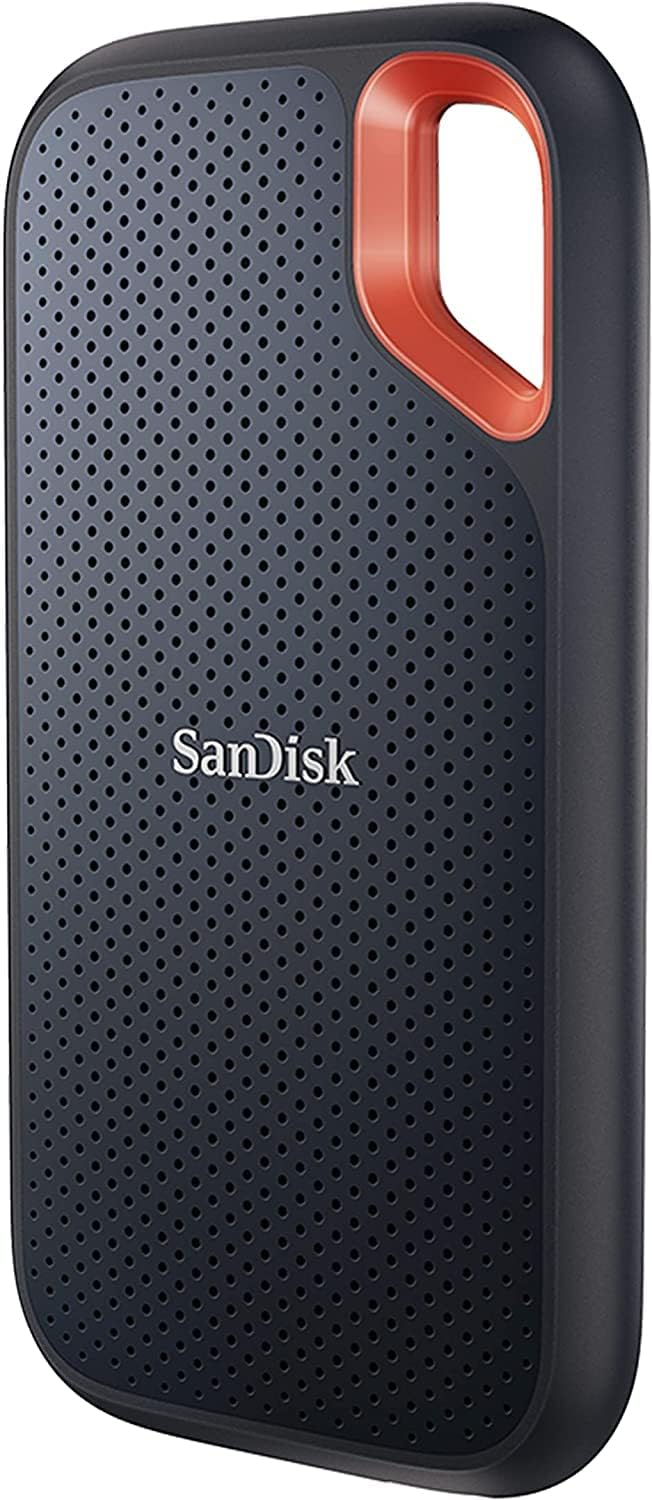
Best for Beginners: SanDisk Extreme Portable SSD V2 (1TB) – No installation required. USB-C with 1,050 MB/s speeds, rugged design, and AES encryption. Perfect for users who just want fast, reliable external storage without hassle (~$120).
Best for Advanced Users: WD Black SN850X 2TB NVMe SSD – Built for heavy workloads, this drive offers 7,300 MB/s speeds, 1,200 TBW endurance, and a heatsink option. Ideal for developers, video editors, or anyone pushing their Mac to the limit (~$220).
Conclusion: Making the Right Choice
Choosing the best SSD for your Mac isn’t just about picking the fastest or cheapest drive—it’s about aligning technology with your specific needs, Mac model, and workflow. Whether you’re breathing new life into an aging MacBook with a budget NVMe upgrade or equipping your Mac Studio with a Thunderbolt RAID array for 8K video editing, the right SSD can transform your experience. Prioritize compatibility first, then balance performance, capacity, endurance, and price. Don’t overlook real-world factors like thermal management, encryption, and manufacturer support—they matter just as much as raw speed.
Remember, storage is the foundation of your digital life on a Mac. A poor choice can lead to frustration, data loss, or wasted investment. But a thoughtful, informed decision delivers years of smooth, responsive performance. Use this guide as your roadmap: assess your Mac, define your needs, avoid common pitfalls, and invest wisely. And when in doubt, lean toward reputable brands and slightly higher capacity—you’ll thank yourself later.
Ready to upgrade? Start by identifying your Mac model and interface, then explore our top recommendations. Your faster, more capable Mac awaits.