
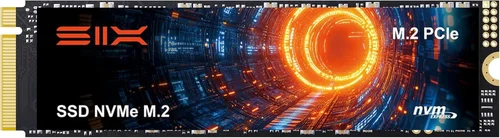
The internal solid-state drive (SSD) market in 2026 is more dynamic, competitive, and technologically advanced than ever before. With the rapid adoption of PCIe Gen5, the refinement of 3D NAND architectures, and the growing influence of AI-driven workloads, choosing the right SSD for your PC isn’t just about speed—it’s about compatibility, longevity, value, and future-proofing. Whether you’re building a high-end gaming rig, upgrading an aging workstation, or assembling a compact mini-ITX system, the SSD you choose will significantly impact your system’s responsiveness, boot times, file transfer speeds, and overall user experience.
This comprehensive buying guide is designed to cut through the marketing noise and technical jargon to deliver actionable, expert-level advice tailored to real-world needs. You’ll learn how to evaluate SSDs based on performance, endurance, form factor, interface compatibility, and long-term reliability—not just peak read/write numbers. We’ll explore the latest developments in NAND flash technology, controller designs, and firmware optimizations, and help you understand why not all SSDs are created equal—even if they share similar specs on paper. By the end of this guide, you’ll be equipped to make a confident, informed decision that aligns with your budget, use case, and performance expectations.
The SSD market today spans a wide spectrum—from budget-friendly SATA drives ideal for basic upgrades to blazing-fast NVMe Gen5 SSDs capable of saturating even the most advanced motherboards. Brands like Samsung, Western Digital, Crucial, Kingston, SK Hynix, and Sabrent continue to innovate, while newer entrants and value-focused OEMs offer compelling alternatives. With capacities ranging from 250GB to a staggering 8TB (and beyond), and prices fluctuating due to global NAND supply dynamics, it’s easy to feel overwhelmed. This guide will demystify the process, helping you identify the best internal SSD for your specific needs—whether you’re a casual user, content creator, gamer, or IT professional.

What to Look for When Buying Buying Guide
1. Interface & Form Factor
The interface and physical form factor of an SSD determine how it connects to your motherboard and whether it’s compatible with your system. The two most common interfaces today are SATA and NVMe (Non-Volatile Memory Express), with NVMe further divided into PCIe Gen3, Gen4, and Gen5. SATA SSDs use the same interface as traditional hard drives and are limited to around 550 MB/s due to SATA III bandwidth constraints. They’re ideal for older systems or budget builds but are increasingly being phased out in favor of NVMe.
NVMe SSDs, on the other hand, connect via the M.2 slot and leverage the PCIe bus for significantly higher speeds. PCIe Gen3 drives typically offer 3,000–3,500 MB/s, Gen4 doubles that to 7,000+ MB/s, and Gen5 pushes the envelope to 12,000–14,000 MB/s. When choosing an NVMe SSD, ensure your motherboard supports the corresponding PCIe generation. For example, a Gen5 SSD will work in a Gen4 slot but at reduced speeds. Form factors include M.2 2280 (most common), 2260, and 2242—check your motherboard’s manual to confirm supported sizes.
2. Performance Specifications
Performance is often the first thing buyers look at, but it’s important to understand what those numbers actually mean. Sequential read/write speeds (measured in MB/s) indicate how fast large files like videos or game assets can be transferred. Random 4K read/write speeds (measured in IOPS—Input/Output Operations Per Second) reflect performance in everyday tasks like booting the OS, launching applications, or multitasking. A drive with high sequential speeds but poor random performance may feel sluggish in real-world use.
For most users, a Gen4 NVMe SSD with 5,000–7,000 MB/s sequential speeds and strong 4K random performance is the sweet spot. Gamers benefit from faster load times, while content creators see improved performance in video editing, 3D rendering, and large file transfers. However, unless you’re working with 8K video or massive datasets, Gen5 speeds may be overkill and come with higher power consumption and heat output. Always check real-world benchmarks from trusted sources like Tom’s Hardware, AnandTech, or StorageReview—not just manufacturer claims.
3. NAND Flash Type & Controller
The type of NAND flash memory used in an SSD plays a critical role in its speed, endurance, and cost. The most common types are TLC (Triple-Level Cell) and QLC (Quad-Level Cell). TLC stores three bits per cell and offers a good balance of performance, durability, and price—making it ideal for mainstream users. QLC stores four bits per cell, increasing density and lowering cost per gigabyte, but at the expense of write endurance and sustained performance under heavy workloads.
More advanced SSDs may use PLC (Penta-Level Cell), though these are still emerging and best suited for read-heavy enterprise applications. The controller, or SSD “brain,” manages data flow, error correction, wear leveling, and garbage collection. High-quality controllers from companies like Phison, Silicon Motion, and Marvell ensure consistent performance and longevity. Look for drives with DRAM cache, which significantly improves performance and endurance by storing mapping tables—avoid DRAM-less SSDs unless you’re on a tight budget and only doing light tasks.
4. Endurance & TBW Rating
Endurance refers to how much data can be written to an SSD over its lifetime, typically measured in TBW (Terabytes Written). A higher TBW rating indicates a longer lifespan and greater reliability. For example, a 1TB SSD with a 600 TBW rating can theoretically endure 600 terabytes of writes before failure. Real-world usage rarely hits these limits—most consumers write far less than 50TB over several years—but TBW is a useful metric for comparing drives.
Drives with higher endurance often use better NAND (like TLC) and include features like over-provisioning (extra unused space to improve wear leveling). If you’re a heavy user—frequent large file transfers, video editing, or running virtual machines—opt for a drive with a higher TBW. Consumer SSDs typically range from 150 TBW (budget QLC) to 1,200+ TBW (high-end TLC). Enterprise drives go even higher, but are overkill for most users.
5. Capacity & Cost per GB
Capacity directly affects price, performance, and longevity. Larger SSDs often perform better due to more parallel NAND channels and better wear leveling. A 1TB SSD will generally outperform a 500GB model of the same model line, especially under sustained writes. For most users, 1TB is the minimum recommended capacity in 2026—enough for the OS, applications, and a decent game library. 2TB is ideal for content creators or gamers with large libraries, while 4TB+ is for enthusiasts or professionals.
Cost per gigabyte is a key value metric. As of 2026, expect to pay around $0.06–$0.10 per GB for mid-range Gen4 TLC SSDs. Budget QLC drives may dip below $0.05/GB, while high-performance Gen5 drives can exceed $0.15/GB. Avoid extremely cheap SSDs—they often cut corners on NAND quality, controllers, or firmware. A slightly higher upfront cost can pay off in reliability and performance over time.
6. Brand Reputation & Reliability
Not all SSD brands are created equal. Established manufacturers like Samsung, Western Digital, Crucial, and SK Hynix have proven track records of reliability, consistent firmware updates, and strong customer support. Samsung’s 990 Pro and WD’s Black SN850X are benchmarks in performance and endurance. Crucial’s P5 Plus offers excellent value, while SK Hynix’s Platinum P41 is a top-tier Gen4 contender.
Newer or lesser-known brands may offer aggressive pricing, but often lack transparency in component sourcing or long-term support. Check user reviews, professional benchmarks, and failure rate data (e.g., from Backblaze’s annual drive reports) before committing. A reputable brand may cost more upfront but reduces the risk of data loss, premature failure, or compatibility issues.
7. Warranty & Support
A strong warranty is a sign of confidence in a product’s durability. Most premium SSDs come with a 5-year limited warranty, often tied to the TBW rating—meaning the warranty expires when either the time limit is reached or the TBW threshold is hit. Some brands, like Samsung and WD, offer data recovery services or migration tools as part of their support ecosystem.
Check the warranty terms carefully: some only cover the drive, not data loss. Also, ensure the brand has a local service center or easy RMA process in your region. Avoid brands with vague or hard-to-access support. A good warranty not only protects your investment but also reflects the manufacturer’s commitment to quality.
8. Thermal Management & Heatsinks
High-performance NVMe SSDs, especially Gen4 and Gen5 models, generate significant heat under load. Without proper cooling, they can throttle performance to prevent overheating. Many premium SSDs come with integrated heatsinks, or you can purchase aftermarket M.2 heatsinks. Some motherboards include built-in heatsinks for M.2 slots—check your board’s specs.
For compact builds (e.g., mini-ITX) or laptops, thermal management is even more critical. A drive that runs hot may require active cooling or a lower-power model. Look for SSDs with thermal throttling protection and consider ambient case airflow when installing. Overheating not only reduces performance but can shorten the drive’s lifespan.
Different Types of Buying Guide

Common Buying Mistakes to Avoid

❌ Mistake: Ignoring Interface Compatibility
Why it’s bad: Buying a Gen5 SSD for a motherboard that only supports Gen3 means you’re paying for performance you can’t use. Similarly, installing an M.2 22110 SSD in a slot that only supports 2280 can physically prevent installation.
What to do instead: Always check your motherboard’s manual for supported PCIe generations and M.2 form factors. Use tools like CPU-Z or the manufacturer’s website to verify compatibility before purchasing.
❌ Mistake: Prioritizing Peak Speeds Over Real-World Performance
Why it’s bad: A drive with 14,000 MB/s sequential read may look impressive, but if it throttles under sustained load or has poor 4K random performance, it won’t feel faster in daily use.
What to do instead: Focus on real-world benchmarks and reviews. Look for drives with consistent performance, strong random I/O, and thermal management.
❌ Mistake: Choosing QLC for Heavy Workloads
Why it’s bad: QLC SSDs have lower write endurance and slower sustained write speeds due to fewer program/erase cycles. They’re prone to performance drops when the cache is exhausted.
What to do instead: Use QLC only for light tasks like web browsing or document editing. For gaming, video editing, or frequent large file transfers, opt for TLC-based drives.
❌ Mistake: Skimping on Capacity
Why it’s bad: A 500GB SSD may seem sufficient, but modern games can take 100–200GB each, and Windows 11 alone uses 60–80GB. Running low on space slows down the drive and reduces lifespan.
What to do instead: Start with at least 1TB. If budget allows, go for 2TB—especially if you plan to keep the drive for 3–5 years.
❌ Mistake: Overlooking Thermal Throttling
Why it’s bad: High-end NVMe drives can hit 70–80°C under load, triggering thermal throttling that cuts speeds by 30–50%. This negates the benefits of fast hardware.
What to do instead: Use a heatsink if your case or motherboard supports it. Ensure good airflow around the M.2 slot. Consider drives with built-in thermal sensors and throttling protection.
❌ Mistake: Buying Based Solely on Price
Why it’s bad: The cheapest SSDs often use inferior components, lack DRAM, or have poor firmware. They may fail prematurely or lose data.
What to do instead: Balance price with brand reputation, TBW rating, and warranty. A $20 savings isn’t worth a failed drive and lost data.
❌ Mistake: Ignoring Firmware Updates
Why it’s bad: Firmware bugs can cause crashes, data corruption, or performance issues. Some brands release critical updates post-launch.
What to do instead: Register your SSD with the manufacturer and check for firmware updates periodically. Use official tools like Samsung Magician or WD Dashboard.
Budget Guidelines: How Much Should You Spend?
Entry-Level ($30–$60 for 1TB): This tier includes SATA SSDs and budget NVMe Gen3 drives. Ideal for upgrading older systems or adding secondary storage. Expect modest speeds (500–3,500 MB/s), lower TBW ratings, and possibly DRAM-less designs. Best for light office work, web browsing, and basic multitasking. Examples: Crucial MX500 (SATA), Kingston NV2 (Gen3 NVMe).
Mid-Range ($60–$120 for 1TB): The sweet spot for most users. These are typically Gen4 NVMe SSDs with TLC NAND, DRAM cache, and strong endurance (600+ TBW). They offer excellent performance for gaming, content creation, and productivity. Look for drives from reputable brands with 5-year warranties. Examples: Samsung 980 Pro, WD Black SN770, Crucial P5 Plus.
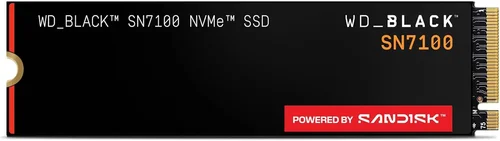
Premium ($120–$250 for 1TB): For enthusiasts and professionals who demand top-tier performance. These are high-end Gen4 or entry-level Gen5 SSDs with advanced controllers, superior thermal management, and 1,000+ TBW. Ideal for 4K/8K video editing, 3D rendering, and AI workloads. Examples: Samsung 990 Pro, WD Black SN850X, SK Hynix Platinum P41.
Luxury ($250+ for 1TB): Cutting-edge Gen5 SSDs with speeds exceeding 12,000 MB/s, often with heatsinks and enterprise-grade features. These are overkill for most users but future-proof for high-end workstations. Expect premium pricing and higher power consumption. Examples: Sabrent Rocket 5, Corsair MP700 Pro.
Expert Tips for Getting the Best Deal
1. Buy During Major Sales Events: SSD prices fluctuate, but the best deals appear during Black Friday, Cyber Monday, Amazon Prime Day, and back-to-school sales. Subscribe to price tracking tools like CamelCamelCamel or Honey to monitor drops.
2. Compare Total Cost of Ownership: A slightly more expensive SSD with a longer warranty and higher TBW may cost less in the long run than a cheap drive that fails early. Factor in potential data recovery costs.
3. Check for Bundled Software: Some SSDs come with free cloning software (e.g., Acronis True Image), cloud storage, or game bundles. These add value beyond raw performance.
4. Prioritize Reputable Retailers: Buy from authorized sellers like Amazon (sold by Amazon), Newegg, Best Buy, or direct from the manufacturer. Avoid third-party sellers with no reviews—counterfeit SSDs are a real risk.
5. Test Before Committing: If possible, test the SSD in your system before finalizing the purchase. Use tools like CrystalDiskMark or AS SSD Benchmark to verify performance matches claims.
6. Consider Used or Refurbished (Cautiously): Refurbished SSDs from reputable sources can offer savings, but check the remaining TBW and warranty status. Avoid used drives unless you can verify health via SMART data.
7. Don’t Overbuy on Speed: Unless you’re editing 8K video or running AI models, a Gen4 SSD is more than sufficient. Save money by avoiding Gen5 unless your workflow demands it.
8. Plan for Future Upgrades: If you’re building a new PC, consider getting a larger SSD now to avoid needing a second drive later. Upgrading storage is harder once the system is built.

Frequently Asked Questions
Q: Can I use a Gen5 SSD in a Gen4 motherboard?
A: Yes, but it will run at Gen4 speeds. The drive is backward compatible, so you won’t damage anything—but you won’t get the full performance benefit. It’s a good way to future-proof if you plan to upgrade your motherboard later.
Q: Do I need a heatsink for my NVMe SSD?
A: It depends. If your motherboard has a built-in M.2 heatsink or you’re using the drive in a well-ventilated case, you may not need one. However, for Gen4/Gen5 drives under sustained load, a heatsink helps prevent thermal throttling and maintains peak performance.
Q: Is DRAM cache really necessary?
A: For most users, yes. DRAM cache improves performance, especially during random writes and multitasking. DRAM-less SSDs use system memory (HMB) as a substitute, which works but isn’t as efficient. Avoid DRAM-less drives for heavy workloads.
Q: How long do SSDs typically last?
A: Most consumer SSDs last 5–10 years under normal use. With TBW ratings of 300–1,200TB and typical annual writes of 20–50TB, failure due to wear is rare. More often, SSDs fail due to power surges, firmware bugs, or manufacturing defects.
Q: Can I use an SSD as a boot drive?
A: Absolutely. In fact, it’s recommended. SSDs drastically reduce boot times and improve system responsiveness. Just ensure your BIOS is set to boot from the SSD after installation.
Q: What’s the difference between NVMe and M.2?
A: M.2 is the physical form factor (the shape and size of the drive), while NVMe is the communication protocol. Not all M.2 drives are NVMe—some use SATA. Always check the interface type.
Q: Should I enable TRIM?
A: Yes. TRIM helps the SSD manage deleted data and maintain performance over time. It’s usually enabled by default in Windows 10/11 and modern Linux distributions.
Q: Can I install multiple SSDs in one PC?
A: Yes, as long as your motherboard has enough M.2 or SATA ports. You can use one for the OS and applications, and another for games or media storage.
Q: Are SSDs safe from physical shock?
A: Yes. Unlike HDDs, SSDs have no moving parts, making them highly resistant to drops, vibrations, and physical impact. This makes them ideal for laptops and portable systems.
Q: Do SSDs need defragmentation?
A: No. Defragmentation is unnecessary and can reduce SSD lifespan by increasing write cycles. Windows automatically disables defrag for SSDs and runs TRIM instead.
Our Final Recommendations
Best for Budget-Conscious Buyers: Crucial P3 1TB (Gen3 NVMe) – At around $50, this DRAM-less Gen3 drive offers solid performance for everyday tasks. It’s not the fastest, but it’s reliable, energy-efficient, and perfect for upgrading an older system or adding secondary storage.
Best Overall Value: Samsung 980 Pro 1TB (Gen4 NVMe) – A proven performer with 7,000 MB/s speeds, excellent 4K random performance, and a 1,200 TBW rating. It’s slightly older but still one of the most balanced drives on the market, often available at a discount.
Best Premium Option: WD Black SN850X 2TB (Gen4 NVMe) – With blazing speeds, a robust heatsink, and top-tier endurance, this drive is ideal for gamers and creators. It includes gaming-optimized firmware and a 5-year warranty, making it a long-term investment.
Best for Beginners: Kingston NV2 1TB (Gen3 NVMe) – Simple, affordable, and easy to install. It lacks DRAM but performs well for light use. Kingston’s reliability and straightforward setup make it a great first SSD.
Best for Advanced Users: SK Hynix Platinum P41 2TB (Gen4 NVMe) – Often ranked as the fastest Gen4 SSD, it delivers near-7,000 MB/s speeds with exceptional endurance (1,200 TBW). It’s a favorite among enthusiasts and professionals for its consistency and efficiency.
Conclusion: Making the Right Choice
Choosing the best internal SSD for your PC in 2026 is about more than just speed—it’s about matching the drive’s capabilities to your specific needs, budget, and system compatibility. From understanding the nuances of NAND types and interface standards to avoiding common pitfalls like thermal throttling and DRAM-less designs, this guide has equipped you with the knowledge to make a smart, informed decision.
Remember, the “best” SSD isn’t always the fastest or most expensive—it’s the one that delivers the right balance of performance, reliability, and value for your use case. Whether you’re building a budget PC, upgrading a gaming rig, or assembling a professional workstation, prioritize compatibility, endurance, and real-world performance over marketing hype.
Take your time, compare options, and don’t hesitate to invest a little more for peace of mind and long-term satisfaction. With the right SSD, your PC will feel faster, more responsive, and ready to handle whatever you throw at it—today and for years to come.