

Solid-state drives (SSDs) have revolutionized data storage since their mainstream adoption, and by 2026, they’ve become the default choice for nearly every computing device—from ultrabooks and gaming rigs to servers and industrial systems. Unlike traditional hard disk drives (HDDs), SSDs use NAND flash memory to store data, offering dramatically faster read/write speeds, lower latency, improved durability, and silent operation. As a result, upgrading to or building a system with an SSD isn’t just a performance boost—it’s a fundamental shift in how your computer feels and responds in daily use.
But here’s the catch: not all SSDs are created equal. With rapid advancements in NAND technology, interface standards, and form factors, choosing the right SSD can feel overwhelming. The market is flooded with options ranging from compact M.2 drives to high-capacity U.2 enterprise units, each tailored to different use cases, budgets, and hardware compatibility. Whether you’re a casual user looking to speed up your laptop, a content creator handling 4K video files, or a system builder configuring a high-performance workstation, understanding the nuances of SSD form factors is essential. This guide cuts through the noise to help you make a confident, informed decision.
In this comprehensive buying guide, you’ll learn everything you need to know about SSD form factors in 2026. We’ll break down the key factors that influence performance and compatibility, compare the most common types of SSDs on the market, highlight common pitfalls to avoid, and provide expert-backed recommendations based on real-world usage. By the end, you’ll have a clear roadmap to selecting the best SSD for your specific needs—whether you’re prioritizing speed, capacity, portability, or value.
—

What to Look for When Buying SSDs
1. Form Factor and Physical Compatibility
The form factor of an SSD refers to its physical size, shape, and connector type—and it’s arguably the most critical factor when choosing a drive. Unlike HDDs, which have largely standardized on 2.5-inch enclosures, SSDs come in a variety of form factors designed for different devices and use cases. The wrong form factor won’t fit in your system, no matter how fast or large it is.
The most common SSD form factors in 2026 include:
– M.2: A small, stick-like drive that plugs directly into the motherboard. Available in different lengths (e.g., 2242, 2260, 2280) and key types (B-key, M-key, or B+M), M.2 drives are ideal for ultrabooks, mini PCs, and modern desktops. They support both SATA and NVMe protocols, but NVMe M.2 drives offer significantly higher speeds.
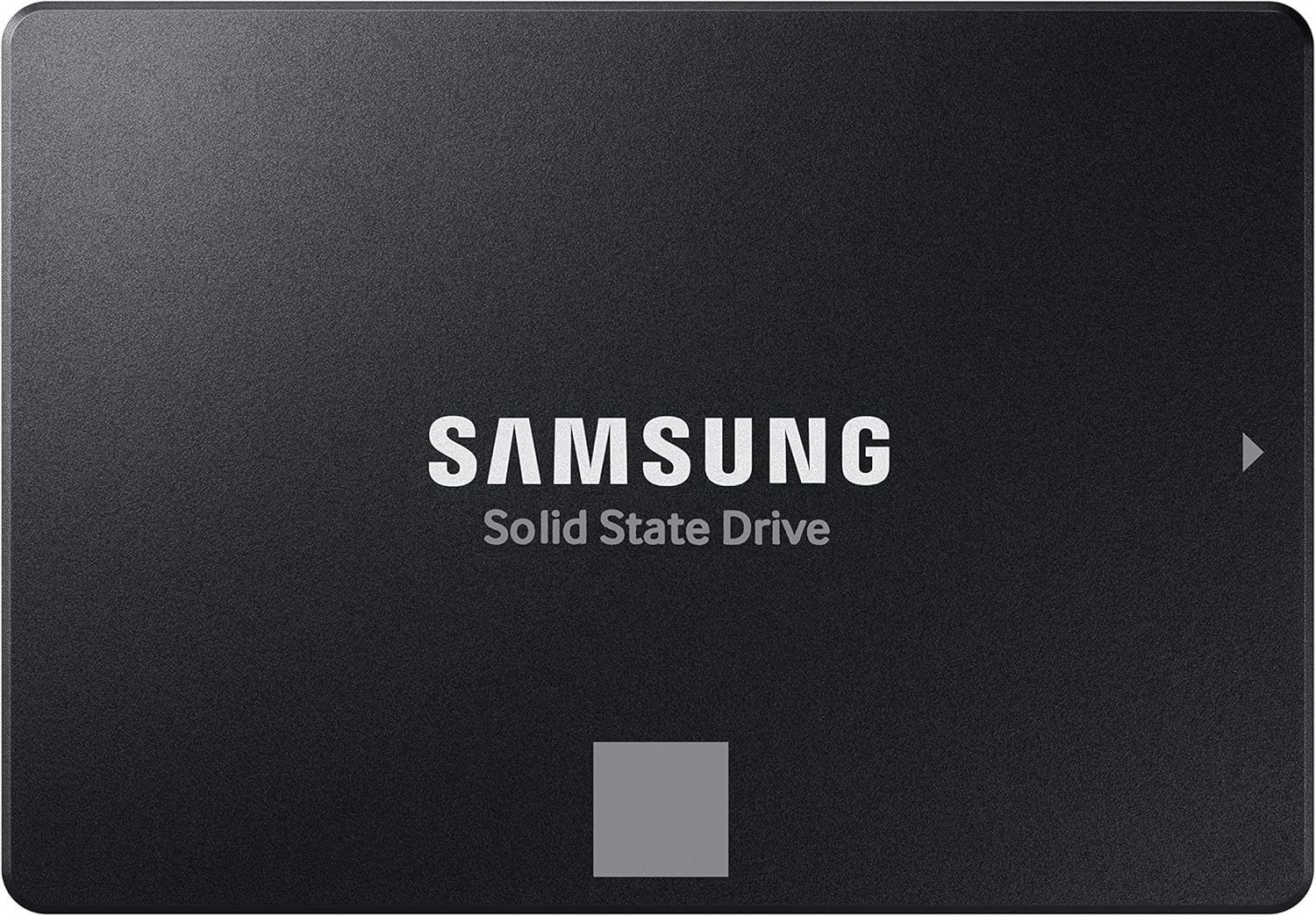
– 2.5-inch SATA: The traditional SSD form factor, resembling a laptop HDD. These drives connect via SATA cables and power connectors and are widely compatible with older systems, desktops, and laptops that lack M.2 slots. While slower than NVMe drives, they’re reliable and affordable.
– U.2: A 2.5-inch drive with a different connector (SFF-8639) that supports NVMe speeds. Primarily used in enterprise and high-end workstations, U.2 drives offer high performance and hot-swappability but require compatible motherboards or backplanes.
– PCIe Add-in Card (AIC): These SSDs install directly into a PCIe slot on the motherboard, bypassing SATA limitations entirely. They’re common in high-performance desktops and servers, offering the fastest speeds but taking up a full expansion slot.
– mSATA: A smaller version of SATA SSDs, once popular in ultrabooks and compact devices. While largely phased out in favor of M.2, some older systems still use mSATA.
Before buying, always check your device’s specifications. For example, a laptop may only support M.2 2280 NVMe drives, while a desktop might accommodate both 2.5-inch SATA and M.2. Using an incompatible form factor means the drive simply won’t fit or function.
2. Interface and Protocol: SATA vs. NVMe
The interface and communication protocol determine how fast data can move between the SSD and your system. In 2026, two main protocols dominate: SATA and NVMe (Non-Volatile Memory Express).
SATA III is the older standard, with a maximum theoretical bandwidth of 6 Gbps (around 550–600 MB/s in real-world performance). Most 2.5-inch SSDs and some M.2 drives use SATA. While sufficient for everyday tasks like web browsing, office work, and light gaming, SATA SSDs are bottlenecked by their interface and can’t match the speeds of modern NVMe drives.
NVMe, on the other hand, leverages the PCIe (Peripheral Component Interconnect Express) interface, allowing for much higher data transfer rates. NVMe SSDs connect via M.2 or U.2 slots and can achieve speeds exceeding 7,000 MB/s on PCIe 4.0 and over 14,000 MB/s on PCIe 5.0 drives. This makes them ideal for demanding applications like 4K/8K video editing, 3D rendering, large database operations, and high-FPS gaming.
When choosing between SATA and NVMe, consider your use case:
– General use: SATA SSDs are cost-effective and offer more than enough speed for most users.
– Performance-intensive tasks: NVMe is the clear winner, especially with PCIe 4.0 or 5.0 support.
– Compatibility: Ensure your motherboard supports NVMe if you’re considering an NVMe drive. Most modern systems do, but older ones may not.
3. Performance Specifications: Speed, IOPS, and Endurance
Beyond interface, several performance metrics define an SSD’s capabilities:
– Sequential Read/Write Speeds: Measured in MB/s, these indicate how quickly large files (like videos or games) can be read from or written to the drive. NVMe drives typically offer 3,500–7,000 MB/s on PCIe 4.0 and up to 14,000 MB/s on PCIe 5.0.
– Random Read/Write IOPS: Input/Output Operations Per Second measure how well the SSD handles small, scattered files—critical for multitasking, boot times, and database operations. High IOPS (e.g., 1M+ for premium drives) means snappier system responsiveness.
– Endurance (TBW): Terabytes Written indicates how much data can be written to the drive over its lifetime. Higher TBW ratings (e.g., 600–1,200 TBW for consumer drives) suggest longer lifespan, especially important for write-heavy workloads.
– DRAM Cache: Many SSDs include a small DRAM chip to cache the mapping table (FTL), improving speed and longevity. DRAM-less SSDs are cheaper but may suffer performance degradation under heavy loads.
For most users, a balance of speed and endurance is ideal. Gamers and content creators should prioritize high sequential speeds and IOPS, while enterprise users may need drives with high endurance and power-loss protection.
4. Storage Capacity and Future-Proofing
SSD capacities in 2026 range from 128GB to 8TB for consumer drives, with enterprise models going even higher. While 256GB may suffice for a basic system, we recommend at least 500GB for most users—enough for the OS, applications, and a moderate library of games or media.
Consider your storage needs over the next 3–5 years. If you work with large files (e.g., RAW photos, 4K video), 1TB or 2TB is advisable. Cloud storage can supplement local capacity, but having ample onboard storage improves performance and reduces reliance on external drives.
Also, note that SSDs perform best when not fully filled. Aim to keep at least 10–20% of the drive free to maintain optimal speed and longevity.
5. NAND Flash Type: TLC, QLC, and Beyond
NAND flash memory comes in different types, each affecting performance, endurance, and cost:
– TLC (Triple-Level Cell): Stores 3 bits per cell. Offers a good balance of speed, endurance, and price. Most consumer SSDs use TLC NAND.
– QLC (Quad-Level Cell): Stores 4 bits per cell, increasing density and lowering cost per GB. However, QLC drives have lower write speeds and endurance, making them better suited for read-heavy tasks like media storage.
– PLC (Penta-Level Cell): Emerging in 2026, PLC stores 5 bits per cell, pushing capacity even higher. Still in early adoption, PLC drives are best for archival storage due to limited write cycles.
– SLC and MLC: Used in enterprise and industrial applications for maximum endurance and speed, but too expensive for consumer use.
For most users, TLC is the sweet spot. QLC is acceptable for secondary storage or budget builds, but avoid it for OS drives or heavy workloads.
6. Brand Reputation and Reliability
Not all SSDs are created equal—even if they share the same specs. Brand reputation matters because it reflects consistency in quality, firmware updates, and long-term reliability.
Top-tier brands like Samsung, Western Digital, Crucial, Kingston, and Sabrent have established track records for producing reliable SSDs with strong performance and customer support. These companies invest heavily in R&D, use high-quality NAND, and provide robust firmware.
Avoid no-name or ultra-cheap SSDs, especially those from unknown manufacturers. These often use inferior NAND, lack DRAM, or have poor firmware, leading to data loss, slowdowns, or premature failure.
Check independent reviews and reliability reports (e.g., from Backblaze or TechPowerUp) to gauge real-world performance and failure rates.
7. Warranty and Support
A strong warranty is a sign of manufacturer confidence. Most reputable SSDs come with 3- to 5-year limited warranties, often tied to TBW ratings. For example, a drive with a 600 TBW rating and 5-year warranty means it’s expected to last five years under normal use or until 600TB of data is written—whichever comes first.
Check the warranty terms: some cover only hardware defects, while others include data recovery support. Also, ensure the brand offers accessible customer service and firmware update tools.
8. Price and Value for Money
SSD pricing has dropped significantly over the years, but performance and capacity still influence cost. As of 2026, expect to pay:
– $0.08–$0.12 per GB for SATA SSDs
– $0.10–$0.18 per GB for NVMe TLC drives
– $0.15–$0.25+ per GB for high-end NVMe or QLC drives
While it’s tempting to go for the cheapest option, consider total cost of ownership. A slightly more expensive SSD with better endurance and warranty may save you money in the long run by avoiding replacement costs and downtime.
Look for value in the mid-range: drives that offer strong performance, reliability, and capacity without premium pricing.
—
Different Types of SSDs Compared
—
Common Buying Mistakes to Avoid

❌ Mistake: Ignoring Compatibility
Why it’s bad: Buying an M.2 NVMe drive for a laptop that only supports SATA M.2 or 2.5-inch drives means the SSD won’t work—no matter how fast it is. This leads to wasted money and frustration.
What to do instead: Always verify your device’s SSD compatibility before purchasing. Check the manual, manufacturer website, or use tools like Crucial’s Scanner or Samsung’s Advisor.
❌ Mistake: Choosing QLC for Primary Storage
Why it’s bad: QLC SSDs have slower write speeds and lower endurance. Using one as your OS drive can lead to sluggish performance during updates, installations, or heavy multitasking.
What to do instead: Use TLC or MLC SSDs for your primary drive. Reserve QLC for secondary storage, backups, or media libraries where read speed matters more than write endurance.
❌ Mistake: Overlooking DRAM Cache
Why it’s bad: DRAM-less SSDs rely on system memory (HMB) for caching, which can cause performance drops under sustained workloads. They’re also more prone to slowdowns when nearly full.
What to do instead: Prioritize SSDs with dedicated DRAM cache, especially for OS and application drives. The performance and longevity benefits outweigh the slight cost increase.
❌ Mistake: Buying Based on Price Alone
Why it’s bad: The cheapest SSDs often use low-quality NAND, lack firmware updates, or have poor warranties. They may fail prematurely, risking data loss.
What to do instead: Focus on value—balancing price, performance, reliability, and warranty. Mid-range drives from reputable brands usually offer the best long-term value.
❌ Mistake: Not Checking Warranty Terms
Why it’s bad: Some warranties are voided if the drive exceeds its TBW rating, even if it’s still functional. Others don’t cover data recovery.
What to do instead: Read the fine print. Choose drives with generous TBW ratings and clear warranty terms. Register your SSD to ensure full coverage.
❌ Mistake: Filling the Drive to Capacity
Why it’s bad: SSDs need free space for wear leveling and garbage collection. Filling a drive beyond 80–90% can drastically reduce performance and lifespan.
What to do instead: Keep at least 10–20% of the drive free. Use cloud storage or external drives for large media files.
❌ Mistake: Assuming All NVMe Drives Are Fast
Why it’s bad: Not all NVMe drives support PCIe 4.0 or 5.0. Some older or budget models use PCIe 3.0, limiting their speed to around 3,500 MB/s.
What to do instead: Check the PCIe generation and lane count (x2 vs. x4). For maximum speed, choose PCIe 4.0 or 5.0 x4 drives.
—
Budget Guidelines: How Much Should You Spend?
– Entry-Level ($40–$80 for 1TB): Ideal for basic upgrades or secondary storage. Look for 2.5-inch SATA or M.2 SATA drives from brands like Kingston or Crucial. Expect speeds around 500–550 MB/s and 3-year warranties.
– Mid-Range ($80–$150 for 1TB): The sweet spot for most users. NVMe M.2 drives with TLC NAND, DRAM cache, and PCIe 4.0 support. Great for gaming, productivity, and light content creation. Brands like Samsung, WD, and Sabrent offer excellent options.
– Premium ($150–$300 for 1TB): For enthusiasts and professionals. High-end NVMe drives with PCIe 5.0, extreme speeds (10,000+ MB/s), and robust endurance. Ideal for 4K editing, 3D rendering, and high-FPS gaming.
– Luxury ($300+ for 1TB): Enterprise-grade or niche drives with features like power-loss protection, hardware encryption, and 5+ year warranties. Best for servers, workstations, or users who demand maximum reliability.
—

Expert Tips for Getting the Best Deal
– Buy during sales events: Major discounts occur during Black Friday, Cyber Monday, Amazon Prime Day, and back-to-school seasons. Sign up for deal alerts from retailers like Newegg, Best Buy, or B&H.
– Compare prices across retailers: Use price tracking tools like CamelCamelCamel or Honey to find the lowest historical prices and apply coupons automatically.
– Check refurbished or open-box deals: Reputable sellers often offer certified refurbished SSDs at 20–40% off with full warranties.
– Prioritize warranty over minor price differences: A $10 savings isn’t worth it if the drive has a shorter warranty or lower TBW.
– Test before finalizing: Use tools like CrystalDiskMark or AS SSD to benchmark performance after installation. Ensure the drive meets advertised specs.
– Consider future upgrades: If building a new PC, choose a motherboard with multiple M.2 slots and PCIe 5.0 support to allow for future SSD upgrades.
– Avoid counterfeit drives: Buy from authorized retailers. Fake SSDs often have inflated capacity readings and fail quickly.
—

Frequently Asked Questions
Q: Can I use an M.2 SSD in a 2.5-inch bay?
A: Only with an adapter. Some enclosures or caddies allow M.2 SSDs to be mounted in 2.5-inch bays, but they require a separate power and data connection. Not all systems support this setup.
Q: Is NVMe always faster than SATA?
A: In terms of interface, yes—NVMe can be up to 10x faster. However, real-world performance depends on the workload. For everyday tasks, the difference may not be noticeable.
Q: Do SSDs need to be defragmented?
A: No. SSDs don’t benefit from defragmentation and it can reduce their lifespan. Modern operating systems automatically disable defrag for SSDs and use TRIM instead.
Q: How long do SSDs last?
A: Most consumer SSDs last 5–10 years under normal use, depending on TBW and usage patterns. Heavy write workloads may shorten lifespan.
Q: Can I recover data from a failed SSD?
A: It’s possible but difficult and expensive. Unlike HDDs, SSDs often encrypt data and may become inaccessible if the controller fails. Regular backups are essential.
Q: Are external SSDs as fast as internal ones?
A: It depends on the interface. USB 3.2 Gen 2×2 or Thunderbolt 3/4 external SSDs can match internal SATA speeds, but rarely exceed NVMe performance.
Q: Should I enable over-provisioning?
A: Yes, if supported. Over-provisioning reserves space for wear leveling, improving performance and longevity. Most drives do this automatically.
Q: Can I mix SSDs from different brands?
A: Yes, but avoid using them in RAID configurations unless they’re identical. Mixed drives may have different performance characteristics and failure rates.
Q: Do SSDs get slower over time?
A: They can, especially if nearly full or DRAM-less. However, modern SSDs use advanced controllers and firmware to minimize slowdowns.
Q: Is it safe to turn off an SSD frequently?
A: Yes. SSDs have no moving parts and are designed for frequent power cycles. Unlike HDDs, they don’t suffer from mechanical wear.
—
Our Final Recommendations
– Best for Budget-Conscious Buyers: Crucial MX500 1TB (2.5-inch SATA) – Reliable, affordable, and widely compatible. Great for upgrading older systems.
– Best Overall Value: Samsung 980 Pro 1TB (M.2 NVMe PCIe 4.0) – Excellent performance, strong endurance, and a trusted brand. Ideal for most users.
– Best Premium Option: WD Black SN850X 2TB (M.2 NVMe PCIe 4.0) – Top-tier speeds, robust build, and excellent for gaming and content creation.
– Best for Beginners: Kingston NV2 1TB (M.2 NVMe PCIe 4.0) – Simple installation, good performance, and budget-friendly. Perfect for first-time upgraders.
– Best for Advanced Users: Sabrent Rocket 4 Plus 4TB (M.2 NVMe PCIe 4.0) – High capacity, extreme speeds, and ideal for workstations and NAS setups.
—
Conclusion: Making the Right Choice
Choosing the right SSD form factor in 2026 is about more than just speed—it’s about compatibility, reliability, and aligning the drive with your specific needs. Whether you’re upgrading a aging laptop, building a high-end gaming PC, or configuring a professional workstation, the SSD you select will significantly impact your system’s performance and longevity.
By focusing on form factor, interface, NAND type, and brand reputation, you can avoid common pitfalls and make a purchase that delivers lasting value. Remember to prioritize your use case: general users can thrive with SATA or entry-level NVMe drives, while power users should invest in high-performance NVMe models with robust warranties.
Don’t rush the decision. Take time to research, compare options, and consider future-proofing your system. With the right SSD, you’ll enjoy faster boot times, quicker application launches, and a smoother overall computing experience for years to come.
Ready to upgrade? Use this guide as your roadmap, and choose the SSD that fits your life—not just your budget.