

If you’re building, upgrading, or replacing a PC in 2026, one of the most impactful decisions you’ll make is choosing the right solid-state drive (SSD). Gone are the days when hard disk drives (HDDs) ruled the storage world—today’s systems demand speed, reliability, and efficiency, and SSDs deliver on all fronts. Whether you’re a gamer chasing faster load times, a content creator working with 8K video, or a professional managing large datasets, the SSD you choose can dramatically influence your system’s responsiveness, boot times, file transfer speeds, and overall user experience.
This comprehensive buying guide is designed to cut through the noise and help you make an informed, confident decision. We’ll walk you through every critical factor—from performance benchmarks and form factors to budget considerations and brand reliability—so you can find the SSD that perfectly matches your needs. You’ll learn how to interpret technical specs like sequential read/write speeds, IOPS, endurance ratings, and NAND types. We’ll also compare the latest SSD categories, highlight common pitfalls to avoid, and provide expert-backed recommendations across different use cases and price ranges. By the end, you’ll not only know what to buy but why it matters.
The SSD market in 2026 is more competitive and diverse than ever. With advancements in PCIe 5.0, NVMe 2.0, and QLC/PLC NAND technologies, options range from ultra-affordable SATA drives to blazing-fast Gen5 NVMe SSDs capable of over 14,000 MB/s. At the same time, new players have entered the field, and established brands continue to innovate. This guide will help you navigate this evolving landscape with clarity and confidence, ensuring you get the best value, performance, and longevity for your investment.

What to Look for When Buying Buying Guide
1. Budget & Price Range
Your budget is the foundation of your SSD decision. Prices vary widely depending on capacity, performance tier, and technology. As of 2026, entry-level SATA SSDs start around $0.08 per gigabyte, while high-end PCIe 5.0 NVMe drives can exceed $0.30 per gigabyte. For most users, a sweet spot exists between $0.12 and $0.20 per GB, offering excellent performance without overspending.
Consider your total storage needs. A 1TB drive is ideal for general use, while 2TB or more suits gamers, creators, or professionals. Don’t fall into the trap of buying the cheapest drive available—low-cost SSDs often use slower NAND or lack DRAM caches, which can hurt long-term performance. Instead, aim for a balance: prioritize drives that offer strong value per gigabyte while meeting your performance requirements.
2. Performance Specifications
Performance is where SSDs truly shine—and where confusion often sets in. The two most important metrics are sequential read/write speeds and random I/O operations per second (IOPS). Sequential speeds (measured in MB/s) determine how fast large files like videos or game installs transfer. Random IOPS reflect how quickly the drive handles small, scattered files—critical for OS responsiveness and multitasking.
For 2026, PCIe 4.0 NVMe SSDs typically deliver 5,000–7,000 MB/s, while PCIe 5.0 drives push 10,000–14,000 MB/s. However, real-world gains depend on your use case. Gamers may not notice a difference between Gen4 and Gen5 unless loading massive open-world titles, while video editors benefit significantly from higher bandwidth.
Also consider latency and queue depth. Lower latency means faster response times, especially under heavy workloads. High queue depth performance (QD32+) matters for servers or workstations but is less relevant for typical desktop users.
3. Build Quality & Durability
Not all SSDs are built equally. Durability hinges on several factors: NAND type, controller quality, thermal management, and overall build design. Modern SSDs use 3D NAND flash, with TLC (Triple-Level Cell) being the most common for consumer drives due to its balance of speed, endurance, and cost. QLC (Quad-Level Cell) offers higher density and lower prices but reduced write endurance—ideal for read-heavy tasks like media storage.
Look for drives with robust controllers from reputable manufacturers like Phison, Silicon Motion, or Marvell. These chips manage data flow, error correction, and wear leveling. A high-quality controller ensures consistent performance and longevity.
Thermal throttling is another concern, especially with Gen5 SSDs. Many high-performance drives now include heatsinks or require motherboard-mounted cooling. If your case has poor airflow, consider a drive with built-in thermal regulation or invest in an aftermarket heatsink.
Endurance is measured in terabytes written (TBW). A 1TB SSD with a 600 TBW rating can safely write 600TB over its lifetime. For context, the average user writes less than 20TB per year, so even modest TBW ratings are sufficient for most. However, content creators or developers running constant backups should opt for higher endurance.
4. Features & Functionality
Beyond raw speed, modern SSDs offer a range of features that enhance usability and security. DRAM cache is one of the most important—it acts as a buffer for the drive’s mapping tables, improving speed and longevity. DRAM-less SSDs are cheaper but can suffer performance drops under sustained workloads.
Hardware encryption (via TCG Opal or IEEE 1667) protects your data if the drive is lost or stolen. While not essential for everyone, it’s valuable for professionals handling sensitive information.
Some drives include software suites for monitoring health, updating firmware, or cloning data. Samsung’s Magician, Crucial’s Storage Executive, and WD’s Dashboard are excellent examples. These tools simplify maintenance and help you maximize drive lifespan.
Other features include power-loss protection (PLP), which safeguards data during unexpected shutdowns, and SLC caching, which temporarily boosts write speeds by using a portion of TLC/QLC NAND as faster single-level cells. While not a dealbreaker, these features add peace of mind and performance consistency.
5. Brand Reputation
Brand matters—especially when it comes to reliability and support. Established manufacturers like Samsung, Western Digital, Crucial, Kingston, and Seagate have proven track records of quality control, consistent firmware updates, and responsive customer service. They also tend to use higher-grade components and undergo rigorous testing.
Newer brands or OEMs (Original Equipment Manufacturers) may offer competitive pricing but often lack transparency about NAND sources or controller quality. While some budget drives perform well, others suffer from early failure or inconsistent performance. Stick with reputable brands unless you’re comfortable taking a calculated risk.
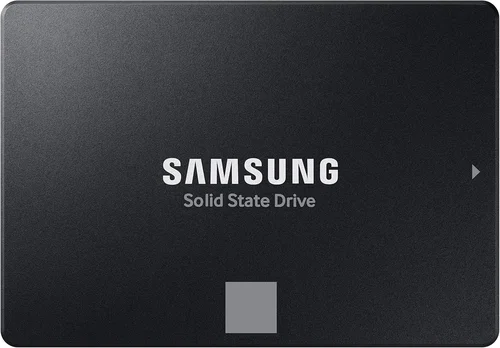
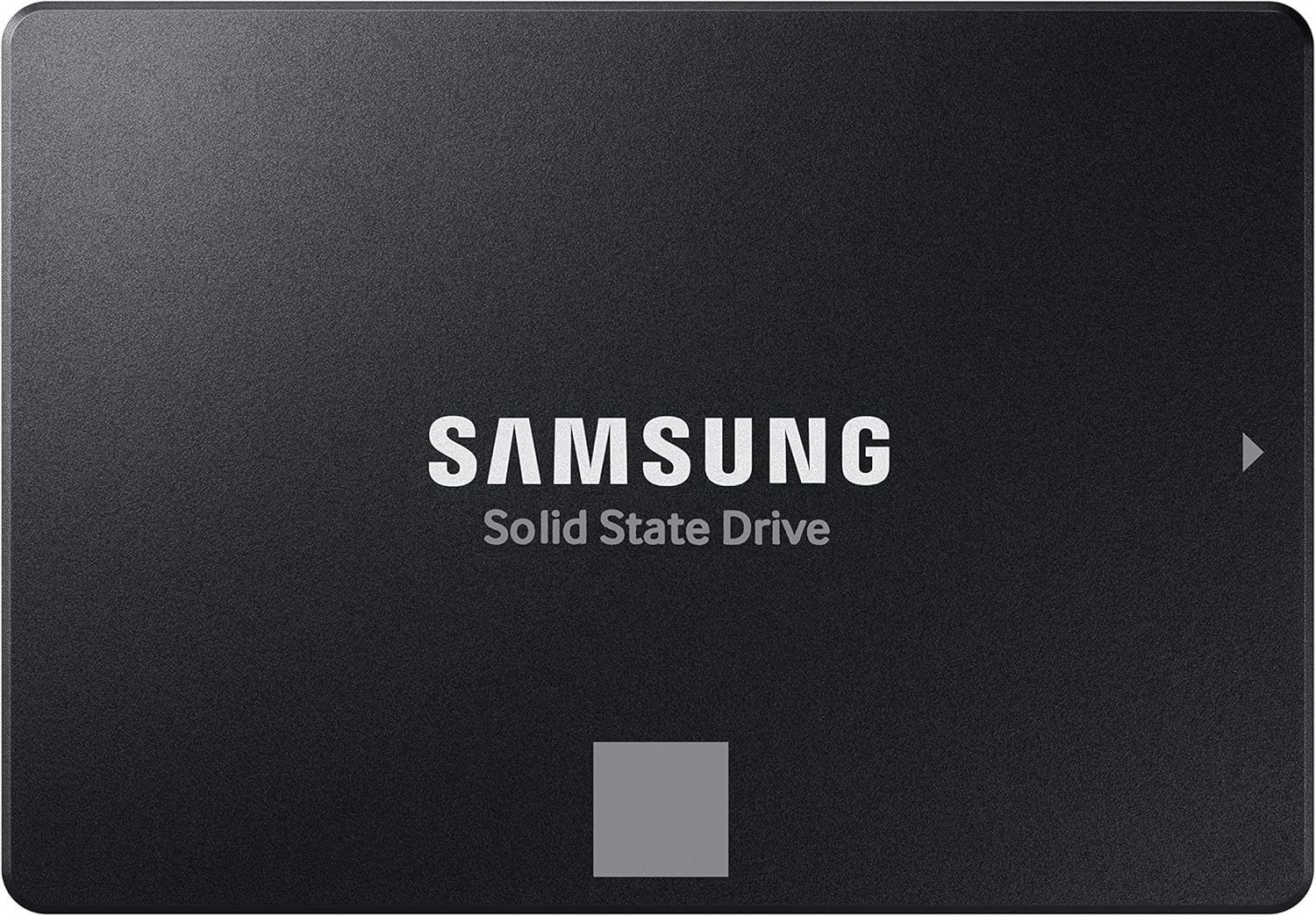
That said, don’t assume all products from a top brand are equal. Even Samsung offers a range from the high-end 990 Pro to the more affordable 870 EVO. Always check individual model reviews and benchmarks.
6. Warranty & Support
A strong warranty is a sign of manufacturer confidence. Most premium SSDs come with 5-year limited warranties, often tied to TBW limits. For example, a 1TB drive with a 600 TBW rating and 5-year warranty will be replaced if it fails before either threshold is reached.
Check the warranty terms carefully. Some brands require registration, while others offer on-site service or expedited replacements. Crucial and Samsung, for instance, provide hassle-free RMA processes. Avoid brands with vague or restrictive policies.
Customer support quality varies widely. Look for companies with live chat, detailed FAQs, and firmware update tools. A responsive support team can save you hours of frustration if issues arise.
7. Size & Portability
While most internal SSDs are 2.5-inch or M.2 form factors, portability matters for external drives. If you need to move large files between systems, consider a portable NVMe SSD with USB 3.2 Gen 2×2 (20 Gbps) or Thunderbolt 4 support. These drives offer near-internal speeds and are ideal for photographers, videographers, or remote workers.
For internal use, M.2 2280 (22mm wide, 80mm long) is the standard for modern motherboards. Ensure your system supports the drive’s interface (SATA or NVMe) and physical size. Some compact PCs or laptops may only fit shorter M.2 drives (e.g., 2242 or 2260).
8. User Reviews & Ratings
Technical specs tell part of the story—real-world performance tells the rest. User reviews on sites like Amazon, Newegg, or Reddit provide invaluable insights into reliability, noise (if any), heat output, and ease of installation. Look for patterns: if multiple users report early failure or firmware bugs, it’s a red flag.
Professional reviews from trusted sources (e.g., Tom’s Hardware, AnandTech, or StorageReview) offer in-depth benchmarks and long-term testing. Cross-reference these with user feedback to get a complete picture.
Avoid drives with consistently low ratings or vague descriptions like “high-speed” without supporting data. Transparency is key—reputable brands publish detailed specs and test results.
Different Types of Buying Guide

Common Buying Mistakes to Avoid

❌ Mistake: Ignoring Interface Compatibility
Why it’s bad: Buying an NVMe SSD for a system that only supports SATA will result in a non-functional drive. Similarly, some M.2 slots only support SATA, not NVMe.
What to do instead: Check your motherboard manual or use tools like CPU-Z to confirm M.2 slot type and supported interfaces. When in doubt, consult the manufacturer’s website.
❌ Mistake: Overpaying for Marginal Gains
Why it’s bad: PCIe 5.0 drives offer impressive specs, but real-world benefits for average users are minimal. You’re paying a premium for speed you may never fully utilize.
What to do instead: Match the drive to your use case. Gamers and general users should prioritize PCIe 4.0. Reserve Gen5 for professional workloads requiring massive bandwidth.
❌ Mistake: Skimping on Capacity
Why it’s bad: A 500GB SSD fills up quickly with modern games (often 100GB+ each) and OS updates. Low capacity leads to constant cleanup and performance degradation.
What to do instead: Start with 1TB for most users. If budget allows, go for 2TB—especially if you store media or work with large files.
❌ Mistake: Overlooking Thermal Management
Why it’s bad: High-performance SSDs generate heat. Without proper cooling, they throttle, reducing speed and lifespan.
What to do instead: Use a heatsink if your case has space, or choose a drive with built-in thermal regulation. Monitor temps with tools like HWInfo.
❌ Mistake: Buying Based Solely on Price
Why it’s bad: The cheapest SSDs often use inferior NAND, lack DRAM, or have poor controllers—leading to slowdowns and early failure.
What to do instead: Focus on value, not just cost. Look for drives with strong reviews, good warranties, and transparent specs.
❌ Mistake: Neglecting Firmware Updates
Why it’s bad: Outdated firmware can cause bugs, performance issues, or security vulnerabilities.
What to do instead: Download the manufacturer’s utility software and check for updates regularly. Enable automatic notifications if available.
❌ Mistake: Not Backing Up Before Installation
Why it’s bad: Cloning or fresh installs can go wrong, leading to data loss.
What to do instead: Always back up important files to an external drive or cloud service before swapping SSDs.
Budget Guidelines: How Much Should You Spend?
– Entry-Level ($50–$100): Ideal for budget builds or secondary storage. Look for reliable SATA or PCIe 3.0 NVMe drives like the Crucial MX500 or Kingston NV2. Expect 500GB–1TB capacity and solid everyday performance.
– Mid-Range ($100–$200): The sweet spot for most users. PCIe 4.0 NVMe drives like the Samsung 980 Pro or WD Black SN850X offer excellent speed, durability, and features. 1TB–2TB capacities are common, with strong TBW ratings and 5-year warranties.
– Premium ($200–$400): For enthusiasts and professionals. High-end PCIe 4.0 or early PCIe 5.0 drives with heatsinks, advanced controllers, and top-tier NAND. Examples include the Seagate FireCuda 530 or Corsair MP700. Ideal for 8K editing, AI training, or competitive gaming.
– Luxury ($400+): Top-tier performance with cutting-edge tech. PCIe 5.0 drives like the Gigabyte Aorus Gen5 10000 or MSI Spatium M570 push over 12,000 MB/s. These are overkill for most but perfect for workstations or future-proofing high-end systems.
Expert Tips for Getting the Best Deal
– Buy during sales: Major retailers offer deep discounts during Black Friday, Cyber Monday, and Prime Day. Sign up for deal alerts from Newegg, Amazon, or Best Buy.
– Compare prices across retailers: Use tools like PCPartPicker or Google Shopping to find the lowest price. Don’t forget to factor in shipping and return policies.
– Check refurbished or open-box options: Many manufacturers sell certified refurbished SSDs with full warranties at 20–30% off. These are often as good as new.
– Read the fine print on warranties: Ensure the warranty covers both time and TBW. Some brands void coverage if used in RAID or servers.
– Test before finalizing: Use benchmarks like CrystalDiskMark or AS SSD to verify performance matches specs. This is especially important for budget drives.
– Consider future upgrades: If you plan to add more storage later, choose a drive that leaves room in your budget and system.
– Don’t forget the OS: If you’re doing a fresh install, factor in the cost of Windows or Linux licenses.
– Use cloning software: Tools like Macrium Reflect or Acronis True Image make migrating from an old drive seamless and error-free.
Frequently Asked Questions
Q: Is NVMe always faster than SATA?
A: Yes, in terms of maximum bandwidth. NVMe drives use the PCIe interface, which is significantly faster than SATA’s 6 Gbps limit. However, for everyday tasks like web browsing or office work, the difference may not be noticeable.
Q: Do I need a heatsink for my NVMe SSD?
A: It depends. PCIe 4.0 and 5.0 drives can get hot under load. If your case has good airflow or your motherboard includes a heatsink, you may not need one. For compact builds or sustained workloads, a heatsink is recommended.
Q: Can I use an SSD as a boot drive?
A: Absolutely. In fact, it’s highly recommended. SSDs drastically reduce boot times and improve system responsiveness. Most modern OSes are optimized for SSD booting.
Q: How long do SSDs last?
A: With typical use, a quality SSD can last 5–10 years or more. Most fail due to controller issues or firmware bugs, not NAND wear. Check TBW ratings and warranty terms for peace of mind.
Q: Should I enable TRIM?
A: Yes. TRIM helps maintain SSD performance by clearing unused data blocks. It’s enabled by default in Windows 10/11 and macOS, but verify it’s active using the command prompt or disk utility.
Q: Can I mix SSDs from different brands?
A: Yes, but avoid mixing in RAID configurations unless necessary. For general use, different brands work fine—just ensure compatibility with your system.
Q: What’s the difference between DRAM and DRAM-less SSDs?
A: DRAM acts as a cache for the drive’s mapping tables. DRAM-less SSDs use system memory (HMB) instead, which can slow down under heavy workloads. For most users, the difference is minor, but DRAM-equipped drives are more consistent.
Q: Are external SSDs as fast as internal ones?
A: With USB 3.2 Gen 2×2 or Thunderbolt 4, external SSDs can reach 2,000–2,800 MB/s—close to internal SATA speeds. They won’t match NVMe internals but are excellent for portability.
Q: How do I clone my old drive to a new SSD?
A: Use cloning software like Macrium Reflect, Acronis, or Samsung Data Migration. Connect both drives, select source and destination, and follow the prompts. Ensure the new drive is equal or larger in capacity.
Q: Can I use an SSD in an old PC?
A: Yes, if it has a SATA port. Even older systems benefit from SSD upgrades—booting Windows 7 or 8 from an SSD feels like a new machine.
Our Final Recommendations
– Best for Budget-Conscious Buyers: Crucial P3 1TB (PCIe 3.0 NVMe) – Reliable, fast enough for most tasks, and priced under $80. Great for upgrades or secondary storage.
– Best Overall Value: Samsung 980 Pro 1TB (PCIe 4.0 NVMe) – Consistently top-tier performance, excellent endurance, and a trusted brand. Ideal for gamers and creators.
– Best Premium Option: WD Black SN850X 2TB (PCIe 4.0 NVMe) – Blazing speeds, robust build, and advanced features like gaming mode. Perfect for high-end builds.
– Best for Beginners: Kingston NV2 1TB (PCIe 3.0 NVMe) – Simple installation, solid performance, and low cost. No-frills reliability for first-time upgraders.
– Best for Advanced Users: Corsair MP700 2TB (PCIe 5.0 NVMe) – Cutting-edge speed, built-in heatsink, and future-proof design. For those who demand the absolute best.
Conclusion: Making the Right Choice
Choosing the best SSD for your PC in 2026 doesn’t have to be overwhelming. By focusing on your specific needs—whether that’s budget, performance, capacity, or portability—you can narrow down the options and find a drive that delivers real value. Remember, the goal isn’t to buy the fastest or most expensive SSD, but the one that best fits your workflow and system.
Prioritize reputable brands, check compatibility, and don’t overlook features like DRAM, thermal management, and warranty support. Use this guide as your roadmap, and take advantage of expert tips to get the best deal. Whether you’re upgrading an aging system or building a dream machine, the right SSD will transform your experience—making everything from booting up to loading games feel instantaneous.
Now that you’re equipped with the knowledge, it’s time to make your move. Compare your top choices, check current prices, and invest in storage that will keep your PC running smoothly for years to come. Your future self will thank you.