
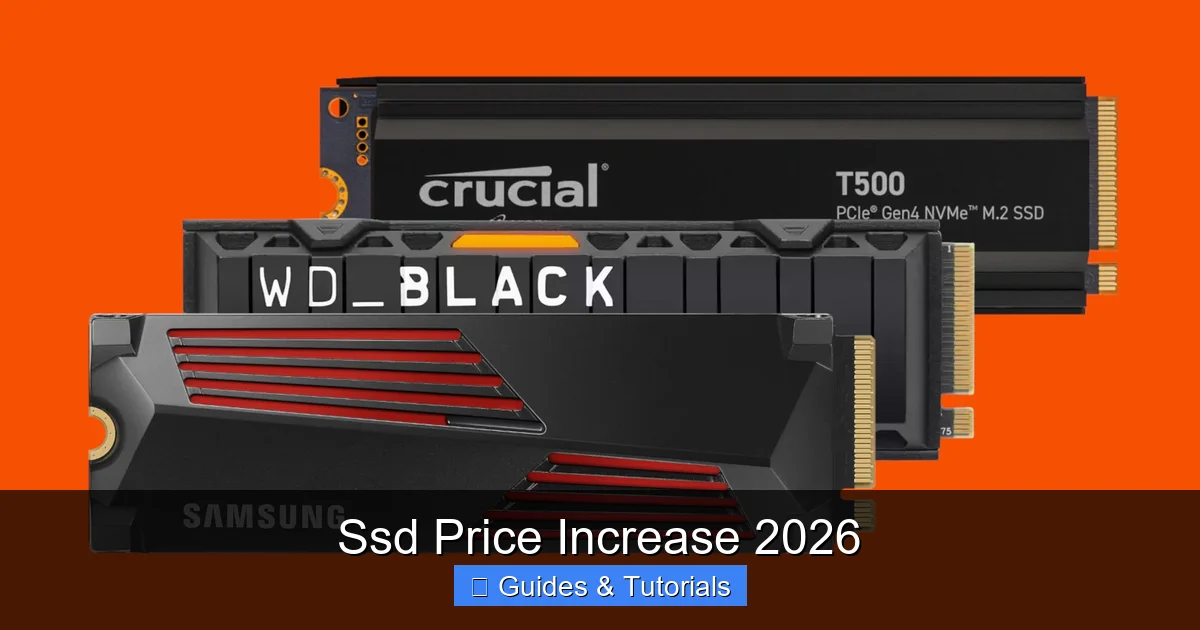
SSD prices are projected to climb significantly by 2026 due to rising production costs, supply chain disruptions, and increased demand for high-performance storage. Consumers and businesses alike should act now to secure affordable SSDs before shortages drive up costs further. This guide breaks down the key factors behind the anticipated price hike and offers practical tips to navigate the changing landscape.
Key Takeaways
- Rising Production Costs: Increased energy prices and raw material shortages are driving up manufacturing expenses for SSDs.
- Supply Chain Disruptions: Ongoing geopolitical tensions and logistics bottlenecks may limit SSD availability in 2026.
- Growing Demand: AI, data centers, and gaming industries are fueling strong consumer and enterprise demand.
- NAND Flash Shortages: Key components like NAND chips face constrained supply, directly impacting SSD pricing.
- New Technology Adoption: Next-gen SSDs (e.g., PCIe 5.0, Gen5) will be more expensive as older models phase out.
- Strategic Buying Window: Purchasing SSDs now could save money before prices surge in late 2025 and 2026.
- Alternative Options: Consider hybrid drives or cloud storage as cost-effective alternatives during high-price periods.
📑 Table of Contents
- The Rising Tide: Why SSD Prices Are Set to Increase in 2026
- Understanding the SSD Market Landscape
- Key Factors Driving SSD Price Increases in 2026
- How Will SSD Prices Change Specifically in 2026?
- Who Will Be Affected by the SSD Price Hike?
- What Can You Do About It? Practical Tips to Prepare for the SSD Price Surge
- Looking Beyond 2026: Long-Term Outlook for SSD Pricing
- Conclusion: Stay Informed, Stay Prepared
The Rising Tide: Why SSD Prices Are Set to Increase in 2026
If you’ve been holding off on upgrading your computer or building a new PC, you might want to reconsider. The storage market is heating up—and not just in temperature. Solid State Drives (SSDs), once considered a luxury upgrade, are becoming essential for modern computing. But there’s growing concern that SSD prices could jump significantly in 2026. From supply chain issues to surging global demand, several factors are converging to push costs upward. In this comprehensive guide, we’ll break down exactly what’s happening, why it matters to you, and what you can do about it.
Whether you’re a gamer, a content creator, a student, or running a small business, SSDs power your daily tasks. Faster boot times, quicker file transfers, and snappier system performance all depend on reliable SSD technology. Yet, as innovation accelerates and manufacturing becomes more complex, so do the costs. By 2026, experts predict a noticeable spike in SSD pricing across consumer and enterprise markets. Understanding these trends isn’t just about tracking tech news—it’s about making smarter financial decisions in an increasingly competitive digital world.
Understanding the SSD Market Landscape
To grasp why SSD prices are climbing, we need to look at the bigger picture. The SSD market has grown dramatically over the past decade. What started as niche high-end storage solutions is now standard in laptops, desktops, smartphones, and data centers worldwide. This explosive growth has reshaped how we store and access information—but it hasn’t come without challenges.
Visual guide about Ssd Price Increase 2026
Image source: oscoo.com
The Evolution of SSD Technology
SSDs have evolved rapidly since their commercial debut. Early models used SATA interfaces and offered modest speeds compared to today’s standards. Now, we see NVMe SSDs using PCIe 4.0 and even PCIe 5.0 lanes, delivering speeds over 7,000 MB/s—enough to load entire video editing projects in seconds. This leap in performance comes with higher development and production costs, which manufacturers often pass on to consumers.
As technology advances, older SSD generations become obsolete faster. For example, PCIe 3.0 SSDs are already being phased out in new motherboards in favor of PCIe 4.0 and 5.0 support. This shift means manufacturers must invest heavily in new factories and retool equipment, increasing overall production expenses. These costs don’t disappear overnight—they gradually filter into retail prices.
Global Demand Surge
One of the biggest drivers behind rising SSD prices is simply: more people want them. The pandemic accelerated digital transformation across industries. Remote work, online education, and streaming entertainment became the norm. Every laptop, tablet, and desktop sold today includes an SSD—even budget models.
But demand isn’t limited to personal devices. Cloud providers, artificial intelligence labs, and cryptocurrency mining operations consume massive amounts of storage. Data centers require petabytes of SSDs to manage real-time analytics, machine learning workloads, and virtual machines. This enterprise-level demand competes directly with consumer purchases, tightening supply and pushing prices higher.
Key Factors Driving SSD Price Increases in 2026
While multiple forces contribute to the coming price hikes, a few stand out as primary culprits. Let’s dive into each one so you understand exactly what’s happening behind the scenes.
Visual guide about Ssd Price Increase 2026
Image source: custompc.com
1. Raw Material Scarcity and Rising Costs
SSDs rely on specialized materials, especially NAND flash memory chips. These are made from silicon wafers processed in ultra-clean environments. The production of NAND involves rare earth elements and highly refined chemicals. When global commodity prices rise—or when supply chains falter—the cost of raw materials climbs.
In recent years, geopolitical tensions between major producers (like China and Taiwan) have created uncertainty. Any disruption in these regions can ripple through the entire industry. For instance, if a key semiconductor plant shuts down due to political unrest or natural disasters, NAND chip supplies shrink. Manufacturers respond by raising prices to offset losses—and those increases trickle down to end users.
Additionally, energy costs play a role. Manufacturing NAND flash is incredibly energy-intensive. As electricity prices rise globally—especially in Europe and parts of Asia—production expenses grow. These added costs are baked into every SSD sold.
2. Supply Chain Bottlenecks Persist
The global supply chain remains fragile. Shipping delays, port congestion, and container shortages continue to affect electronics distribution. SSDs are assembled in stages across different countries: design in the U.S., fabrication in South Korea or Japan, assembly in China or Vietnam, and packaging in various locations. Any link in this chain can slow delivery and inflate costs.
For example, during the pandemic, many factories paused operations, causing backlogs. Even though production rebounded, lead times for SSDs remain longer than ideal. Warehouses report tighter inventory levels, and retailers warn of potential stockouts by mid-2026. When supply can’t keep up with demand, prices naturally rise.
3. Increased Competition for Components
SSDs aren’t built in isolation. They depend on other critical parts like controllers, DRAM cache, and printed circuit boards. All of these components face their own supply constraints and price pressures.
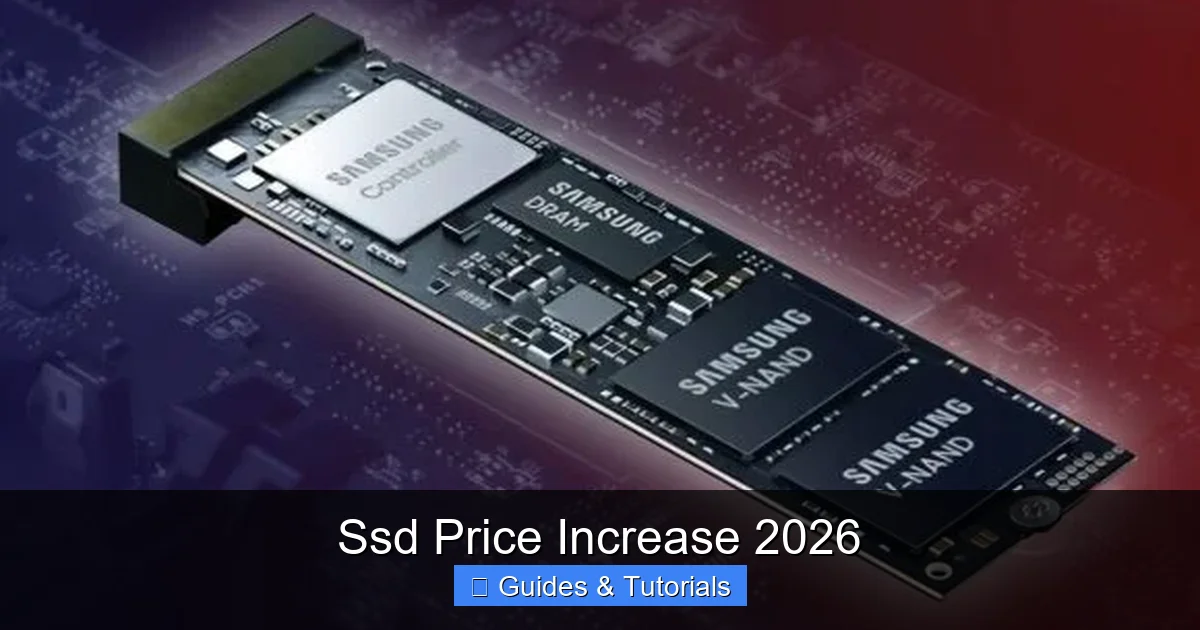
DRAM modules—used for temporary data buffering—are particularly sought after. Both SSDs and RAM rely on similar manufacturing processes. When server farms and gamers compete for limited DRAM supplies, prices spike. Since DRAM is a major cost component in SSDs, its price affects final product costs.
Similarly, advanced SSD controllers require cutting-edge microprocessors. As AI and autonomous vehicles demand more processing power, chipmakers prioritize high-margin products. That leaves fewer resources for controller production, creating shortages and driving up costs.
4. Tariffs and Trade Policies
International trade policies add another layer of complexity. Countries impose tariffs on imported electronics to protect domestic industries. For example, the U.S. has placed duties on Chinese-made SSDs and components. While intended to boost local manufacturing, these tariffs raise import costs for American buyers.
As geopolitical rivalries escalate, new trade barriers emerge. If a country restricts exports of critical semiconductors, other nations retaliate with their own restrictions. This tit-for-tat approach creates uncertainty for manufacturers who must plan production years in advance. To hedge against risk, companies build in extra costs—which show up in retail prices.
5. Transition to Newer Technologies
The tech industry never stops innovating. By 2026, we’ll likely see widespread adoption of PCIe 5.0 SSDs and even early Gen6 models. These drives offer double the bandwidth of current Gen4 SSDs and are ideal for high-end gaming, 8K video editing, and AI training.
However, developing and producing next-gen SSDs requires massive R&D investments. Factories must be upgraded, testing protocols refined, and compatibility ensured. These efforts take time and money. Initially, new technologies carry premium pricing until economies of scale kick in. So while PCIe 5.0 SSDs promise blazing speed, they’ll also come with a hefty price tag well into 2026.
How Will SSD Prices Change Specifically in 2026?
Experts estimate that average SSD prices could increase by 15% to 30% between 2025 and 2026. Entry-level 500GB models may go from $40 to $50–$60. Mid-range 1TB drives could jump from $70 to $90–$110. High-performance 2TB+ NVMe SSDs might see the largest gains—potentially rising from $150 to $200 or more.
Visual guide about Ssd Price Increase 2026
Image source: applech2.com
This isn’t speculative fear-mongering. Industry analysts from Gartner, IDC, and TrendForce have published reports forecasting sustained price pressure through 2026. Their models account for production delays, component shortages, and shifting demand patterns. The consensus? Buckle up for higher storage costs.
Here’s a rough breakdown of expected price changes by capacity and type:
- 500GB SATA SSD: $35 → $45–$55
- 1TB SATA SSD: $55 → $70–$85
- 1TB NVMe PCIe 4.0 SSD: $75 → $95–$110
- 2TB NVMe PCIe 5.0 SSD: $160 → $200–$240
These numbers reflect inflation-adjusted estimates based on current trends. Actual prices may vary depending on brand, retailer promotions, and regional economic conditions. But the general upward trajectory is clear.
Who Will Be Affected by the SSD Price Hike?
The impact of rising SSD prices won’t be uniform. Different groups will feel the pinch in distinct ways. Let’s explore who’s most vulnerable—and who might benefit.
Home Users and Gamers
For everyday computer users, upgrading from an HDD to an SSD is one of the easiest performance boosts. But if prices rise sharply, many may delay upgrades or settle for smaller capacities. Gamers, in particular, face a dilemma: modern titles require fast storage to reduce loading times and texture pop-in.
Consider this scenario: You’re building a new gaming rig. A 1TB NVMe SSD is ideal for your OS, games, and apps. But if that drive jumps from $80 to $100+, it eats into your total budget. Some gamers might opt for two smaller SSDs instead of one large one—but that complicates cable management and limits future expansion.
Small Businesses and Startups
Small businesses rely on fast, reliable storage for productivity software, customer databases, and file sharing. Many still use traditional hard drives due to cost concerns. If SSD prices surge, upgrading entire office networks becomes prohibitively expensive.
Startups building web applications or mobile services often host data on SSD-powered servers. Higher storage costs directly impact operational expenses. In competitive markets, even a 20% increase in infrastructure spending can strain thin profit margins.
Larger Enterprises and Data Centers
Larger organizations absorb price increases better than individuals or SMBs. They negotiate bulk discounts and have dedicated procurement teams to manage supply risks. However, they’re not immune—especially if SSD shortages occur.
Data centers consume SSDs by the truckload. A single facility might deploy hundreds of terabytes monthly. If prices rise 25%, annual storage costs could increase by millions. Companies may respond by optimizing usage (e.g., tiered storage systems) or delaying hardware refreshes.
Manufacturers and Retailers
On the flip side, some players stand to benefit. SSD manufacturers who secure long-term component contracts or invest in automation may maintain stable margins. Similarly, retailers offering bundled deals or financing options can attract price-sensitive shoppers.
Brands like Samsung, Crucial, and WD have diversified suppliers and expanded production capacity. These companies are better positioned to weather price swings. Meanwhile, e-commerce platforms like Amazon and Newegg may run clearance sales to clear older inventory before 2026.
What Can You Do About It? Practical Tips to Prepare for the SSD Price Surge
The good news? You don’t have to wait helplessly for prices to climb. There are smart strategies to minimize impact and make informed decisions. Here’s how to stay ahead of the curve.
Buy Now, Before Prices Rise
If you need an SSD soon, consider purchasing it now. Prices are still relatively stable today, and waiting could mean paying significantly more later. Look for reputable brands and avoid deep discounts from unknown sellers—those might be refurbished or counterfeit units.
Set a reminder for yourself: “Check SSD prices every three months.” If you spot a good deal, act fast. Black Friday, Prime Day, and holiday sales often feature steep discounts, but timing is everything. Stockpiling isn’t necessary—just ensure you get what you need before shortages hit.
Compare Prices Across Retailers
Don’t assume all stores charge the same. Use price-tracking tools like CamelCamelCamel (for Amazon) or Keepa to monitor historical prices. Subscribe to deal alerts from TechRadar, Tom’s Hardware, or PCMag. These services notify you when SSDs drop below your target price.
Also, check international retailers if shipping is feasible. Sites like Alternate.de or Scan.co.uk sometimes offer lower prices due to currency exchange rates or local tax policies. Just factor in shipping and import duties before committing.
Consider Older Generations
If you’re not doing intensive work like 4K video editing or AI development, a PCIe 3.0 or SATA SSD will suffice. These drives are cheaper now and will remain usable for years. Manufacturers often discount older models as they phase them out.
For example, a 1TB SATA SSD from Samsung’s 870 EVO series still delivers excellent reliability and speed for general use. It won’t match a PCIe 5.0 drive in raw performance, but it’s perfect for operating systems, browsers, and office apps.
Explore Alternative Storage Solutions
If SSD prices become too high, consider hybrid approaches. Many laptops now include both an SSD and an HDD—using the SSD for the OS and frequently accessed files, and the HDD for bulk storage.
Cloud storage is another option. Services like Google Drive, Dropbox, and OneDrive offer affordable plans for backing up documents and media. While not as fast as local SSDs, they’re scalable and accessible anywhere. For non-critical data, cloud storage can reduce reliance on physical drives.
Join Waitlists or Subscribe to Newsletters
Some manufacturers notify customers when new SSDs launch or restock. Sign up for newsletters from Western Digital, Kingston, or Seagate. They often send exclusive coupons or early access to sales.
You can also join forums like Reddit’s r/hardwareswap or r/buildapc. Community members share real-time updates on deals, rumors, and inventory changes. Being part of these communities gives you insider knowledge before mainstream outlets report it.
Plan Budgets Ahead for Upgrades
If you’re managing a team or planning a large-scale hardware refresh, start budgeting early. Allocate funds specifically for storage upgrades in Q4 2025 or early 2026. This prevents last-minute scrambles and ensures everyone gets the performance they need.
For students or hobbyists, consider building systems incrementally. Buy a smaller SSD now, then expand later when prices stabilize. Modular designs allow flexible upgrades without replacing everything at once.
Looking Beyond 2026: Long-Term Outlook for SSD Pricing
While 2026 may bring a price spike, it’s unlikely to be the end of the story. Over the next decade, SSD costs will likely follow a pattern: initial high prices as new tech launches, followed by gradual declines as production scales and competition heats up.
Moore’s Law—though slowing—still influences memory density. As engineers pack more bits onto each NAND cell, per-gigabyte costs fall. We’ve seen this trend repeatedly: 1TB SSDs once cost $500; now they’re under $100. Similar reductions will happen again with Gen5 and beyond.
However, don’t expect dramatic drops overnight. Emerging technologies like 3D XPoint, MRAM, or even quantum storage are still years away from mass production. Until then, expect steady price increases driven by demand and supply constraints.
Another factor to watch: sustainability regulations. Governments worldwide are pushing for greener electronics. Energy-efficient manufacturing and recyclable materials add costs initially, but they may lead to long-term savings through improved efficiency.
Conclusion: Stay Informed, Stay Prepared
SSD prices are headed upward in 2026—no sugarcoating here. Rising production costs, supply chain issues, and booming demand are combining to create a perfect storm. Whether you’re upgrading your laptop, building a gaming PC, or managing company servers, these changes matter.
But you’re not powerless. By acting now, comparing options, and staying informed, you can navigate the coming price surge with confidence. Don’t wait until your favorite SSD sells out or costs twice as much. Take control of your storage strategy today.
Remember: technology evolves fast, but smart planning lasts longer. Make choices that balance performance, budget, and future-proofing. And when in doubt, ask questions. Talk to experts, read reviews, and trust your instincts. After all, the best way to beat rising prices is to be prepared—before they even arrive.
🎥 Related Video: The SSD Apocalypse: Why Prices are Skyrocketing in 2026
📺 Adam Talks Tech
The days of dirt-cheap SSDs are officially behind us for now. As we move into early 2026, the market is facing a “perfect storm” of …
Frequently Asked Questions
Will SSD prices really increase in 2026?
Yes, industry experts predict a 15% to 30% price increase for SSDs in 2026 due to rising production costs, component shortages, and high global demand. Reports from Gartner and IDC confirm this trend.
Which types of SSDs will be most affected by the price hike?
High-performance NVMe PCIe 5.0 SSDs and large-capacity drives (2TB+) will see the biggest price jumps. Older SATA and PCIe 3.0 models may remain relatively stable or drop slightly as they phase out.
Can I still find good SSD deals before 2026?
Absolutely. Monitor sales events like Black Friday, Prime Day, and holiday promotions. Use price-tracking tools to catch discounts before shortages drive prices up.
Is it worth waiting until 2026 for cheaper SSDs?
Not necessarily. Prices may rise steadily through 2025 and 2026. Waiting risks higher costs and potential stockouts. Buying now often saves money.
Should I switch to HDDs instead of SSDs to save money?
Only if speed isn’t important. HDDs are cheaper per gigabyte but much slower. For most users, the performance gain from SSDs outweighs the cost difference—especially with rising prices.
How can businesses prepare for rising SSD costs?
Start budgeting early, negotiate bulk purchase agreements, consider hybrid storage setups, and prioritize critical upgrades first. Planning ahead minimizes disruption and keeps operations running smoothly.