

Key Takeaways
- Global Supply Chain Disruptions: Ongoing geopolitical tensions, semiconductor shortages, and logistics delays are straining SSD production worldwide.
- Rising Demand from AI and Data Centers: Artificial intelligence training, cloud computing, and high-performance storage needs are driving unprecedented SSD consumption.
- Manufacturing Capacity Limits: Fewer fabs are producing NAND flash memory, and existing facilities are operating at maximum output with little room for expansion.
- Price Volatility Ahead: Expect significant price increases in consumer and enterprise SSDs throughout 2025 and into 2026.
- Alternative Technologies Emerging: New storage solutions like Gen5 NVMe, CXL-enabled memory, and QLC/PLC SSDs may help ease pressure but aren’t silver bullets.
- Early Adoption Could Save Money: Buying now or stocking up during stable periods might lock in lower prices before the crisis peaks.
- Impact on Everyday Users: Gamers, content creators, and remote workers relying on fast storage will feel the effects first through slower upgrades and inflated costs.
📑 Table of Contents
- Introduction: What Is the SSD Crisis of 2026?
- The Roots of the Crisis: Why SSDs Are Suddenly Scarce
- Manufacturing Challenges: The Hard Truth Behind Limited Output
- Who Will Be Hit First? Understanding the Impact Zones
- What You Can Do Now: Preparing for the SSD Shortage
- Future Outlook: Will the Crisis End… Or Worsen?
- Conclusion: Stay Informed, Stay Prepared
Introduction: What Is the SSD Crisis of 2026?
Imagine walking into a computer store only to find that every SSD shelf is empty. Your favorite gaming laptop upgrade is delayed because the required 1TB NVMe drive is backordered for months. A small business owner trying to migrate to faster storage can’t afford the sudden price hike. These scenarios aren’t far-fetched—they’re early symptoms of what experts call the **SSD Crisis 2026**. We’ve seen similar shortages before—like the DRAM crunch of 2018 or the GPU shortage during crypto mining booms—but this time feels different. The storm isn’t just one thing; it’s a perfect alignment of surging demand, constrained supply, and shifting market dynamics. And while we’re still years away from peak crisis levels, the warning lights have already started blinking red. This article breaks down exactly what the SSD Crisis of 2026 means, who it affects most, and what you can do today to stay ahead. Whether you’re a tech enthusiast, IT professional, or casual user, understanding these trends helps you make smarter decisions about storage now and in the near future.The Roots of the Crisis: Why SSDs Are Suddenly Scarce

Visual guide about Ssd Crisis 2026
Image source: polycrisis.org
Demand Surge from AI and Cloud Computing
Artificial intelligence has become one of the biggest drivers behind SSD growth. Training large language models requires massive datasets loaded repeatedly from high-speed storage. A single GPT-4-level model can churn through petabytes of data—each iteration needing ultra-fast access. That means hyperscalers like Google, Microsoft Azure, and Amazon Web Services are buying SSDs by the truckload. But it’s not just big tech. Startups building AI tools, universities running research clusters, and even autonomous vehicle companies rely heavily on fast storage. According to industry reports, enterprise SSD shipments grew over 20% annually between 2022 and 2024—a pace that simply can’t be met with current production rates.Consumer Demand Doesn’t Slow Down
Meanwhile, everyday users keep pushing for bigger, faster drives. Gamers want 2TB+ NVMe SSDs to house expansive games like Cyberpunk 2077 or Starfield. Video editors streamline workflows by storing raw footage directly on SSDs instead of spinning disks. Remote workers use external SSDs for secure backups and quick file transfers across devices. Even Apple’s transition to custom SSDs inside MacBooks increased per-unit consumption, further straining global inventory. With no end in sight to this trend, total SSD demand is projected to double by 2026 compared to 2023 levels.Supply Chain Bottlenecks Persist
On the flip side, producing SSDs isn’t as simple as printing more chips. Most NAND flash memory comes from just a handful of manufacturers based in China, South Korea, and Taiwan. Any disruption—whether from trade restrictions, natural disasters, or factory fires—can ripple across the entire industry. Take the 2021 Texas freeze, which shut down several semiconductor plants for weeks. Or consider recent U.S.-China tensions affecting export controls on advanced chips. These events show how vulnerable the supply chain really is. Even routine shipping delays due to port congestion or labor strikes can push lead times from weeks to months.Manufacturing Challenges: The Hard Truth Behind Limited Output

Visual guide about Ssd Crisis 2026
Image source: tier1.com
NAND Flash Production Is Concentrated
Over 90% of global NAND flash memory is produced by just five companies: Samsung, SK Hynix, Micron, Kioxia, and Western Digital. This consolidation gives them pricing power but also creates single points of failure. If one plant goes offline for maintenance or suffers damage, global output drops instantly. Moreover, building new fabrication facilities (fabs) takes years and costs billions. A single modern NAND fab can cost $15 billion or more. With capital markets tightening and interest rates rising, few investors are willing to fund such risky ventures right now.Technology Leapfrogging Slows Innovation
Another issue: moving to newer process nodes (like 200-layer or beyond) is getting harder and more expensive. While denser layers mean more storage per chip, yield rates often drop initially, increasing per-unit costs. Manufacturers must balance innovation with profitability—sometimes choosing to delay upgrades until economic conditions improve. As a result, average SSD capacity growth has slowed slightly since 2022, even as raw demand explodes. This mismatch between supply capabilities and market needs fuels the looming crisis.Who Will Be Hit First? Understanding the Impact Zones
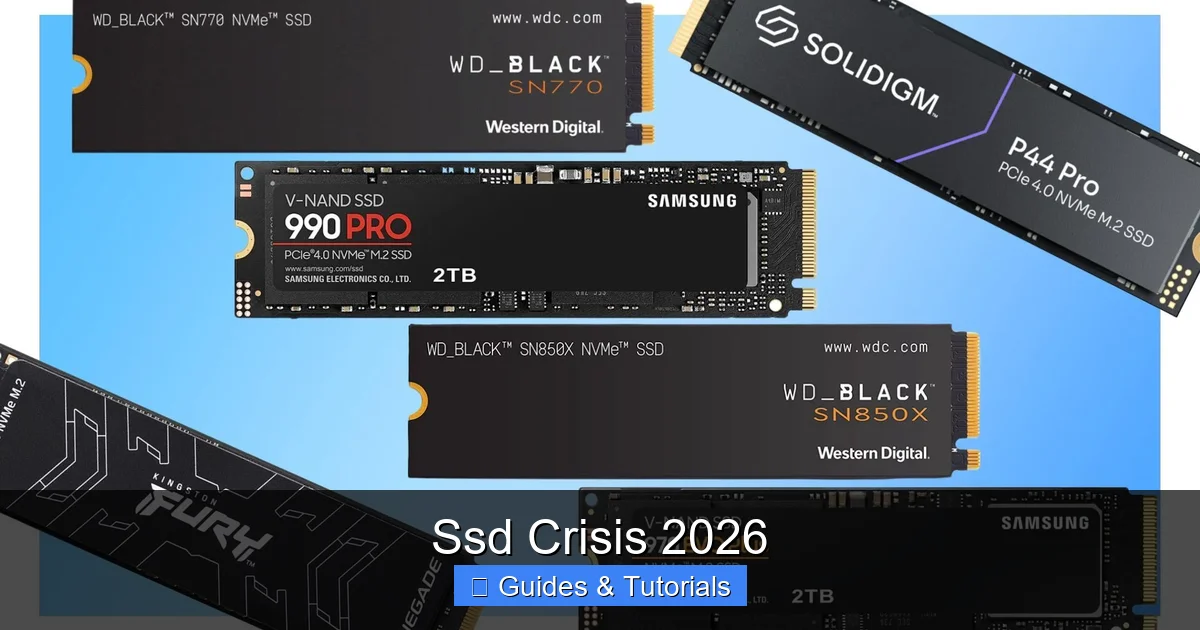
Visual guide about Ssd Crisis 2026
Image source: cdn.mos.cms.futurecdn.net
Enterprise and Data Center Operators
Cloud providers and large enterprises operate on razor-thin margins. Delayed hardware deliveries mean postponed server deployments, which translates to lost revenue. For example, a company planning to launch a new SaaS platform might miss its go-live date if SSDs aren’t available. Additionally, data centers consume vast amounts of energy. Switching to newer, more efficient SSDs helps cut power bills—but if those drives are scarce, they’ll stick with older, less efficient models longer than planned. That’s bad for both budgets and sustainability goals.Small Businesses and SMBs
Small-to-medium businesses (SMBs) often lack the negotiation leverage of giants like AWS. When SSD prices jump 30–50%, they may have no choice but to delay IT upgrades or absorb the extra cost. This can hurt competitiveness, especially if rivals move to faster storage and deliver better performance. Remote work setups also depend on portable SSDs for collaboration and backup. If external drives disappear from shelves, freelancers and consultants face real productivity losses.Gamers and Content Creators
For enthusiasts, the crisis hits hardest through availability and pricing. Limited-edition SSDs or high-end models like Samsung 990 Pro or WD Black SN850X may sell out within hours of restock. Waiting lists stretch into months, and resellers jack up prices on eBay or Amazon. Content creators using video editing software like DaVinci Resolve know how critical fast storage is for rendering 4K/8K footage. Without reliable access to large-capacity SSDs, project timelines get pushed back—and clients get frustrated.Everyday Consumers and Home Users
Even basic laptop or desktop buyers aren’t immune. OEMs (original equipment manufacturers) like Dell and HP build PCs using contracted SSD supplies. If those components run short, they might downgrade specs or delay shipments altogether. And let’s not forget smart home devices—many IoT gadgets now include local storage for privacy or offline functionality. If manufacturers can’t source affordable SSDs, they may scale back features or raise device prices.What You Can Do Now: Preparing for the SSD Shortage
While the full force of the **SSD Crisis 2026** hasn’t arrived yet, there are concrete steps you can take today to protect yourself.Audit Your Current Storage Needs
Start by assessing how much storage you actually use. Open your system settings and check free space on your main drive. Ask: – Do I really need a 2TB SSD, or will 1TB suffice for now? – Can I offload files to cheaper HDDs or cloud storage instead? Many people buy oversized drives thinking they’ll “future-proof” their setup—only to fill them up slowly over years. Being honest about usage helps avoid unnecessary spending later.Buy Strategically During Stable Periods
Prices fluctuate constantly. Monitor deals on sites like Newegg, B&H Photo, or Best Buy using price-tracking tools like CamelCamelCamel or Keepa. Look for sales around holidays (Black Friday, Prime Day) when retailers clear old stock. Also consider buying refurbished or open-box units from reputable sellers. They often come with full warranties and save money—especially useful if you need a drive urgently but don’t want to pay premium prices during shortages.For example, checking out reviews of budget-friendly options like the Silicon Power Ace A55 4TB SSD could help you plan ahead without overspending.
Explore Alternative Storage Options
If SSDs remain unavailable, consider these fallbacks: – **Hybrid Drives (SSHDs):** Combine HDD speed with a small SSD cache for moderate performance gains. – **External HDDs:** USB 3.2 Gen 2 drives offer terabyte-level capacity at low cost—ideal for backups. – **Network-Attached Storage (NAS):** Share storage across multiple devices without touching individual drives. – **Cloud Storage:** Services like Backblaze or pCloud provide scalable options, though upload speeds vary. Keep in mind: none match SSD performance, but they keep systems running until normal supply resumes.Advocate for Long-Term Solutions
If you represent a business or institution, push leadership to diversify suppliers or negotiate bulk contracts now. Early partnerships with manufacturers can secure priority allocation during shortages. Individuals can support open-source initiatives promoting sustainable tech practices—like repairing rather than replacing devices—which reduces overall demand pressure.Future Outlook: Will the Crisis End… Or Worsen?
So what happens after 2026? Experts disagree on whether this marks the worst of the crisis or just the beginning.Potential Relief Through Innovation
Some analysts point to promising developments that could alleviate strain: – **Gen5 NVMe SSDs:** Delivering over 14 GB/s read speeds, these next-gen drives increase efficiency and reduce per-gigabyte costs. – **QLC & PLC NAND:** Quadruple-and-pentuple-level cell technologies pack more bits per cell, boosting density without expanding fabs. – **3D XPoint Alternatives:** Intel’s discontinued Optane paved the way for emerging memory-class storage solutions. However, adoption takes time. It took years for PCIe 4.0 to go mainstream after launch, and Gen5 won’t reach mass market until late 2025 at best.Geopolitical Risks Loom Large
Conversely, ongoing tensions between major economies could trigger export bans or sanctions affecting key materials like rare earth elements used in chipmaking. Climate change-induced disasters may also disrupt production hubs in Asia. Without coordinated international cooperation, the **SSD Crisis 2026** could evolve into a prolonged shortage lasting well beyond 2027.Conclusion: Stay Informed, Stay Prepared
The **SSD Crisis 2026** isn’t something that will suddenly appear overnight—it’s unfolding gradually, shaped by forces we’re already witnessing today. From AI labs consuming terabytes daily to gamers chasing the latest SSD deals, demand is skyrocketing. At the same time, fragile supply chains and aging fabs struggle to keep up. But here’s the good news: awareness is the first step toward resilience. By auditing your needs, shopping smartly, and exploring alternatives, you can navigate the coming storm without panic. Whether you’re upgrading a personal rig or managing a corporate data center, preparation beats reaction every time. Stay tuned to trusted tech news sources, follow industry leaders on social media, and remember—knowledge is your best defense against scarcity.🎥 Related Video: SSD Prices Will DOUBLE in 2026! Buy Now Samsung NAND Crisis!
📺 dijital dream
SSD Prices Will DOUBLE in 2026! If you are planning a PC build or a storage upgrade, you need to watch this urgent report on the …
Frequently Asked Questions
When exactly will the SSD Crisis 2026 happen?
The crisis is expected to peak in mid-to-late 2026, though early shortages and price hikes could begin as soon as late 2025. Factors like AI demand and supply chain delays are accelerating the timeline.
Will SSD prices definitely go up during the crisis?
Yes, most forecasts predict a 30–60% increase in average SSD prices by 2026 due to limited supply and high demand. Enterprise-grade drives will see sharper jumps than budget models.
Can I still buy SSDs safely in 2024 or 2025?
Absolutely! Prices are relatively stable now, and buying during sales or from authorized retailers helps avoid inflated resale markups later. Just monitor stock levels closely.
Are external SSDs affected the same way as internal ones?
Not always—external drives use slightly older NAND technology and lower-tier controllers, so they’re often easier to source. However, high-capacity enclosures may still face delays.
Should I switch to HDDs if SSDs become too expensive?
Only if speed isn’t critical. Modern HDDs are reliable and cheap for bulk storage, but they’re too slow for OS booting, gaming, or video editing. Use them alongside SSDs where appropriate.
How can businesses prepare for SSD shortages?
Businesses should audit storage needs, negotiate long-term supplier contracts, consider hybrid setups, and explore cloud-based alternatives to reduce reliance on physical drives.