
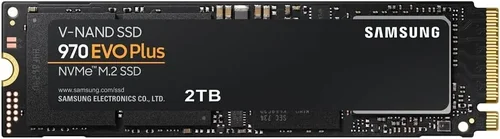
When it comes to upgrading your computer’s storage, few components deliver as dramatic a performance boost as a high-quality solid-state drive (SSD). Whether you’re building a new gaming rig, reviving an aging laptop, or optimizing a workstation for creative tasks, the right SSD can transform boot times, application loading, and overall system responsiveness. Among the sea of options available in 2026, one name continues to stand out: the Samsung 970 EVO Plus. Since its debut, this NVMe M.2 SSD has earned a reputation for reliability, speed, and consistent real-world performance. But is it still the best choice in today’s rapidly evolving storage market?
This comprehensive buying guide is designed to answer that very question—and much more. Whether you’re a first-time builder, a seasoned tech enthusiast, or a professional relying on fast data access, this guide will equip you with everything you need to make an informed decision. We’ll break down the key factors to consider when shopping for an SSD, compare different types of drives, highlight common pitfalls, and provide expert-backed recommendations. By the end, you’ll not only know whether the Samsung 970 EVO Plus is right for you, but also how to evaluate any SSD with confidence.
The SSD market in 2026 is more competitive than ever. With advancements in NAND technology, controller designs, and interface standards like PCIe 4.0 and 5.0, consumers now have access to faster, more efficient, and increasingly affordable storage solutions. Yet, despite newer models hitting the shelves, the Samsung 970 EVO Plus remains a benchmark many drives are measured against. Its blend of proven performance, Samsung’s trusted brand reputation, and broad compatibility makes it a perennial favorite. However, newer alternatives—such as the Samsung 980 PRO, WD Black SN850X, and Crucial T700—offer compelling upgrades in speed and endurance. This guide will help you navigate these choices, weigh trade-offs, and determine what “best” truly means for your specific use case.

What to Look for When Buying Buying Guide
1. Budget & Price Range
Your budget is often the first and most decisive factor when choosing an SSD. Prices vary significantly based on capacity, performance tier, and brand. As of 2026, the Samsung 970 EVO Plus typically ranges from $60 for a 250GB model to over $200 for the 2TB version. While it’s no longer the newest drive on the market, it remains competitively priced—especially during seasonal sales. When setting your budget, consider not just the upfront cost but also the cost per gigabyte (GB), which gives a clearer picture of value. For example, a 1TB drive priced at $90 offers better value ($0.09/GB) than a 500GB drive at $55 ($0.11/GB). Additionally, factor in potential future needs: if you plan to store large game libraries, video projects, or virtual machines, investing in a higher-capacity drive now may save you from upgrading again in a year.
2. Performance Specifications
Performance is where SSDs truly shine—and where the Samsung 970 EVO Plus delivers impressive results. This drive uses the PCIe Gen3 x4 interface and supports NVMe 1.3, offering sequential read speeds up to 3,500 MB/s and write speeds up to 3,300 MB/s. While newer PCIe 4.0 and 5.0 drives can exceed 7,000 MB/s, real-world gains depend heavily on your workload. For everyday computing, gaming, and even moderate content creation, the 970 EVO Plus’s speeds are more than sufficient. More importantly, its random read/write performance—critical for multitasking and OS responsiveness—remains excellent, with over 600K IOPS (Input/Output Operations Per Second). When evaluating performance, don’t just focus on peak speeds; look at sustained performance under load, as some drives throttle after prolonged use due to thermal issues.
3. Build Quality & Durability
Samsung has long been known for its high manufacturing standards, and the 970 EVO Plus is no exception. Built with Samsung’s proprietary V-NAND 3-bit MLC (TLC) technology and a custom Phoenix controller, this drive is engineered for both speed and longevity. It boasts a mean time between failures (MTBF) of 1.5 million hours and comes with a 5-year limited warranty or up to 600TBW (Terabytes Written) for the 1TB model—whichever comes first. This level of endurance is more than adequate for typical consumer use, including heavy gaming and multimedia editing. The drive also includes dynamic thermal protection to prevent overheating, a common issue in compact M.2 form factors. Compared to budget SSDs that may use lower-grade NAND or lack robust controllers, the 970 EVO Plus offers peace of mind through consistent, reliable operation over time.
4. Features & Functionality
Beyond raw speed and durability, the Samsung 970 EVO Plus includes several user-friendly features that enhance its appeal. Samsung’s Magician software provides a comprehensive suite of tools for monitoring drive health, optimizing performance, updating firmware, and enabling over-provisioning—a feature that reserves a portion of the drive for background operations, improving longevity and consistency. The drive also supports AES 256-bit hardware encryption, making it a solid choice for users concerned about data security. While it lacks advanced features like power-loss protection (found in enterprise-grade drives), its feature set is well-balanced for consumer and prosumer use. Compatibility is another strength: the 970 EVO Plus works seamlessly with most modern motherboards that support M.2 NVMe slots, including those from Intel and AMD platforms.
5. Brand Reputation
Samsung has established itself as a leader in the SSD market, consistently ranking at or near the top in independent performance and reliability tests. The company’s vertical integration—designing its own NAND, controllers, and firmware—gives it a significant advantage in quality control and innovation. The 970 EVO Plus benefits from this legacy, earning high marks from reviewers and users alike. While newer competitors have emerged, Samsung’s track record for customer support, firmware updates, and long-term reliability remains strong. That said, brand reputation shouldn’t be the sole deciding factor. Some lesser-known brands now offer excellent value, especially in the PCIe 4.0 space. Still, for users prioritizing trust and consistency, Samsung’s reputation is a compelling reason to consider the 970 EVO Plus.
6. Warranty & Support
A strong warranty is a sign of a manufacturer’s confidence in its product—and Samsung backs the 970 EVO Plus with one of the best in the industry. The 5-year limited warranty covers defects in materials and workmanship, while the TBW rating ensures you’re protected against premature wear. For example, the 1TB model’s 600TBW rating means you could write 330GB of data every day for five years before reaching the limit—far beyond what most users will ever need. Samsung also provides accessible customer support through its website, including live chat, phone assistance, and detailed troubleshooting guides. Additionally, firmware updates are regularly released to improve performance and compatibility, a service not all brands offer consistently. When comparing SSDs, always check the warranty terms and support options—these can make a big difference if issues arise.
7. Size & Portability
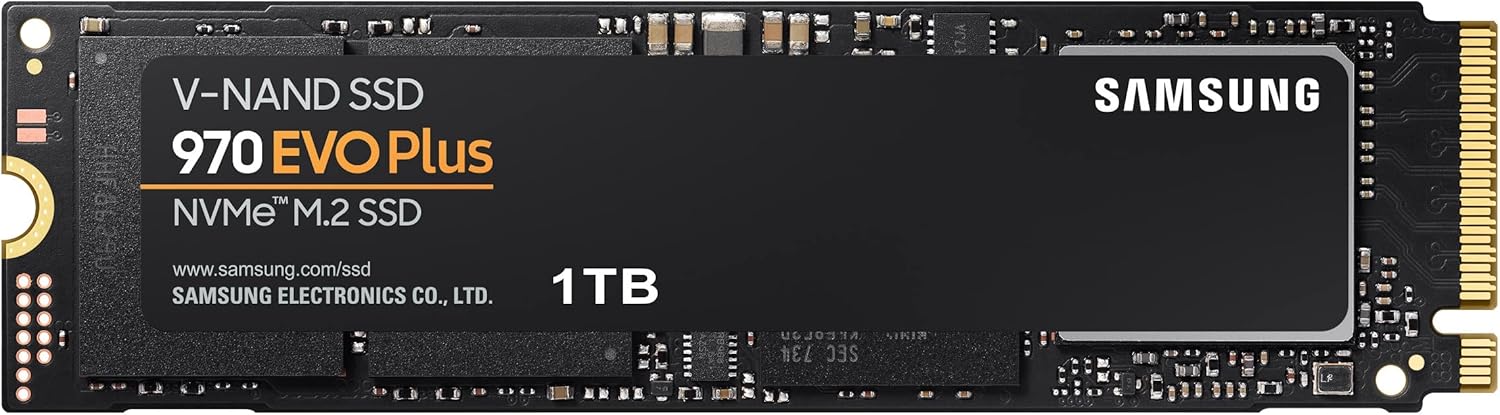
The Samsung 970 EVO Plus comes in the M.2 2280 form factor—measuring 80mm in length, 22mm in width, and just 2.38mm in height. This compact design makes it ideal for laptops, mini-PCs, and small-form-factor desktops where space is at a premium. Unlike 2.5-inch SATA SSDs, which require power and data cables, the M.2 form factor connects directly to the motherboard, reducing clutter and improving airflow. While portability isn’t typically a concern for internal drives, the 970 EVO Plus’s small size and lightweight build make it easy to install and ideal for systems with limited internal space. Just ensure your motherboard has an available M.2 slot that supports NVMe—some older boards only support SATA-based M.2 drives.
8. User Reviews & Ratings
User feedback is one of the most reliable indicators of real-world performance. The Samsung 970 EVO Plus consistently earns high ratings across major retail platforms like Amazon, Newegg, and Best Buy, with average scores often above 4.7 out of 5 stars. Common praises include fast boot times, smooth multitasking, and quiet operation (since SSDs have no moving parts). Some users note that the drive can get warm under heavy load, but this is typical for high-performance M.2 SSDs and is mitigated by the included thermal throttling. A small number of reviews mention compatibility issues with very old systems or specific motherboard chipsets, but these are rare. Overall, the consensus is clear: the 970 EVO Plus delivers on its promises. When reading reviews, focus on verified purchases and detailed experiences rather than brief, vague comments.
Different Types of Buying Guide
Common Buying Mistakes to Avoid
❌ Mistake: Choosing Based Solely on Peak Speed
Why it’s bad: Many buyers fixate on advertised read/write speeds, but real-world performance depends on sustained speeds, random I/O, and thermal management. A drive that peaks at 7,000 MB/s may throttle to 1,500 MB/s under load, negating its advantage.
What to do instead: Look for reviews that test sustained performance and thermal behavior. Prioritize drives with consistent speeds and good cooling solutions.
❌ Mistake: Ignoring Compatibility
Why it’s bad: Not all M.2 slots support NVMe. Some only accept SATA-based M.2 drives, and older motherboards may lack PCIe Gen3 or Gen4 support. Installing an incompatible drive can result in it not being detected.
What to do instead: Check your motherboard’s manual or manufacturer website to confirm M.2 slot type and supported protocols before purchasing.
❌ Mistake: Overlooking Endurance (TBW)
Why it’s bad: Cheaper SSDs often have low TBW ratings, meaning they wear out faster under heavy use. This is especially risky for users who frequently write large amounts of data.
What to do instead: Compare TBW ratings across models. For most users, 600TBW (like the 970 EVO Plus 1TB) is more than sufficient, but content creators should aim higher.
❌ Mistake: Buying the Largest Capacity Without Need
Why it’s bad: Higher capacities cost more per GB and may be unnecessary. A 4TB drive is overkill for a basic office PC and could be better spent on other components.
What to do instead: Assess your actual storage needs. 500GB–1TB is ideal for most users; go larger only if you work with large files or games.
❌ Mistake: Skipping Firmware Updates
Why it’s bad: Outdated firmware can cause performance issues, compatibility problems, or even data corruption. Many users never update their SSD firmware.
What to do instead: Use manufacturer tools like Samsung Magician to check for and install firmware updates regularly.
❌ Mistake: Neglecting Thermal Management
Why it’s bad: High-performance M.2 SSDs generate heat, which can cause throttling and reduce lifespan. Laptops and compact PCs are especially vulnerable.
What to do instead: Use a heatsink if your case supports it, or choose a drive with built-in thermal protection like the 970 EVO Plus.
❌ Mistake: Falling for “Gaming” Branding
Why it’s bad: Many SSDs are marketed as “gaming” with flashy names and RGB lighting, but performance is often identical to standard models. You’re paying for aesthetics, not speed.
What to do instead: Focus on specs and reviews, not marketing buzzwords. A plain SSD with strong performance is better than a “gaming” drive with gimmicks.
Budget Guidelines: How Much Should You Spend?
- Entry-Level ($30–$70 for 1TB): This tier includes SATA SSDs and budget NVMe drives. Expect speeds around 550 MB/s (SATA) or up to 2,000 MB/s (NVMe Gen3). Ideal for basic upgrades, office use, or older systems. The Samsung 870 EVO is a solid choice here.
- Mid-Range ($70–$120 for 1TB): This is the sweet spot for most buyers. Drives like the Samsung 970 EVO Plus offer excellent performance, reliability, and value. Perfect for gaming, productivity, and moderate content creation.
- Premium ($120–$200 for 1TB): PCIe Gen4 drives dominate this tier, delivering speeds over 5,000 MB/s. Great for enthusiasts, streamers, and professionals who need faster load times and file transfers.
- Luxury ($200+ for 1TB): Top-tier PCIe Gen5 SSDs with speeds exceeding 10,000 MB/s. Reserved for high-end workstations, AI development, or users who want the absolute best performance regardless of cost.
Expert Tips for Getting the Best Deal
- Buy during seasonal sales: Major retailers offer deep discounts on SSDs during holidays and shopping events. Sign up for newsletters to get early alerts.
- Compare prices across retailers: Use price-tracking tools like CamelCamelCamel or Honey to find the best deals on Amazon, Newegg, and Best Buy.
- Check for bundle deals: Some manufacturers offer SSDs bundled with heatsinks, cloning software, or migration kits—adding value beyond the drive itself.
- Verify warranty terms: Ensure the warranty is transferable and covers the full period. Some third-party sellers may void warranties.
- Read return policies: Make sure you can return or exchange the drive if it’s defective or incompatible. Most reputable retailers offer 30-day returns.
- Test after installation: Use tools like CrystalDiskMark or Samsung Magician to verify performance and health after setup.
- Consider future upgrades: If you plan to build a new PC soon, consider a Gen4 or Gen5 drive now to avoid replacing it later.
- Avoid counterfeit drives: Buy from authorized retailers. Fake SSDs are common on auction sites and can fail prematurely.

Frequently Asked Questions
Q: Is the Samsung 970 EVO Plus still worth buying in 2026?
A: Yes, especially if you’re using a PCIe Gen3 system or want a reliable, high-performing SSD at a good price. While newer Gen4 and Gen5 drives are faster, the 970 EVO Plus remains excellent for most users and often costs less than cutting-edge alternatives.
Q: Can I use the Samsung 970 EVO Plus in a laptop?
A: Yes, as long as your laptop has an M.2 NVMe slot. Most modern ultrabooks and gaming laptops support it, but check your model’s specifications first.
Q: Does the 970 EVO Plus come with a heatsink?
A: No, it does not include a heatsink. However, many motherboards come with M.2 heatsinks, or you can purchase one separately if needed.
Q: How long will the Samsung 970 EVO Plus last?
A: With a 600TBW rating for the 1TB model and typical usage, it can last 10+ years. Most users will never reach the write limit.
Q: Is the 970 EVO Plus compatible with PS5?
A: No. The PS5 requires PCIe Gen4 SSDs with specific performance and size requirements. The 970 EVO Plus is Gen3 and not supported.
Q: Can I clone my old drive to the 970 EVO Plus?
A: Yes. Use Samsung Data Migration software or third-party tools like Macrium Reflect to clone your existing drive.
Q: Does the 970 EVO Plus support hardware encryption?
A: Yes, it supports AES 256-bit encryption and is compatible with Windows BitLocker and other encryption software.
Q: What’s the difference between the 970 EVO and 970 EVO Plus?
A: The Plus version uses newer V-NAND technology and offers slightly better performance and endurance. It’s the recommended choice.
Q: Will the 970 EVO Plus improve gaming performance?
A: It will reduce load times and improve level streaming, but it won’t increase FPS. For gaming, it’s a great upgrade from an HDD or SATA SSD.
Q: Is Samsung Magician software necessary?
A: Not necessary, but highly recommended. It provides health monitoring, performance optimization, and firmware updates.
Our Final Recommendations
- Best for Budget-Conscious Buyers: Samsung 870 EVO (SATA) – Reliable, affordable, and perfect for basic upgrades.
- Best Overall Value: Samsung 970 EVO Plus – Excellent performance, durability, and price. Ideal for most users.
- Best Premium Option: Samsung 980 PRO – PCIe Gen4 speeds, great for enthusiasts and creators.
- Best for Beginners: Crucial P3 – Easy to install, solid performance, and great value for first-time builders.
- Best for Advanced Users: WD Black SN850X – High endurance, top-tier Gen4 performance, and excellent software suite.
Conclusion: Making the Right Choice
Choosing the right SSD doesn’t have to be overwhelming. While the Samsung 970 EVO Plus may not be the absolute fastest drive in 2026, it remains one of the most balanced, reliable, and value-packed options on the market. Its proven performance, strong warranty, and broad compatibility make it a smart choice for gamers, professionals, and everyday users alike. However, the “best” SSD ultimately depends on your specific needs, budget, and system capabilities.
As you evaluate your options, remember to prioritize real-world performance over marketing claims, consider future-proofing if you plan to upgrade your system, and always verify compatibility. Whether you go with the 970 EVO Plus or a newer alternative, investing in a quality SSD is one of the most impactful upgrades you can make. It’s not just about speed—it’s about smoother workflows, faster access to your files, and a more responsive computing experience.
Take the time to assess your needs, compare models, and look for the best deal. And when you’re ready, install your new SSD with confidence, knowing you’ve made a choice backed by research and expert insight. Your system—and your patience—will thank you.