
[FEATURED_IMAGE_PLACEOLDER]
Solid-state drives (SSDs) have revolutionized the way we store and access data. Gone are the days when mechanical hard disk drives (HDDs) ruled the storage landscape with their spinning platters and moving read/write heads. Today, SSDs offer faster boot times, quicker file transfers, improved system responsiveness, and greater durability—especially in laptops and portable devices. Whether you’re building a new PC, upgrading an old laptop, or expanding storage for a gaming rig or workstation, choosing the right SSD can make a dramatic difference in performance and user experience.
This comprehensive buying guide is designed to help you navigate the crowded and rapidly evolving SSD market in 2026. With new technologies like PCIe 5.0, NVMe 2.0, and advanced NAND flash memory hitting the mainstream, it’s more important than ever to understand what separates a good SSD from a great one. You’ll learn how to evaluate key factors like speed, capacity, form factor, endurance, and compatibility—so you can make a confident, informed decision that fits your needs and budget. We’ll also break down common pitfalls, compare different SSD types, and offer expert-backed recommendations to ensure you get the best value for your money.
The SSD market today is more diverse and competitive than ever. From budget-friendly SATA models to blazing-fast NVMe Gen5 drives capable of over 14,000 MB/s, there’s an SSD for every use case. Brands like Samsung, Crucial, Western Digital, Kingston, and Sabrent continue to innovate, while newer players like Solidigm and Corsair are pushing performance boundaries. At the same time, pricing has become increasingly accessible, making SSDs a must-have upgrade even for entry-level systems. This guide will walk you through everything you need to know to choose the best SSD for your specific requirements—whether you’re a casual user, content creator, gamer, or IT professional.

What to Look for When Buying Buying Guide
1. Performance Specifications
Performance is arguably the most critical factor when selecting an SSD. Unlike HDDs, which rely on mechanical movement, SSDs use flash memory to store data, allowing for significantly faster read and write speeds. When evaluating performance, focus on three main metrics: sequential read/write speeds, random read/write IOPS (Input/Output Operations Per Second), and interface type.
Sequential speeds—measured in megabytes per second (MB/s)—determine how quickly large files like videos, games, or backups can be transferred. For example, a high-end NVMe SSD might deliver 7,000 MB/s read and 6,500 MB/s write, while a SATA SSD typically maxes out around 550 MB/s due to interface limitations. Random IOPS, on the other hand, reflect how well the drive handles small, scattered files—important for multitasking, booting the OS, or running databases.
The interface also plays a major role. SATA III is the oldest and slowest, capped at ~600 MB/s. NVMe (Non-Volatile Memory Express) drives connect via PCIe lanes and offer much higher bandwidth. PCIe 3.0, 4.0, and 5.0 represent generational improvements, with each doubling the potential speed. A PCIe 5.0 SSD can theoretically reach 16,000 MB/s, though real-world performance depends on the drive’s controller, NAND type, and cooling.
2. Storage Capacity
Capacity determines how much data your SSD can hold, from your operating system and applications to personal files, games, and media libraries. SSDs are available in a wide range of sizes, typically starting at 120GB and going up to 8TB or more for high-end models.
For most users, a 500GB to 1TB SSD strikes the best balance between cost and usability. This size allows you to install your OS, essential programs, and several large games or projects without constantly managing space. If you’re a gamer with a large library, a content creator working with 4K video, or a professional handling large datasets, consider 2TB or higher. Keep in mind that larger capacities often come with better endurance and performance due to more NAND chips and better wear leveling.
One common mistake is opting for the smallest SSD to save money. A 120GB or 240GB drive may seem sufficient for basic tasks, but modern operating systems like Windows 11 or macOS Sonoma can consume 50–70GB alone, leaving little room for updates, apps, or user files. Over time, a nearly full SSD can suffer from performance degradation due to reduced free space for garbage collection and wear leveling.
3. Form Factor & Compatibility
SSDs come in several physical forms, and choosing the right one is essential for compatibility with your system. The most common form factors include 2.5-inch, M.2, and U.2.
The 2.5-inch SSD resembles a traditional laptop hard drive and connects via SATA. It’s ideal for older desktops and laptops that lack M.2 slots. These drives are easy to install and widely compatible but are limited by SATA speeds.
M.2 SSDs are small, stick-like drives that plug directly into the motherboard. They come in different lengths (e.g., 2242, 2260, 2280) and can use either SATA or NVMe protocols. The “2280” size (22mm wide, 80mm long) is the most common. When buying an M.2 SSD, check your motherboard’s manual to confirm it supports NVMe and has an available M.2 slot. Some older boards only support SATA M.2 drives.
U.2 drives are less common and typically used in enterprise environments. They offer high performance and hot-swappable capabilities but require specialized connectors and are not suitable for most consumer systems.
Additionally, consider thermal management. High-performance NVMe drives, especially PCIe 4.0 and 5.0 models, generate significant heat. Without proper cooling, they may throttle performance to prevent overheating. Many motherboards include heatsinks for M.2 slots, or you can purchase aftermarket coolers.
4. NAND Flash Type & Endurance
The type of NAND flash memory used in an SSD affects its speed, durability, and cost. There are several types: SLC (Single-Level Cell), MLC (Multi-Level Cell), TLC (Triple-Level Cell), and QLC (Quad-Level Cell).
SLC stores one bit per cell and offers the best endurance and performance but is expensive and rarely used in consumer drives. MLC stores two bits and is more durable than TLC, often found in enterprise or high-end consumer SSDs. TLC, which stores three bits per cell, is the most common in mainstream drives—offering a good balance of cost, speed, and longevity. QLC stores four bits and is cheaper to produce but has lower endurance and slower write speeds, especially when the drive is near full.
Endurance is measured in terabytes written (TBW) or drive writes per day (DWPD). A higher TBW rating means the drive can withstand more data written over its lifetime. For example, a 1TB SSD with a 600 TBW rating can theoretically write 600TB of data before failure. Consumer drives typically range from 150 TBW for QLC models to 1,200+ TBW for high-end TLC drives.
While most users won’t reach these limits in normal use, endurance matters for workloads involving frequent writes, such as video editing, database operations, or server applications. Always check the TBW rating and warranty terms when comparing drives.
5. Brand Reputation & Reliability
Not all SSDs are created equal, and brand reputation can be a strong indicator of quality and reliability. Established brands like Samsung, Crucial (a Micron brand), Western Digital, and Kingston have a proven track record of producing durable, high-performance drives with consistent firmware updates and customer support.
Samsung, for instance, is known for its excellent controllers and high-endurance NAND, making drives like the 990 Pro a favorite among enthusiasts. Crucial offers great value with its P-series NVMe drives, often using Micron’s latest 3D NAND technology. Western Digital’s WD Black series targets gamers and power users with optimized performance and cooling solutions.
Avoid no-name or ultra-cheap SSDs from unknown manufacturers. These often use inferior components, lack proper firmware, and may fail prematurely. While they might seem like a bargain, the risk of data loss and the hassle of replacement far outweigh the savings. Stick to reputable brands, especially if you’re storing important data.
6. Warranty & Support
A solid warranty is a sign of confidence in a product’s longevity. Most SSDs come with a 3- to 5-year limited warranty, often tied to the TBW rating. For example, a drive with a 600 TBW rating might offer a 5-year warranty or until 600TB is written—whichever comes first.
Check the warranty terms carefully. Some manufacturers require registration, while others offer automatic coverage. Also, consider the quality of customer support. Brands like Samsung and Crucial provide robust support portals, firmware update tools, and data migration software. Others may offer limited assistance or slow response times.
In the event of failure, a good warranty can mean a hassle-free replacement. However, remember that warranties typically don’t cover data recovery. Always back up important files, regardless of your SSD’s reliability.
7. Price & Value for Money
Price is a major consideration, but it shouldn’t be the only one. SSD pricing has dropped significantly over the years, with 1TB NVMe drives now available for under $60 during sales. However, prices vary widely based on performance, capacity, and brand.
To assess value, calculate the cost per gigabyte (GB). For example, a $70 1TB SSD costs $0.07/GB, while a $120 2TB model costs $0.06/GB—making the larger drive a better long-term investment. Keep an eye on seasonal sales like Black Friday, Prime Day, or back-to-school promotions, when prices often drop 20–40%.
Avoid the temptation to buy the cheapest SSD available. While budget drives may work for light use, they often compromise on endurance, performance, and reliability. Instead, aim for the best balance of price, performance, and warranty within your budget.
8. Use Case & Workload
Your intended use case should heavily influence your SSD choice. A casual user who browses the web, streams videos, and uses office apps won’t need the same drive as a video editor working with 8K footage or a gamer with a 200+ game library.
For general computing, a SATA SSD or entry-level NVMe drive (e.g., Crucial P3, WD Blue SN580) is more than sufficient. Gamers benefit from fast NVMe drives with high sequential speeds to reduce load times—look for PCIe 3.0 or 4.0 models with DRAM cache. Content creators should prioritize high endurance, large capacity, and consistent write performance—drives like the Samsung 990 Pro or WD Black SN850X are excellent choices.
Servers and workstations handling heavy I/O workloads may require enterprise-grade SSDs with power-loss protection, advanced error correction, and higher DWPD ratings. These drives are more expensive but offer the reliability needed for 24/7 operation.
Different Types of Buying Guide

Common Buying Mistakes to Avoid

❌ Mistake: Ignoring Compatibility
Why it’s bad: Buying an NVMe SSD for a motherboard that only supports SATA M.2 will result in a non-functional drive. Similarly, installing a PCIe 5.0 SSD in a PCIe 3.0 slot limits performance and may cause instability.
What to do instead: Always check your system’s specifications—motherboard manual, laptop model, or manufacturer website—before purchasing. Confirm the supported interface (SATA/NVMe), form factor (M.2 2280), and PCIe generation.
❌ Mistake: Overlooking Endurance Ratings
Why it’s bad: Choosing a QLC SSD for heavy write workloads can lead to premature failure. These drives have lower TBW ratings and may slow down significantly when near capacity.
What to do instead: Match the SSD’s endurance to your usage. For light tasks, QLC is fine. For video editing, databases, or frequent backups, opt for TLC or MLC drives with higher TBW ratings.
❌ Mistake: Skimping on Capacity
Why it’s bad: A 240GB SSD may seem sufficient, but after installing the OS and a few apps, you’ll quickly run out of space. Low free space reduces performance and shortens lifespan.
What to do instead: Start with at least 500GB. For gaming or creative work, 1TB or more is recommended. Use external storage or cloud services for media files if needed.
❌ Mistake: Buying Based on Speed Alone
Why it’s bad: A PCIe 5.0 SSD with 14,000 MB/s sounds impressive, but most applications don’t benefit from such speeds. You’re paying a premium for performance you won’t use.
What to do instead: Focus on real-world performance. For most users, a PCIe 3.0 or 4.0 NVMe drive offers the best balance of speed, price, and compatibility.
❌ Mistake: Ignoring Thermal Throttling
Why it’s bad: High-performance NVMe drives can overheat during sustained workloads, causing them to throttle speed to protect hardware. This negates the performance benefits.
What to do instead: Choose drives with built-in heat spreaders or install an aftermarket M.2 heatsink. Ensure good case airflow, especially in compact builds.
❌ Mistake: Not Backing Up Data
Why it’s bad: SSDs can fail suddenly without warning. Unlike HDDs, they don’t make noise when failing. Relying solely on an SSD for storage risks permanent data loss.
What to do instead: Implement a 3-2-1 backup strategy: three copies of your data, on two different media, with one offsite (e.g., cloud or external drive).
❌ Mistake: Falling for Fake or Counterfeit Drives
Why it’s bad: Counterfeit SSDs often have fake capacity (e.g., a 1TB drive that’s actually 128GB) and use low-quality components. They can corrupt data or fail quickly.
What to do instead: Buy from authorized retailers or the manufacturer’s website. Use tools like H2testw (Windows) or F3 (macOS/Linux) to verify drive capacity and integrity.
Budget Guidelines: How Much Should You Spend?
Entry-Level ($30 – $60): This range covers 500GB SATA or NVMe SSDs from reputable brands. Ideal for basic upgrades, older systems, or secondary storage. Expect decent performance for everyday tasks but lower endurance and no advanced features. Examples: Crucial BX500, Kingston NV2.
Mid-Range ($60 – $120): The sweet spot for most users. You’ll find 1TB NVMe PCIe 3.0 or 4.0 drives with good speeds, reliable TLC NAND, and 5-year warranties. These drives offer excellent value and are perfect for gaming, productivity, and general use. Examples: Samsung 980, WD Blue SN580, Crucial P3.
Premium ($120 – $250): For enthusiasts and professionals. These drives feature PCIe 4.0 or 5.0 interfaces, high TBW ratings, DRAM cache, and advanced controllers. Ideal for content creation, high-end gaming, and workstations. Examples: Samsung 990 Pro, WD Black SN850X, Sabrent Rocket 4 Plus.
Luxury ($250+): Top-tier performance with cutting-edge technology. Includes 2TB+ PCIe 5.0 drives, enterprise-grade endurance, and premium build quality. Best for extreme workloads, future-proof builds, or users who demand the absolute best. Examples: Corsair MP700, Solidigm P44 Pro.
Expert Tips for Getting the Best Deal
- Shop During Sales: Major retailers like Amazon, Newegg, and Best Buy offer deep discounts during Black Friday, Prime Day, and back-to-school seasons. Sign up for deal alerts to catch price drops.
- Compare Prices Across Retailers: Use price comparison tools like PCPartPicker or Google Shopping to find the lowest price. Don’t forget to factor in shipping and return policies.
- Check for Bundled Deals: Some manufacturers offer free software (e.g., cloning tools, backup suites) or extended warranties with purchase. These can add significant value.
- Consider Refurbished or Open-Box: Certified refurbished SSDs from reputable sellers often come with full warranties and can save you 20–30%. Ensure they’re tested and include original accessories.
- Read User Reviews: Look beyond star ratings. Read detailed reviews on Amazon, Newegg, or tech forums to learn about real-world performance, reliability, and customer service experiences.
- Verify Warranty Terms: Some brands offer better warranty support than others. Samsung and Crucial, for example, provide easy online registration and fast replacement services.
- Test Before Committing: If possible, test the SSD in your system before finalizing the purchase. Check for compatibility, speed, and stability using tools like CrystalDiskMark or AS SSD Benchmark.
- Don’t Forget the Heatsink: If your case has poor airflow or you’re using a high-performance drive, invest in an M.2 heatsink to prevent thermal throttling.

Frequently Asked Questions
Q: Is an SSD really worth it over an HDD?
A: Absolutely. Even a basic SATA SSD will dramatically improve boot times, application loading, and overall system responsiveness compared to an HDD. The performance difference is night and day, making SSDs a must-have upgrade.
Q: Can I use both an SSD and an HDD in the same system?
A: Yes. Many users install the OS and frequently used programs on an SSD for speed, while using a larger, slower HDD for bulk storage like photos, videos, and backups. This hybrid approach offers the best of both worlds.
Q: Do I need a DRAM cache on my SSD?
A: DRAM cache improves performance and longevity by storing mapping tables and reducing write amplification. While DRAM-less SSDs (often using HMB—Host Memory Buffer) can be cheaper, they may slow down under heavy workloads. For most users, a DRAM-equipped drive is preferable.
Q: How long do SSDs last?
A: Modern SSDs are highly durable. A typical consumer drive can last 5–10 years or more under normal use. The TBW rating gives a good estimate—most users will never reach it. Regular backups are still essential.
Q: Can I recover data from a failed SSD?
A: Data recovery from SSDs is more difficult than from HDDs due to wear leveling and TRIM. Professional services may help, but success isn’t guaranteed. Prevention through backups is the best strategy.
Q: Should I enable TRIM?
A: Yes. TRIM helps maintain SSD performance by informing the drive which blocks of data are no longer in use. It’s usually enabled by default in modern operating systems.
Q: Are PCIe 5.0 SSDs worth it in 2026?
A: For most users, no. While PCIe 5.0 offers incredible speeds, real-world benefits are minimal unless you’re transferring massive files regularly. PCIe 4.0 remains the best balance of performance and value.
Q: Can I install an SSD in an old laptop?
A: Many older laptops support 2.5-inch SATA SSDs. Check your laptop’s specifications or manual. Some ultrabooks may only support specific M.2 sizes or require adapters.
Q: Do SSDs get slower over time?
A: SSDs can slow down as they fill up, especially DRAM-less models. However, modern controllers and features like over-provisioning help mitigate this. Keeping 10–20% free space helps maintain performance.
Q: What’s the difference between NVMe and SATA?
A: NVMe is a protocol that allows SSDs to communicate directly with the CPU via PCIe lanes, offering much higher speeds than SATA, which is limited to ~600 MB/s. NVMe drives are typically M.2 form factor, while SATA SSDs are usually 2.5-inch.
Our Final Recommendations
Best for Budget-Conscious Buyers: Crucial P3 1TB – A reliable NVMe PCIe 3.0 drive with excellent value, TLC NAND, and a 5-year warranty. Perfect for upgrading older systems or building a budget PC.
Best Overall Value: Samsung 980 1TB – Combines strong performance, Samsung’s proven reliability, and competitive pricing. Ideal for gamers, students, and general users.
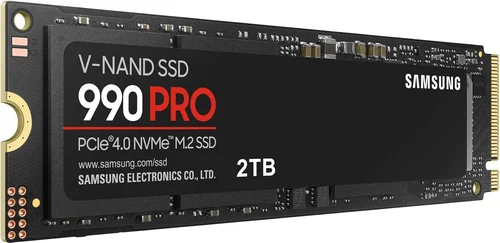
Best Premium Option: Samsung 990 Pro 2TB – Top-tier PCIe 4.0 performance with exceptional endurance and low latency. A favorite among content creators and enthusiasts.
Best for Beginners: WD Blue SN580 1TB – Easy to install, reliable, and affordable. Great for first-time upgraders or those new to NVMe technology.
Best for Advanced Users: Corsair MP700 2TB – A PCIe 5.0 powerhouse with speeds up to 10,000 MB/s, built-in heatsink, and high endurance. Ideal for future-proof builds and extreme workloads.
Conclusion: Making the Right Choice
Choosing the right SSD in 2026 doesn’t have to be overwhelming. By focusing on your specific needs—whether it’s speed, capacity, compatibility, or budget—you can find a drive that delivers exceptional performance and reliability. Remember that while raw specs matter, real-world usability, brand trust, and long-term value are equally important.
Start by assessing your system’s capabilities and your intended use case. Avoid common pitfalls like ignoring compatibility or skimping on capacity. Take advantage of seasonal sales and expert tips to get the best deal. And always prioritize data safety with regular backups.
Whether you’re breathing new life into an old laptop or building a high-performance gaming rig, the right SSD can transform your computing experience. With the insights from this guide, you’re now equipped to make a smart, informed decision. Upgrade with confidence—and enjoy the speed, responsiveness, and reliability that only an SSD can deliver.