
Key Takeaways
- Supply Chain Disruptions: The pandemic caused factory slowdowns, port congestion, and labor shortages, delaying SSD production and shipments.
- Rising Demand: Remote work, gaming, content creation, and cryptocurrency mining all increased demand for faster storage.
- Manufacturing Bottlenecks: Tighter NAND flash supplies and limited semiconductor equipment slowed new SSD production.
- Price Volatility: SSD prices have jumped 30–50% in some regions due to high demand and low inventory.
- Long-Term Outlook: Experts predict stabilization by late 2024 as new factories come online and demand normalizes.
- Alternative Options: Consider refurbished drives, alternative brands, or upgrading to larger capacities to stretch your budget.
📑 Table of Contents
- What Is an SSD and Why Are People Buying So Many?
- Why Is There a Consumer SSD Shortage?
- How Has the SSD Shortage Affected Consumers?
- Which SSD Brands Are Most Affected?
- What Can You Do About the SSD Shortage?
- Will the SSD Shortage End Soon?
- Final Thoughts: Navigating the SSD Shortage
What Is an SSD and Why Are People Buying So Many?
Before diving into the shortage, let’s quickly recap what an SSD is and why it matters. A solid-state drive uses flash memory to store data, unlike HDDs that rely on spinning disks. This makes SSDs significantly faster—boot times can drop from minutes to seconds, and file transfers happen in the blink of an eye. Over the past decade, SSD adoption has exploded. In 2010, only about 10% of new computers shipped with SSDs. Today, it’s closer to 90%. The shift accelerated during the COVID-19 pandemic when millions of people started working and learning from home. Suddenly, laptops needed to handle video calls, cloud apps, and large files—all of which benefit from fast storage. Gaming has also played a huge role. Modern games like *Cyberpunk 2077* or *Call of Duty: Warzone* require massive storage and quick load times. Gamers want SSDs not just for speed, but to avoid frustration during gameplay. Content creators—especially YouTubers and video editors—rely on SSDs to manage large media files efficiently. Even beyond personal use, businesses are upgrading their servers and workstations. Cloud services depend on fast local storage to reduce latency. And let’s not forget cryptocurrency miners, who consume enormous amounts of power and data—often using custom SSD setups for logging and processing. With all this demand, manufacturers ramped up production. But they couldn’t keep up.Why Is There a Consumer SSD Shortage?

Visual guide about Consumer Ssd Shortage
Image source: noypigeeks.com
The SSD shortage isn’t caused by a single factor. Instead, it’s the result of several interconnected challenges hitting the industry at once.
Pandemic-Induced Supply Chain Chaos
When the pandemic hit in early 2020, factories worldwide shut down or operated at reduced capacity. Semiconductor plants, including those producing NAND flash memory (the core component of SSDs), faced strict lockdowns. Even after restrictions eased, supply chains remained fragile.
Shipping containers piled up at ports. Trucks couldn’t move goods due to driver shortages. Warehouses were understaffed. These bottlenecks meant raw materials took months longer to reach assembly lines. As a result, SSD production lagged behind demand.
For example, Samsung’s NAND production dropped by nearly 20% in Q2 2020 compared to pre-pandemic levels. SK Hynix and Micron also reported delays. Since these companies dominate the SSD market, their slowdowns had ripple effects across the entire industry.
Surge in Global Demand
While supply was shrinking, demand was skyrocketing. Remote work forced companies to buy more laptops and desktops. Schools invested in digital learning tools. Consumers upgraded their home offices with better computers.
At the same time, gaming boomed. With gyms closed and social gatherings restricted, people turned to video games for entertainment. Epic Games’ Fortnite, Nintendo’s Animal Crossing, and Sony’s PlayStation 5 became cultural phenomena—all driving SSD sales.
Content creation also surged. Platforms like TikTok and YouTube saw record uploads. Editors needed faster drives to handle 4K footage and complex projects. This created a secondary market for high-capacity SSDs, further straining inventory.
NAND Flash Market Tightness
SSDs are built around NAND flash memory chips. These chips store data in cells and are categorized into different types: SLC, MLC, TLC, and QLC. TLC (triple-level cell) is the most common in consumer SSDs because it offers a good balance of speed, cost, and endurance.
However, NAND production requires specialized equipment and cleanroom environments. Only a handful of companies—Samsung, SK Hynix, Micron, Kioxia (formerly Toshiba Memory), and Western Digital—control most of the world’s NAND capacity.
When demand spiked, these companies prioritized high-margin products like enterprise SSDs used in data centers. Consumer SSDs, often seen as commodity items, got pushed down the priority list. This shift worsened shortages for regular users.
To learn more about how NAND flash shortages specifically affect SSD buyers today, check out our detailed guide: NAND Flash Shortage Explained for SSD Buyers.
Geopolitical and Trade Factors
Trade tensions between the U.S. and China added another layer of uncertainty. Tariffs on imported electronics components made sourcing parts more expensive. Some manufacturers relocated production to Southeast Asia, but logistics there were already strained.
Additionally, natural disasters like floods in Taiwan—a key hub for chip fabrication—disrupted operations. Taiwan produces over 60% of the world’s semiconductors. Any disruption there sends shockwaves through the entire tech industry.
How Has the SSD Shortage Affected Consumers?
Visual guide about Consumer Ssd Shortage
Image source: tech4gamers.com
The consequences of the SSD shortage are felt across the board—from individual buyers to small businesses.
Skyrocketing Prices
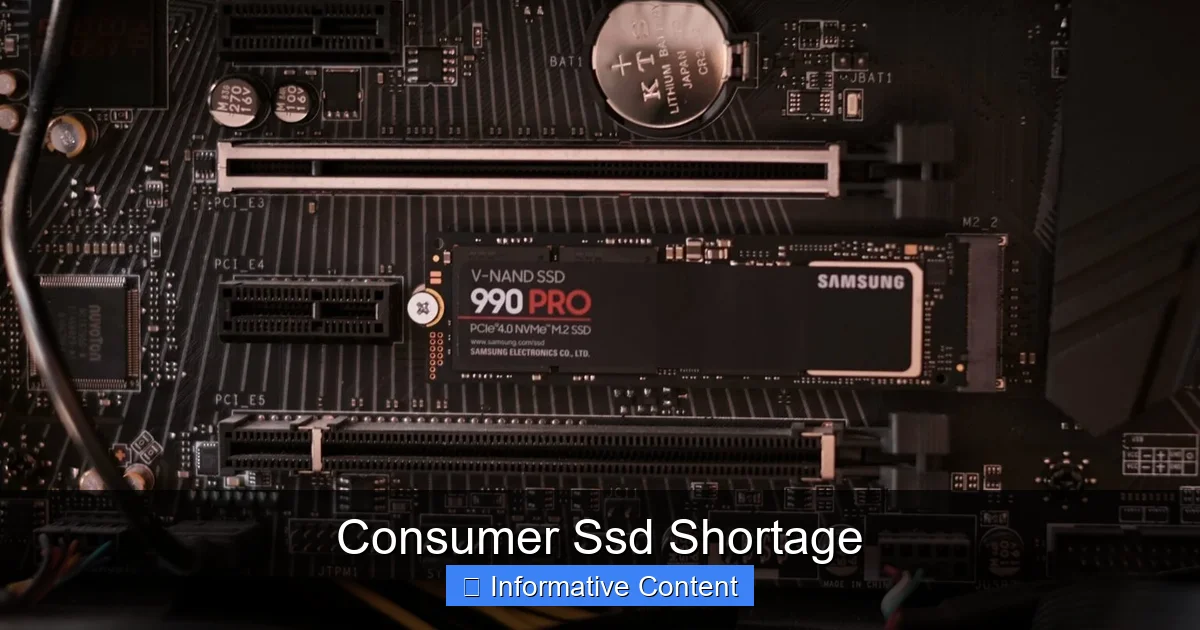
One of the most immediate impacts has been rising prices. According to industry trackers like Tom’s Hardware and TechSpot, average SSD prices increased by 30–50% between 2021 and 2023. A 1TB SATA SSD that cost $80 in 2020 now costs $120–$140.
Even high-end NVMe drives aren’t immune. The Samsung 980 Pro, a popular PCIe Gen4 SSD, saw its street price jump from $150 to over $220.
For budget-conscious shoppers, this is painful. Many feel forced to settle for smaller capacities or slower drives just to stay within their budgets.
Limited Availability
Retailers are struggling to keep SSDs in stock. Major stores like Best Buy, Amazon, and Newegg frequently list top-selling models as “out of stock.” Restock times stretch weeks or even months.
Online forums and Reddit threads are filled with complaints about empty listings and inflated third-party seller prices. Some users report paying double what the manufacturer’s suggested retail price (MSRP) originally was.
This scarcity is especially tough for gamers and professionals who need reliable storage now—not in six months.
Delays in Upgrades and Builds
PC builders are among the hardest hit. When ordering a complete system, buyers often customize storage. But if their preferred SSD model is unavailable, they must either wait or compromise.
Laptop manufacturers are also affected. Many ultrabooks now include only modest SSDs (like 256GB), knowing customers will upgrade later. But with upgrades delayed, users face reduced performance and limited space.
Which SSD Brands Are Most Affected?
Visual guide about Consumer Ssd Shortage
Image source: info.fusionww.com
Not all SSD brands are suffering equally. The shortage has hit certain companies harder than others.
Western Digital (WD)
WD’s Black SN850X and Blue SN570 lines are in high demand. Retailers often limit quantities per customer to prevent scalping. WD has invested in new NAND facilities, but full capacity won’t be online until 2024.
If you’re considering a WD drive during this period, you might want to explore alternatives like the Silicon Power P34A60 2TB NVMe SSD, which offers excellent value and performance while supply stabilizes.
Other Brands
Smaller brands like Kingston, PNY, and ADATA are experiencing similar challenges. They rely on the same NAND suppliers and logistics networks, so they’re not immune. However, some niche players offer better deals during restocks.
What Can You Do About the SSD Shortage?
Despite the shortage, there are steps you can take to find a good SSD without overspending.
Consider Refurbished Drives
Certified refurbished SSDs from reputable sellers can save you 20–30% off retail price. Look for models with warranties (at least one year) and positive reviews. Sites like Back Market and Newegg Refurbished specialize in this space.
Expand Your Search
Don’t limit yourself to one brand or model. Compare prices across Amazon, B&H, Micro Center, and regional electronics stores. Sometimes overseas retailers offer better deals with free shipping.
For those exploring non-Western options, Silicon Power Review 2026 highlights several reliable alternatives that may be easier to source during current market conditions.
Upgrade to Larger Capacities
Instead of chasing a specific 500GB drive, consider a 1TB or 2TB model. Larger drives often have lower per-gigabyte costs and may be easier to find. Plus, extra space means less stress about running out of room.
Use Hybrid Solutions Temporarily
If you need speed now but can’t find an SSD, pair a smaller SSD with a larger HDD. Use the SSD for your operating system and frequently used apps, and the HDD for bulk storage. It’s not ideal, but it works until SSDs stabilize.
Will the SSD Shortage End Soon?
Experts believe the worst of the shortage is behind us—but recovery will take time.
New Production Capacity Coming Online
Major manufacturers are investing billions in new NAND fabs. Samsung recently opened a $17 billion plant in Texas. Micron plans to spend $100 billion over the next decade on expansion. These facilities won’t be operational before late 2024, but they’ll ease pressure by then.
You can read more about how AI data centers are influencing SSD demand trends in our article: Ai Data Center ssd Demand.
Demand Normalization
Cryptocurrency mining has cooled significantly since 2022. Many miners switched to other hardware or exited the market entirely. Gaming interest has stabilized post-pandemic. Enterprise demand remains strong, but it’s more predictable.
As a result, overall demand growth has slowed. This gives manufacturers breathing room to catch up on backlog.
Inventory Replenishment
Retailers are slowly rebuilding stock. While selection is still limited, out-of-stock rates have dropped from 40% in 2022 to under 15% in early 2024, according to Canalys data.
Price Stabilization
SSD prices began falling in late 2023. Analysts expect further declines through 2024 as supply meets demand. However, geopolitical risks and inflation could keep prices above pre-shortage levels.
Final Thoughts: Navigating the SSD Shortage
The consumer SSD shortage has been frustrating for sure. But it’s also a reminder of how interconnected modern technology really is. A problem in one corner of the globe can ripple across continents, affecting everything from your gaming rig to your home office setup.
That said, knowledge is power. By understanding what caused the shortage and staying flexible in your approach, you can still get the storage you need—even during turbulent times.
Whether you’re waiting for prices to drop, exploring refurbished options, or planning around restock cycles, remember: this situation won’t last forever. In a few more quarters, SSDs should return to something resembling normalcy.
Until then, be patient, stay informed, and don’t rush into an overpriced deal just because it’s available today. Your wallet—and your future self—will thank you.
Frequently Asked Questions
What caused the consumer SSD shortage?
The shortage resulted from pandemic-related supply chain disruptions, surging global demand for faster storage, tight NAND flash supplies, and manufacturing bottlenecks. Multiple factors combined to create a prolonged imbalance between supply and demand.
Are SSD prices expected to go back down?
Yes, experts predict SSD prices will gradually decline through 2024 as new production facilities come online and demand stabilizes. However, prices may not return to pre-shortage levels due to ongoing inflation and geopolitical risks.
Can I still build a PC with an SSD right now?
Absolutely, but you may need to be flexible. Consider alternative brands, larger capacities, or waiting for restocks. Many retailers offer SSDs, though selection and pricing vary.
Should I buy a refurbished SSD?
Refurbished SSDs can be a smart choice if purchased from reputable sellers with warranty coverage. They often cost 20–30% less than new models and can save money during shortages.
Will the shortage affect laptop upgrades?
Yes, laptop manufacturers are cautious about including large SSDs due to availability concerns. Users may need to plan upgrades carefully or accept smaller default storage.
How long will the SSD shortage last?
The worst of the shortage appears to be ending, with stabilization expected by late 2024. Full recovery of supply and pricing may take until 2025, depending on global conditions.