

Western Digital (WD) has long been a trusted name in the storage industry, and when it comes to solid-state drives (SSDs), they offer a diverse lineup that caters to everyone from casual laptop users to hardcore gamers and professional content creators. Whether you’re upgrading your aging hard drive for faster boot times or building a high-performance workstation, choosing the right WD SSD can dramatically impact your system’s speed, reliability, and overall user experience. With so many models on the market—each with different interfaces, capacities, speeds, and price points—it’s easy to feel overwhelmed.
This comprehensive buying guide is designed to cut through the noise and help you make an informed decision. We’ll walk you through every critical factor you need to consider, from performance benchmarks and durability ratings to real-world use cases and budget constraints. You’ll learn how to decode technical specs, avoid common pitfalls, and identify which WD SSD aligns best with your specific needs. Whether you’re looking for a budget-friendly SATA drive or a blazing-fast NVMe Gen4 drive for 4K video editing, this guide has you covered.
The SSD market has evolved rapidly over the past few years. While traditional SATA SSDs still offer excellent value for everyday computing, PCIe Gen4 and even Gen5 NVMe drives are now mainstream, delivering read/write speeds that were unthinkable just a decade ago. WD has kept pace with innovation, offering everything from entry-level Blue series drives to high-end Black SN850X models. Understanding where each product fits in the ecosystem—and how it performs under real-world workloads—is essential to getting the most bang for your buck. By the end of this guide, you’ll have the confidence to choose the perfect WD SSD for your setup.

What to Look for When Buying Buying Guide
1. Budget & Price Range
Your budget is often the most immediate constraint when shopping for an SSD. WD offers SSDs across a wide spectrum of price points, so knowing how much you’re willing to spend will help narrow your options significantly. Entry-level drives like the WD Blue SA510 start around $40 for 500GB, while high-performance models such as the WD Black SN850X can cost over $200 for a 2TB capacity. It’s important to balance cost with your performance needs—spending more doesn’t always mean better value if you don’t need top-tier speeds.
Consider your total cost of ownership, not just the upfront price. A slightly more expensive SSD with a longer warranty or better endurance rating might save you money in the long run by avoiding premature failure. Also, watch for seasonal sales—Black Friday, Prime Day, and back-to-school periods often bring significant discounts on WD SSDs. If you’re on a tight budget, look for refurbished or open-box units from reputable retailers, but always verify warranty coverage.
2. Performance Specifications
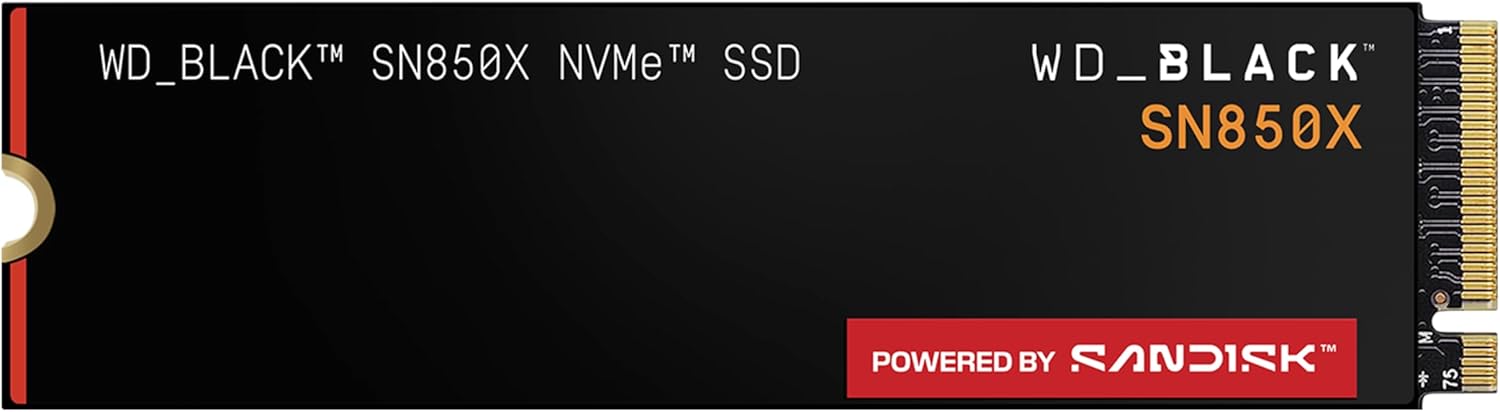
Performance is arguably the most critical factor when selecting an SSD. Key metrics include sequential read/write speeds (measured in MB/s), random read/write IOPS (input/output operations per second), and interface type (SATA vs. NVMe). For example, SATA III SSDs like the WD Blue are capped at around 560 MB/s due to interface limitations, while NVMe Gen3 drives such as the WD Green SN350 can reach up to 3,500 MB/s. The WD Black SN850X, a Gen4 drive, pushes beyond 7,000 MB/s—ideal for demanding tasks like gaming, 3D rendering, or large file transfers.
Don’t just focus on peak speeds. Real-world performance depends on sustained write speeds, especially during large file transfers or multitasking. Some budget NVMe drives throttle heavily under load due to poor thermal management or lack of DRAM cache. Check independent benchmarks and reviews to see how a drive performs under continuous workloads, not just synthetic tests. Also, consider the controller and NAND type—TLC (triple-level cell) NAND offers a good balance of speed, endurance, and cost, while QLC (quad-level cell) is cheaper but slower and less durable.
3. Build Quality & Durability
SSDs are inherently more durable than traditional hard drives because they have no moving parts, but not all SSDs are created equal. Look for drives with robust controllers, high-quality NAND flash memory, and effective thermal solutions. WD’s Black series, for instance, often includes heatsinks or advanced thermal throttling algorithms to maintain performance during extended use. Durability is also measured in terabytes written (TBW)—the total amount of data that can be written to the drive before it’s likely to fail. A 1TB WD Blue SA510 has a TBW rating of 400TB, while the WD Black SN850X offers up to 1,200TB for the same capacity.
Shock resistance, temperature tolerance, and power efficiency are other durability factors. If you’re using the SSD in a laptop or portable device, ensure it meets MIL-STD-883H standards for shock and vibration resistance. For desktop use, especially in compact builds, consider drives with built-in heatsinks or compatibility with motherboard M.2 heatsinks to prevent thermal throttling.
4. Features & Functionality
Beyond raw speed and capacity, modern SSDs come with a range of features that enhance usability and security. WD offers proprietary software like WD Dashboard, which allows you to monitor drive health, update firmware, enable hardware encryption, and perform secure erases. Some models support AES 256-bit encryption and TCG Opal 2.0 compliance, which are essential for businesses or users handling sensitive data.
Other features to consider include SLC caching (which boosts short-term write performance), DRAM cache (improves speed and longevity), and power-loss protection (prevents data corruption during unexpected shutdowns). The WD Black SN850X, for example, includes a large DRAM cache and advanced error correction, making it ideal for professional workloads. Meanwhile, the WD Green series focuses on low power consumption, making it a good fit for laptops and energy-efficient systems.
5. Brand Reputation & Reliability
Western Digital is one of the most established names in data storage, with decades of experience in both HDD and SSD manufacturing. The company owns SanDisk, another trusted brand in flash storage, giving WD access to cutting-edge NAND technology and manufacturing expertise. WD SSDs are widely used in OEM systems, data centers, and consumer devices, which speaks to their reliability and compatibility.
That said, not all WD SSD lines are equal in terms of reputation. The Black series is consistently praised for performance and build quality, while the Green series has faced criticism for inconsistent performance in some generations. Always check recent user reviews and professional benchmarks to ensure the specific model you’re considering lives up to WD’s overall reputation. Avoid older or discontinued models that may lack firmware updates or support.
6. Warranty & Support
Warranty length and terms are strong indicators of a drive’s expected lifespan and the manufacturer’s confidence in its product. WD typically offers 3- to 5-year limited warranties on its SSDs, with higher-end models like the Black SN850X coming with a full 5-year warranty. The warranty often includes a TBW limit—exceeding it may void coverage—so check both the time and endurance limits.
Customer support quality varies by region, but WD provides online resources, firmware updates, and direct support through its website. Some retailers also offer extended warranties or accidental damage protection. If you’re buying for a business or mission-critical system, consider WD’s enterprise-grade SSDs, which come with enhanced support and longer warranties. Always register your drive after purchase to ensure full warranty coverage.
7. Size & Portability
Physical size matters, especially in compact laptops, mini PCs, or small-form-factor builds. Most modern WD SSDs use the M.2 2280 form factor (22mm wide, 80mm long), which is the standard for NVMe drives. However, some older or budget models still use the 2.5-inch SATA form factor, which requires a drive bay and SATA cables.
If you’re upgrading a laptop, confirm your system supports M.2 NVMe or only SATA. Some ultrabooks only accept shorter M.2 2242 or 2230 drives. For external use, WD offers portable SSDs like the WD My Passport SSD, which are compact, durable, and plug-and-play via USB-C. These are ideal for photographers, videographers, or anyone who needs fast, reliable storage on the go.
8. User Reviews & Ratings
While specs and marketing materials provide a baseline, real-world user experiences offer invaluable insights. Look for consistent patterns in reviews—do users report frequent crashes, slowdowns, or early failures? Are firmware updates available and easy to install? Amazon, Newegg, and Best Buy are good sources, but also check tech forums like Reddit’s r/buildapc or Tom’s Hardware for deeper analysis.
Pay attention to reviews from users with similar use cases. A gamer’s experience with a WD Black SN850X will differ from a student using a WD Blue SA510 for document editing. Also, be wary of fake or incentivized reviews—focus on detailed, balanced feedback that discusses both pros and cons.
Different Types of Buying Guide
Common Buying Mistakes to Avoid

❌ Mistake: Ignoring Interface Compatibility
Why it’s bad: Buying an NVMe SSD for a system that only supports SATA will result in a drive that doesn’t work at all. Many older laptops and desktops lack M.2 NVMe slots or BIOS support for booting from NVMe drives.
What to do instead: Check your motherboard or laptop specifications before purchasing. Use tools like CPU-Z or the manufacturer’s support page to confirm supported interfaces. If in doubt, opt for a 2.5-inch SATA SSD, which is universally compatible.
❌ Mistake: Overpaying for Unnecessary Speed
Why it’s bad: A Gen4 NVMe drive offering 7,000 MB/s won’t feel significantly faster than a Gen3 drive in everyday tasks like web browsing or document editing. You’re paying a premium for performance you may never use.
What to do instead: Match the drive to your workload. Gamers and video editors benefit from high-speed NVMe, but casual users will see minimal gains. A SATA SSD or Gen3 NVMe often provides the best value for general use.
❌ Mistake: Choosing the Wrong Capacity
Why it’s bad: A 250GB SSD may seem cheap, but it fills up quickly with modern games, apps, and OS updates. Running low on space can slow down performance and limit functionality.
What to do instead: Aim for at least 500GB for most users, 1TB for gamers or content creators, and 2TB+ for professionals. Use cloud storage or external drives for media files to free up space.
❌ Mistake: Skipping Firmware Updates
Why it’s bad: Outdated firmware can cause bugs, performance issues, or even data loss. Some WD SSDs have had critical firmware fixes released after launch.
What to do instead: Download and install WD Dashboard after setup. Enable automatic update notifications and apply patches promptly. Always back up data before updating firmware.
❌ Mistake: Neglecting Thermal Management
Why it’s bad: High-performance NVMe drives generate heat, which can cause thermal throttling—slowing the drive to prevent damage. This negates the speed advantage in sustained workloads.
What to do instead: Use a heatsink if your case or motherboard supports it. Ensure adequate airflow in your system. Consider drives with built-in thermal solutions, like the WD Black SN850X with heatsink variant.
❌ Mistake: Buying Based on Price Alone
Why it’s bad: The cheapest SSD may use inferior NAND, lack DRAM cache, or have poor endurance, leading to early failure or slow performance.
What to do instead: Compare value, not just price. Look at cost per gigabyte, TBW rating, warranty length, and user reviews. A slightly more expensive drive with better specs often offers better long-term value.
❌ Mistake: Not Checking Return Policies
Why it’s bad: If the drive is defective or incompatible, a strict return policy could leave you stuck with a non-functional product.
What to do instead: Buy from retailers with generous return windows (30 days or more). Keep original packaging and receipts. Test the drive immediately after installation.
Budget Guidelines: How Much Should You Spend?
Entry-Level ($30 – $70): This tier includes drives like the WD Green SN350 and older WD Blue models. Expect capacities from 250GB to 1TB, SATA or basic NVMe speeds, and limited endurance. Ideal for budget builds, secondary storage, or upgrading old systems. Performance is adequate for web browsing, office apps, and light multitasking, but avoid heavy workloads.
Mid-Range ($70 – $150): The sweet spot for most users. Drives like the WD Blue SA510 (SATA) and WD Black SN770 (NVMe Gen4) offer excellent balance of speed, capacity (500GB–2TB), and reliability. These are perfect for gaming, content creation, and general productivity. You’ll get DRAM cache, good TBW ratings, and solid performance without overspending.
Premium ($150 – $300): For enthusiasts and professionals. The WD Black SN850X and SN850P dominate this category with Gen4 speeds, high endurance (up to 1,200TBW), and advanced features like hardware encryption and thermal management. These drives excel in 4K video editing, 3D rendering, and high-FPS gaming. Worth the investment if you demand top performance.
Luxury ($300+): Top-tier models with 4TB+ capacities, enterprise-grade endurance, and cutting-edge tech like Gen5 support (when available). These are overkill for most consumers but ideal for data centers, workstations, or users who want future-proof storage. Expect premium pricing and professional support.

Expert Tips for Getting the Best Deal
– Buy during major sales events: Black Friday, Cyber Monday, Amazon Prime Day, and back-to-school season often feature discounts of 20–40% on WD SSDs. Sign up for retailer newsletters to get early alerts.
– Compare prices across retailers: Check Amazon, Newegg, Best Buy, B&H, and WD’s official store. Sometimes smaller retailers offer bundle deals or free shipping.
– Consider open-box or refurbished units: These can save 15–30% and often come with full warranties. Only buy from certified sellers with return policies.
– Check for manufacturer rebates: WD occasionally offers mail-in rebates or instant discounts on select models. Visit the WD promotions page before purchasing.
– Use price tracking tools: Websites like CamelCamelCamel (for Amazon) or Honey can alert you when prices drop on your desired SSD.
– Bundle with other components: Some retailers offer discounts when you buy an SSD with a laptop, desktop, or gaming console.
– Verify warranty transferability: If buying used or refurbished, ensure the warranty is still valid and transferable to you.
– Test immediately after purchase: Use CrystalDiskMark or WD Dashboard to verify performance and health. Report any issues within the return window.

Frequently Asked Questions
Q: Can I use a WD SSD in a MacBook?
A: Older MacBooks with SATA interfaces can use 2.5-inch WD Blue or Green SSDs with an adapter. Newer Macs with M.2 slots (like some Hackintosh builds) may support NVMe drives, but Apple’s official systems often require proprietary SSDs. Always check compatibility before purchasing.
Q: Do WD SSDs come with cloning software?
A: WD does not include physical cloning software, but you can download Acronis True Image WD Edition for free from their website. It allows you to clone your existing drive to the new SSD seamlessly.
Q: How long do WD SSDs last?
A: Most WD SSDs are rated for 5+ years of typical use, with TBW ratings ranging from 100TB to over 1,000TB depending on the model. Real-world lifespan often exceeds ratings due to conservative estimates.
Q: Is the WD Black worth the extra cost over the Blue?
A: Only if you need high-speed performance. For general use, the Blue series offers excellent value. Gamers, video editors, and power users will benefit from the Black’s faster speeds and better thermal management.
Q: Can I use a WD SSD as a boot drive?
A: Yes, all WD SSDs can be used as boot drives. Ensure your system supports the interface (SATA or NVMe) and that the drive is properly installed and recognized in BIOS.
Q: Do I need a heatsink for my NVMe SSD?
A: Not always, but recommended for high-performance drives like the WD Black SN850X, especially in compact cases or during sustained workloads. Many motherboards include M.2 heatsinks.
Q: Are WD SSDs compatible with Linux?
A: Yes, WD SSDs are fully compatible with Linux distributions. NVMe and SATA drives are recognized natively, and tools like hdparm or smartmontools can monitor health.
Q: What’s the difference between WD Blue and WD Green?
A: WD Blue focuses on balanced performance and reliability for everyday use, while WD Green emphasizes energy efficiency and low cost, often with reduced performance and endurance.
Q: Can I recover data from a failed WD SSD?
A: Data recovery from SSDs is more complex than HDDs due to TRIM and wear leveling. Professional services may help, but success isn’t guaranteed. Always maintain backups.
Q: Does WD offer cloud backup with their SSDs?
A: No, WD SSDs do not include cloud storage. However, you can use third-party services like Google Drive, Dropbox, or WD’s own My Cloud for backup.
Our Final Recommendations
Best for Budget-Conscious Buyers: WD Blue SA510 (1TB) – Offers reliable SATA performance at an unbeatable price. Perfect for upgrading old laptops or desktops without breaking the bank.
Best Overall Value: WD Black SN770 (1TB) – A Gen4 NVMe drive with excellent speeds, low latency, and strong endurance. Great for gaming and productivity at a reasonable price.
Best Premium Option: WD Black SN850X (2TB with Heatsink) – Top-tier performance, robust build, and 5-year warranty. Ideal for professionals and enthusiasts who demand the best.
Best for Beginners: WD Green SN350 (500GB) – Simple, affordable, and easy to install. A great first SSD for users new to upgrades.
Best for Advanced Users: WD Red SA510 (NAS SSD, 2TB) – Designed for 24/7 operation in NAS environments. High endurance, low power draw, and optimized for constant workloads.
Conclusion: Making the Right Choice
Choosing the right WD SSD doesn’t have to be overwhelming. By understanding your needs—whether it’s budget, performance, capacity, or use case—you can confidently navigate WD’s diverse product lineup. Remember that the “best” SSD isn’t always the fastest or most expensive; it’s the one that delivers the right balance of speed, reliability, and value for your specific situation.
We’ve covered everything from key buying factors and common mistakes to budget tiers and expert tips. Use this guide as your roadmap, and don’t hesitate to revisit it when comparing models or waiting for the next sale. With the right WD SSD, you’ll enjoy faster boot times, quicker app launches, and a smoother overall computing experience.
Now that you’re equipped with expert knowledge, it’s time to make your move. Prioritize your needs, compare your options, and invest in a drive that will serve you well for years to come. Your system—and your productivity—will thank you.